Our exciting hike into the Cueva del Viento (Cave of the Wind) took a potentially disastrous turn when we ventured too far into the pitch-black cave and couldn’t find our way out.
We found ourselves grappling with very dark thoughts as we walked in endless circles, listening to bats screech overhead and willing our flashlights not to stop working, while we looked for anything familiar to help us escape the cave.
The Cueva del Viento is found at the end of a popular trail in Guajataca State Forest on the northeastern town of Isabela, Puerto Rico. If you go, make sure you take a good flashlight, tell someone where you are going, and don’t go in too deep.
We thought the rickety stairs down into the cave were the dangerous part.
We had a magical snorkeling experience in Rincon, where we encountered a huge abundance of healthy sea coral, aquatic life, and even a couple of hawksbill turtles!
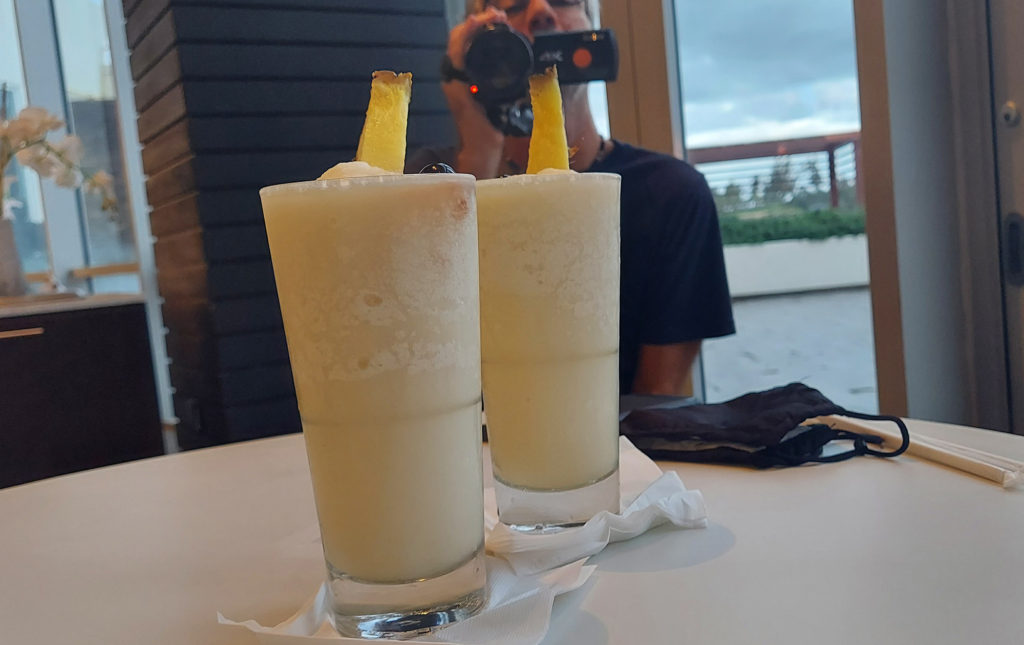
Caribar, the beautiful bar inside the Caribe Hilton in San Juan, boasts that bartender Ramon ‘Monchito’ Perez invented the piña colada there in 1954.
Piña colada at Caribar
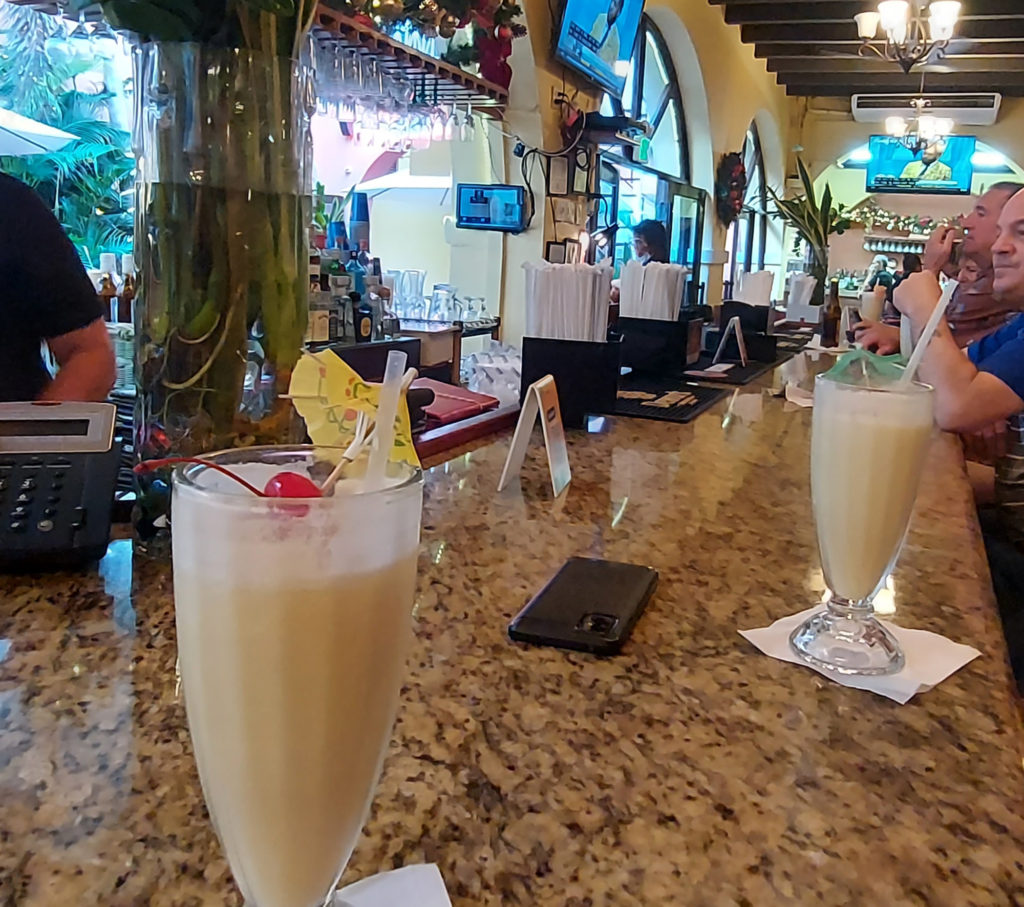
No, wait, that’s Barrachina a Spanish restaurant in Old San Juan, where traditional Spanish bartender Don Ramon Portas Mingot created the original recipe in 1963.
Piña coladas in Barrachina
Neither side is backing down. Which bar is the birthplace of Puerto Rico’s iconic drink? That may never be settled. So in our opinion, the real question is, which bar makes the best piña colada?
And can either version approach the deliciousness of Lisa’s piña colada recipe? Bob gives them the taste test! Enjoy the video:
Caribar‘s address is Calle Los Rosales, San Juan, on the lowest level of the Caribe Hilton Hotel. Barrachina is located at 104 C. de la Fortaleza, Old San Juan.
We came to see the rocks in Laguna Guaniquilla, not far from Buye Beach.
But we found so much more in Punta Guaniquilla, an amazing nature preserves full of natural wonders!
We encountered distant vistas.
Unexplained ruins.
Mangroves seen from a different angle.
Spectacular Caribbean views.
Salt flats that hosted 10,000 skittering crabs.
Jagged boulders rising from the water of Laguna Guaniquilla.
Hidden caves with signs warning of potential seismic activity.
More hidden caves.
Sleeping frogs.
Interesting plants.
Termite nests, some fallen on the ground.
You reach this hike by heading south on foot from the local favorite Buye Beach, down a puddle-mucked, narrow road through a neighborhood of ramshackle cottages that face the Caribbean Sea. Bring lots of water, and definitely bring a camera!
People go to Vieques for island life, a legendary bioluminescent bay, and fantastic snorkeling. But it is truly a one-of-a-kind experience in so many other ways, whether you’re passing a group of wild horses in the roadway, finding a secluded beach spot to call your own, or watching a tropical sunrise from a beach bar.
Ever wonder where chocolate comes from? It starts its life inside a pod that grows from a plant called cacao on a lush mountainside in a wet forest in the tropics. How do I know? I went there to find out.
We recently visited Finca Hekiti (Finca means “farm”, Hekiti means “one” in the Taino language) for an educational experience in a cacao forest in the Las Marias Mountains west of Mayaguez. In addition to learning the farming practices used on an agro-ecological site to grow and harvest fine-grain cacao, we learn about the importance of agroforestry, permaculture, and nature conservation.
Our tour guide was Ricardo, who purchased these four acres of extremely hilly, lush land with his wife Vivienne in 2014.
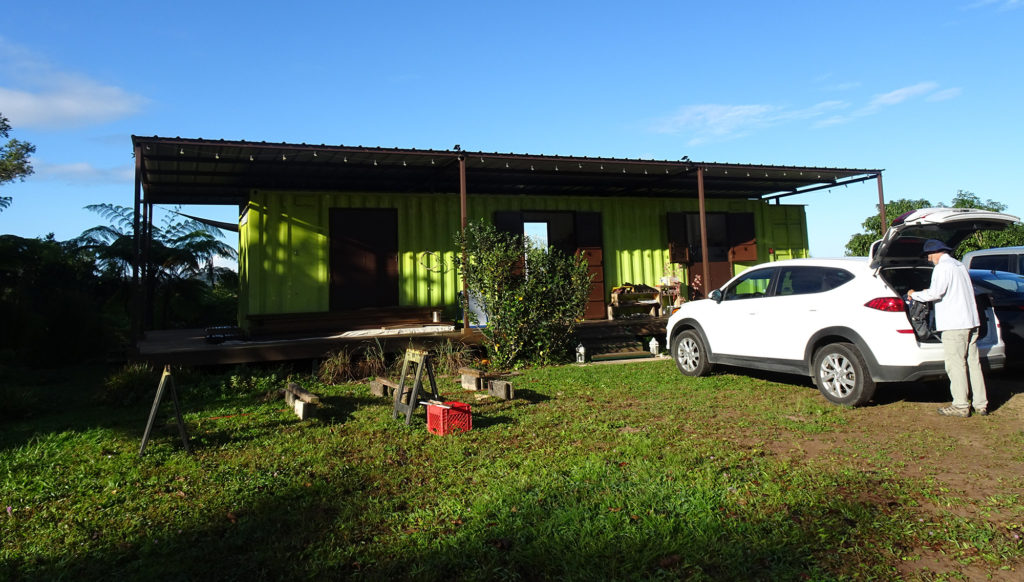
The family lives in this tricked-out shipping container when on the farm
Ricardo, a tall, rangy man with a curly beard, taught us that cacao doesn’t grow in neatly tended rows, like you’ll find on a farm, but as part of a symbiotic forest ecosystem. It nestles among other trees, many of them bearing fruit such as bananas and oranges, and plants that all have their own roles. The cacao tree does need to be pruned and maintained, but there is no irrigation. It gets sun and water at the whim of nature, including enduring a six-to-seven-month-long rainy season every year. Ricardo explained how he uses a process called grafting to improve new plants and make existing ones stronger.
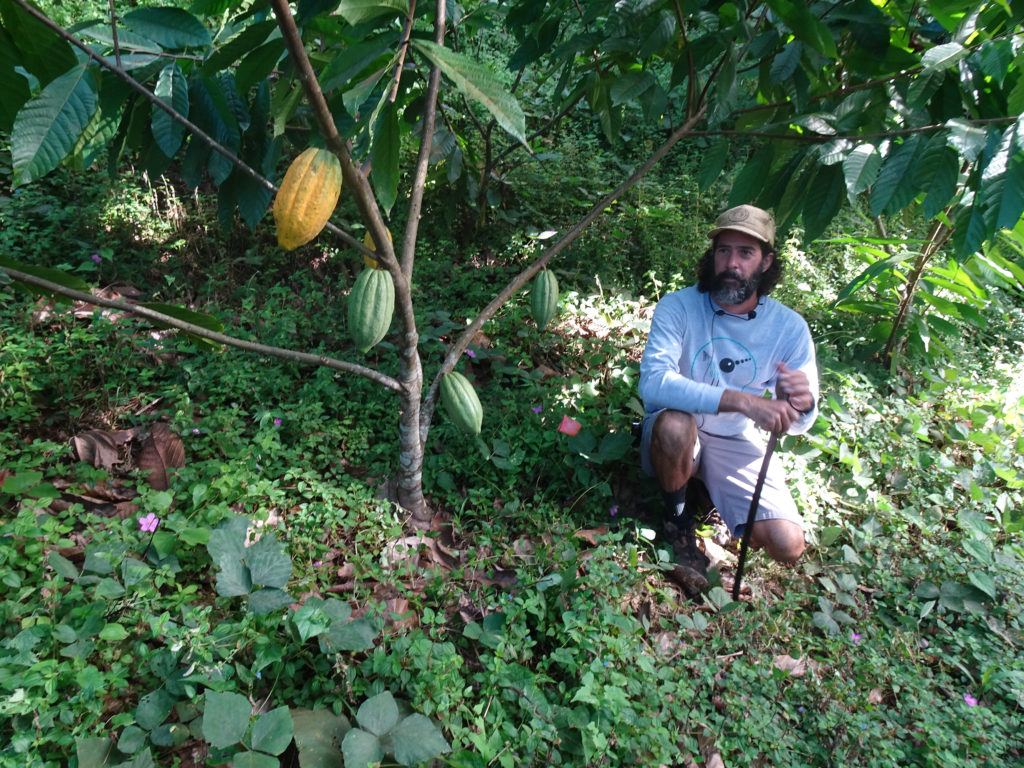
Ricardo beside a cacao tree. The orange pod is ripe. The green one is not ready yet.
He took us on a half-mile hike around the extremely steep and windy agroforest, stopping frequently to show us medicinal plants and explain their purposes (in addition to letting us smell and taste them). We chewed a plant that numbs the mouth, and one that is used for brushing teeth!
Images of Cacao
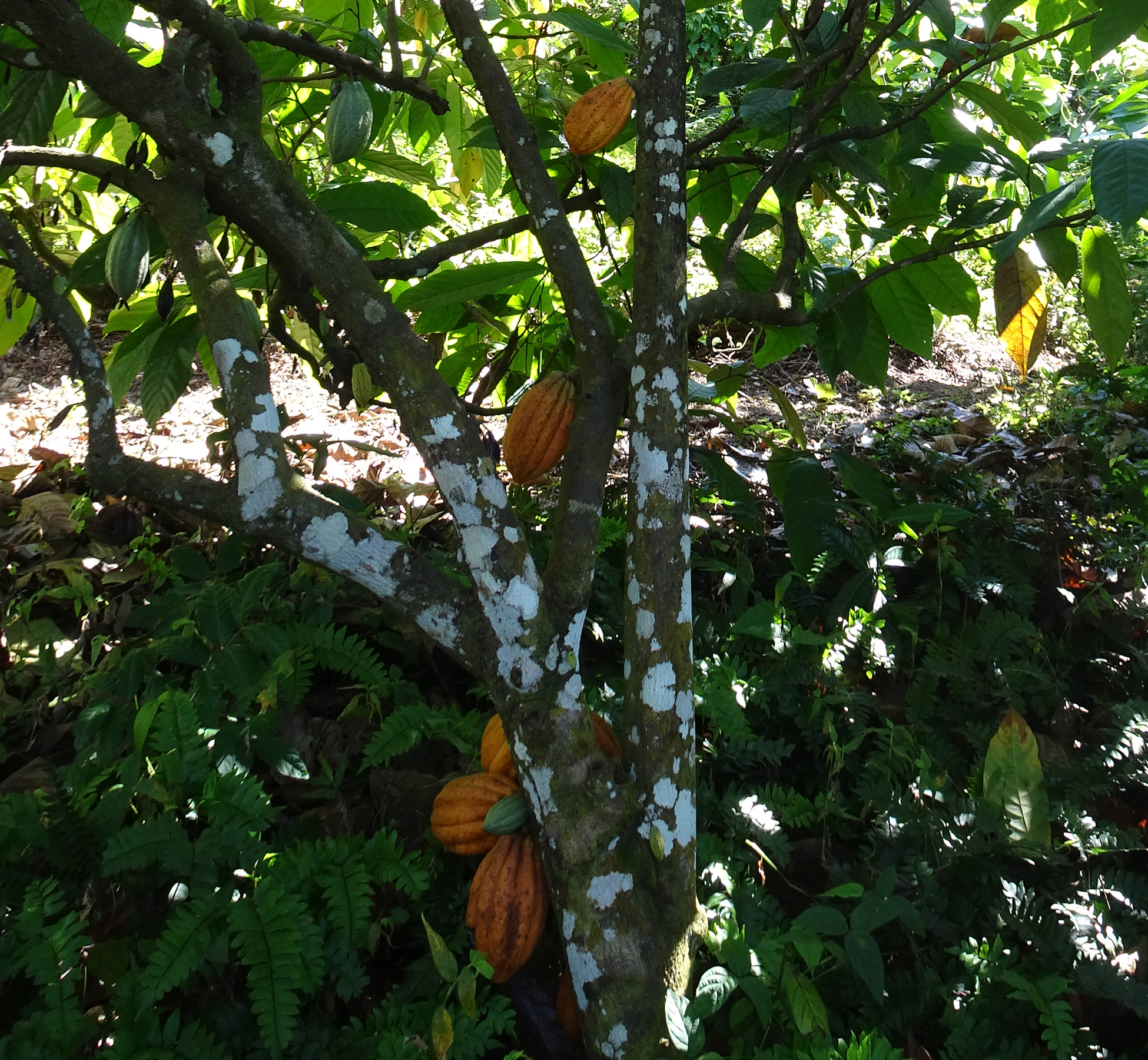
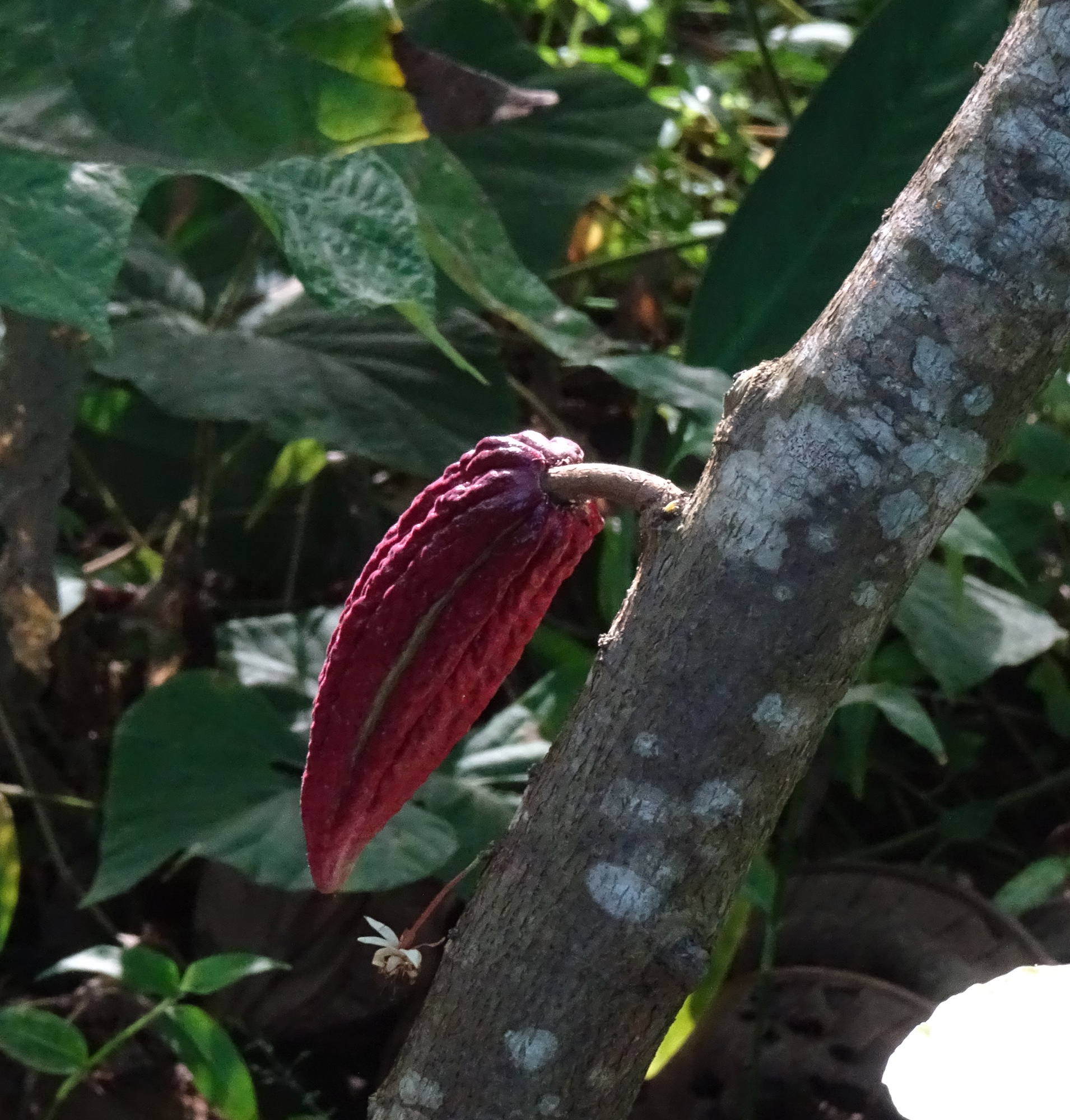
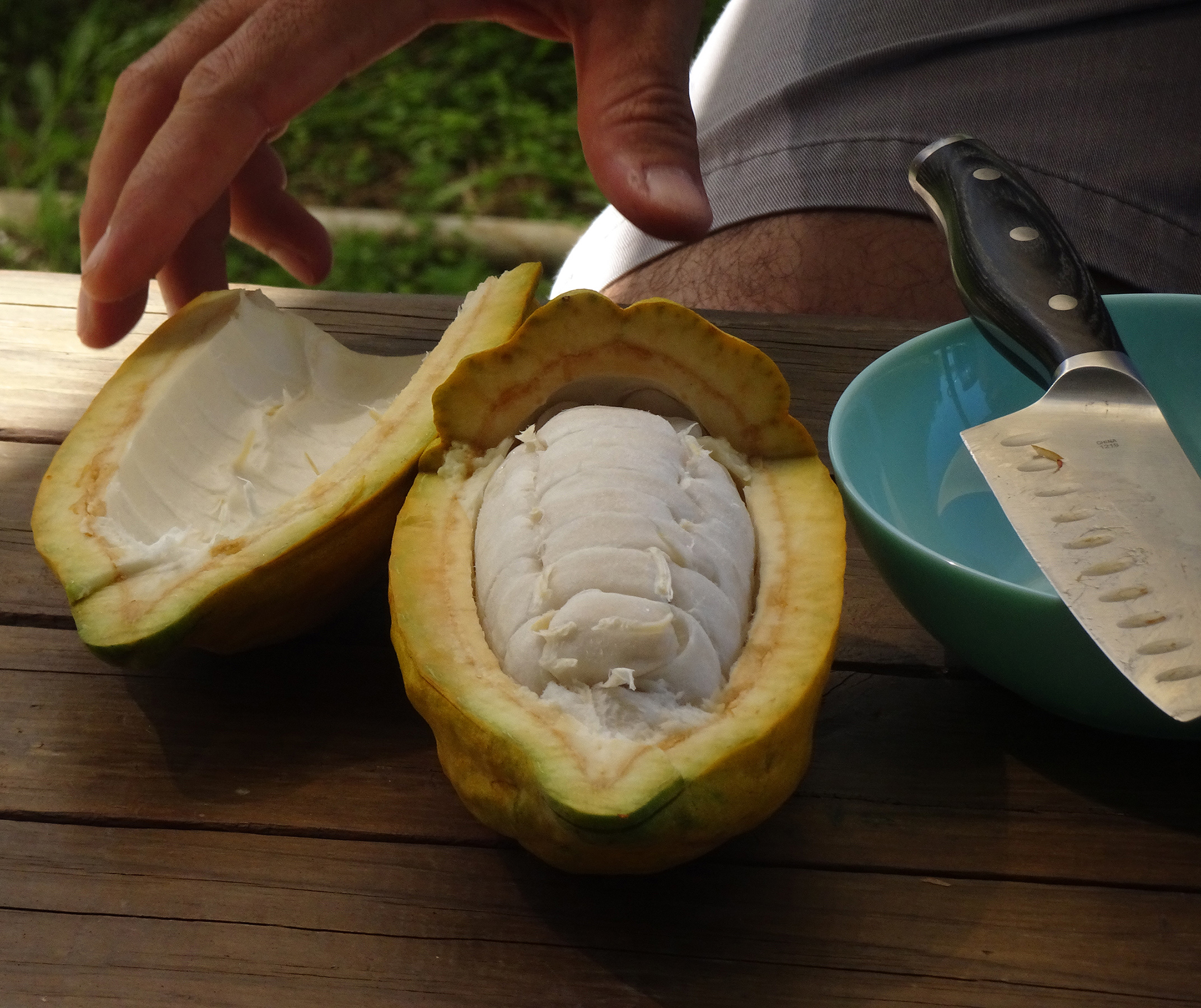
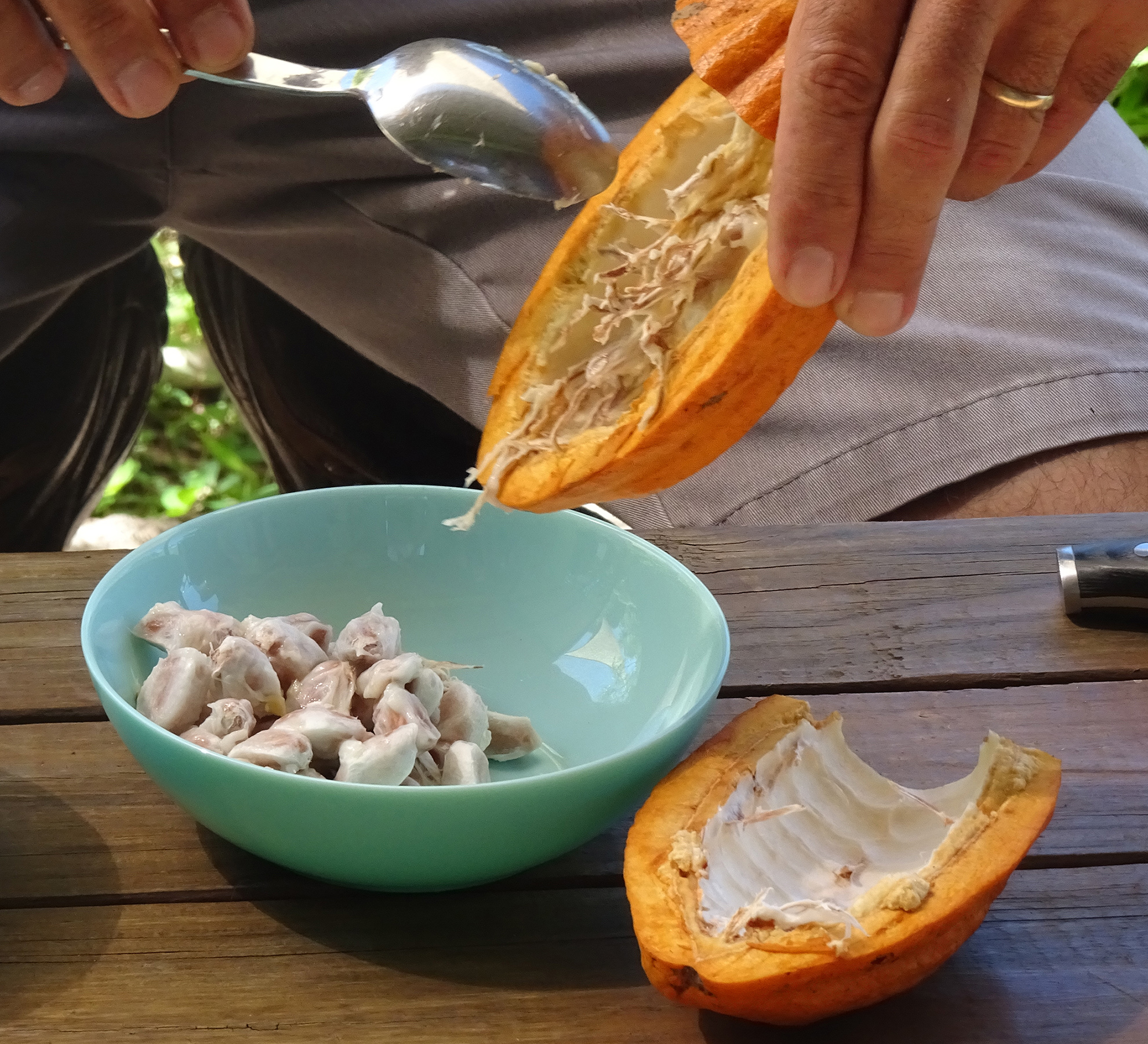
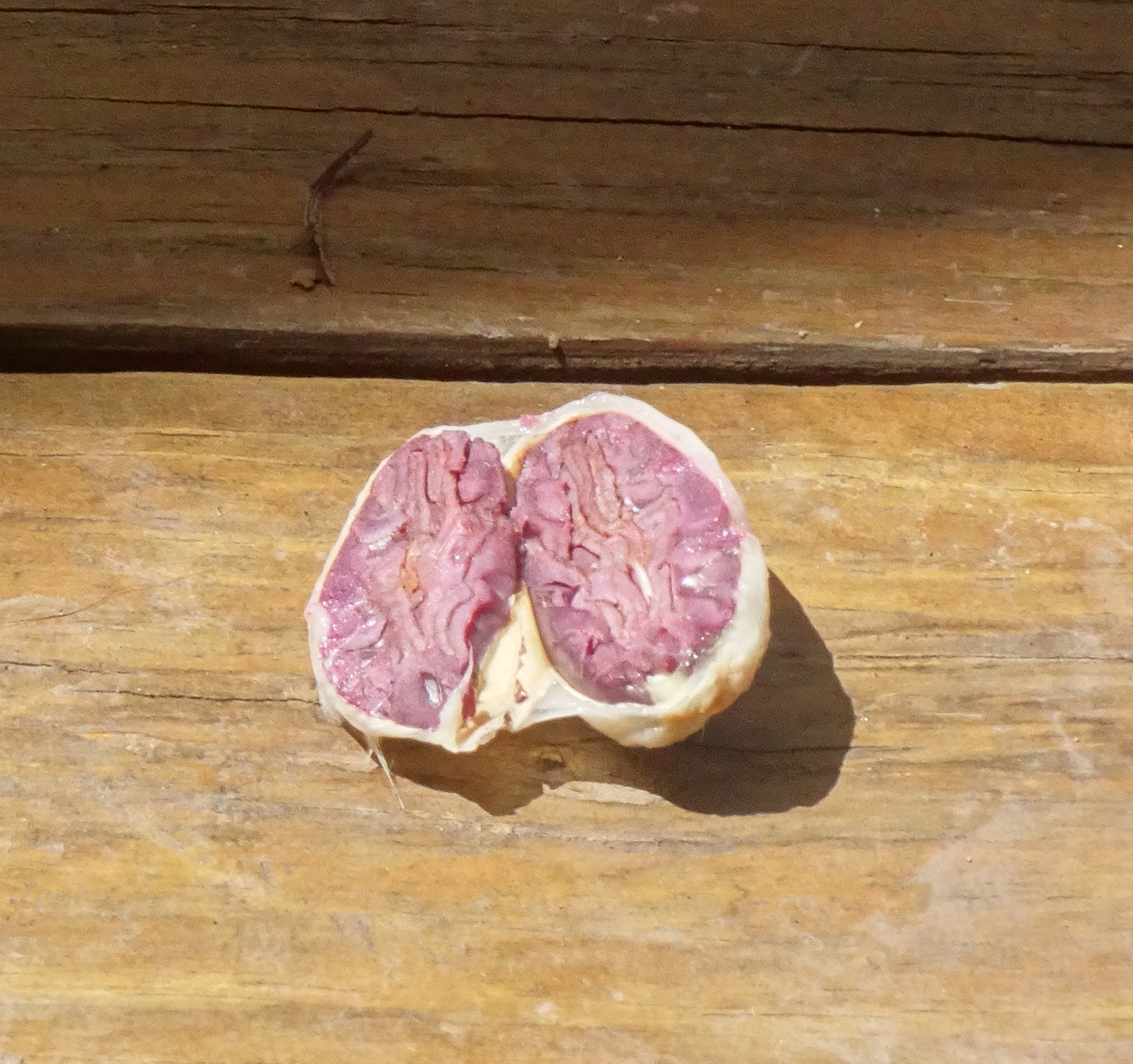
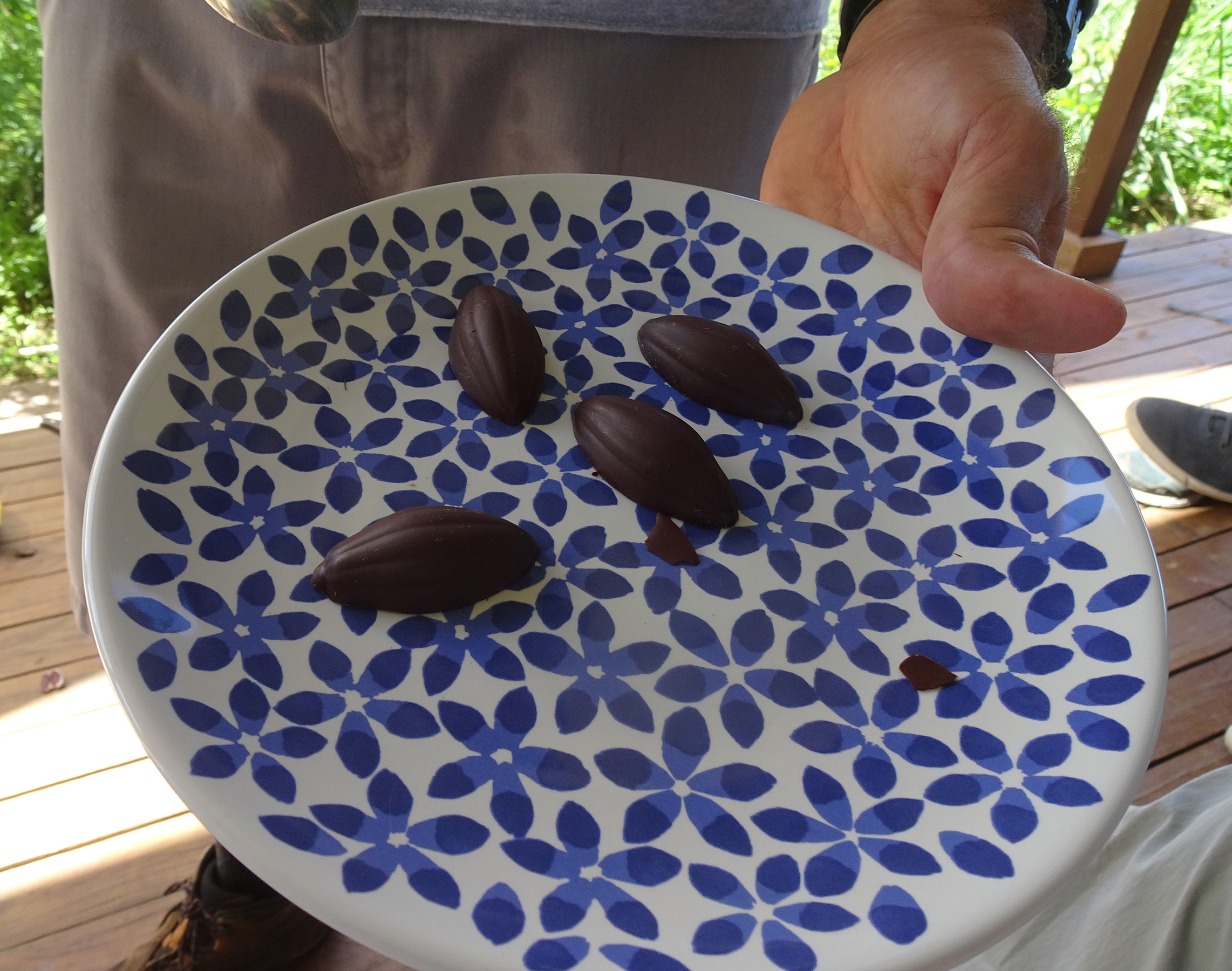
Cacao on the treeA cacao podThe inside of a podThe pulp (which tastes like mango)A cacao seed, cut in halfDark chocolate for tasting
We tasted dark chocolate with hints of cinnamon and cayenne pepper. Delicious!
Finca Hekiti doesn’t process the cacao, so we didn’t get to watch him turn the cacao beans into chocolate. That actually takes a long time, including fermenting, drying, winnowing, roasting, and flavoring. He is planning to produce cocoa nibs, which are small pieces of crushed cacao beans that have abundant health benefits. Learn more here.
If you’re ever in Puerto Rico, you can find this tour through AirbBnB Experiences or on the Finca Hekiti Facebook page. The cost was $25 each, plus tax, quite reasonable for 3 1/2 hours.
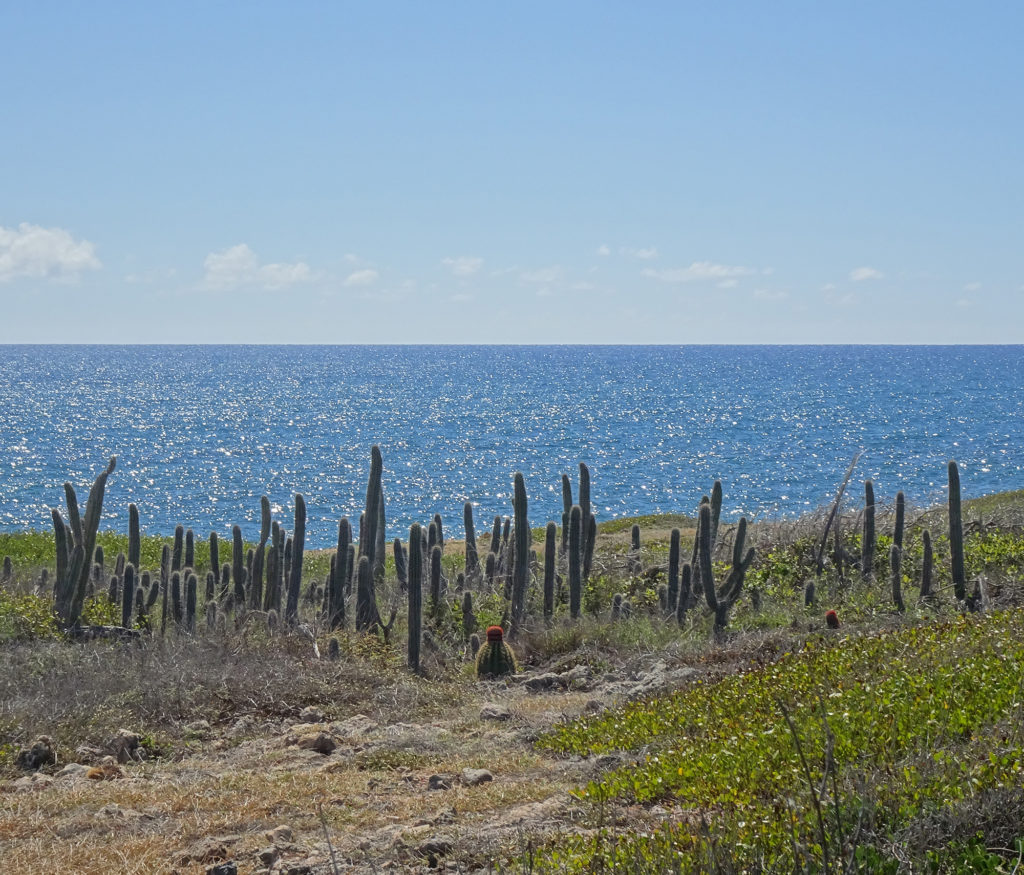
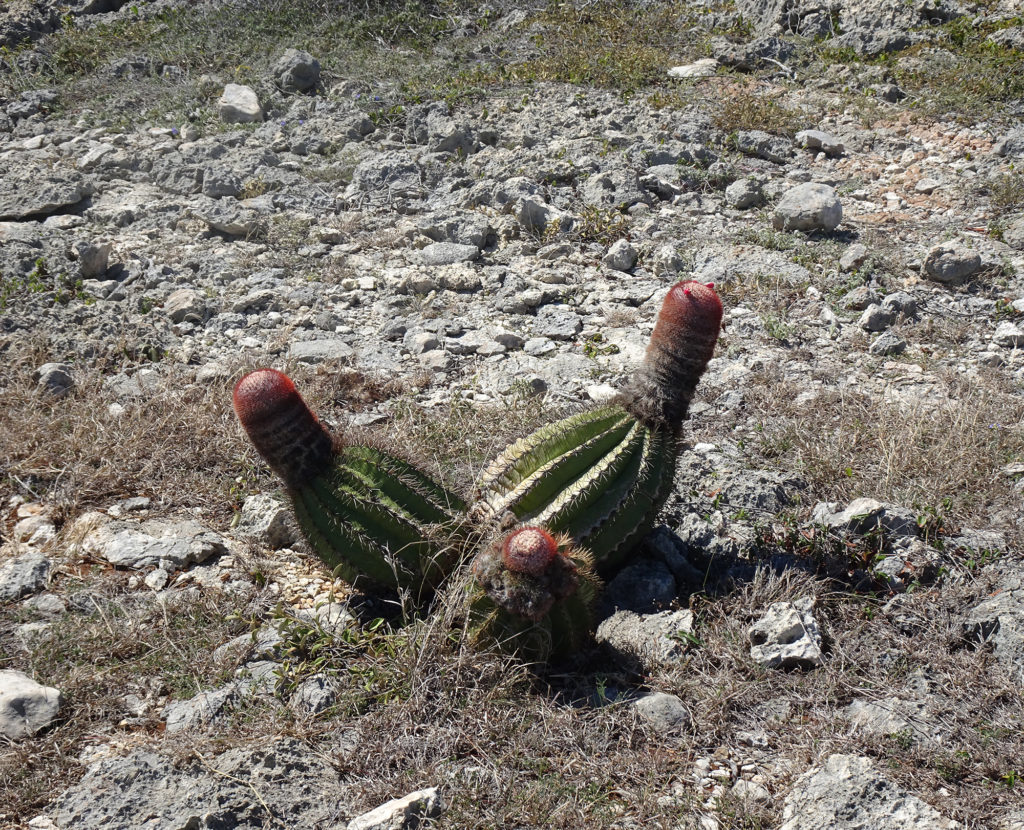
Who would expect to see so many kinds of cacti on a tropical island? We were intrigued to view the turquoise waters of the Caribbean Sea from a desert trail in Guánica State Forest, on the southwest end of Puerto Rico.
A United Nations International Biosphere Reserve, the Guánica State Forest, also known as Guánica dry Fores , is one of the most extensive tropical dry coastal forests in the world, totaling around 9,000 acres. It’s a paradise for birdwatchers, and we saw many. Read all about it.
Enjoy Bob’s video of our 3.7-mile hike along the rocky coast and through the desert.
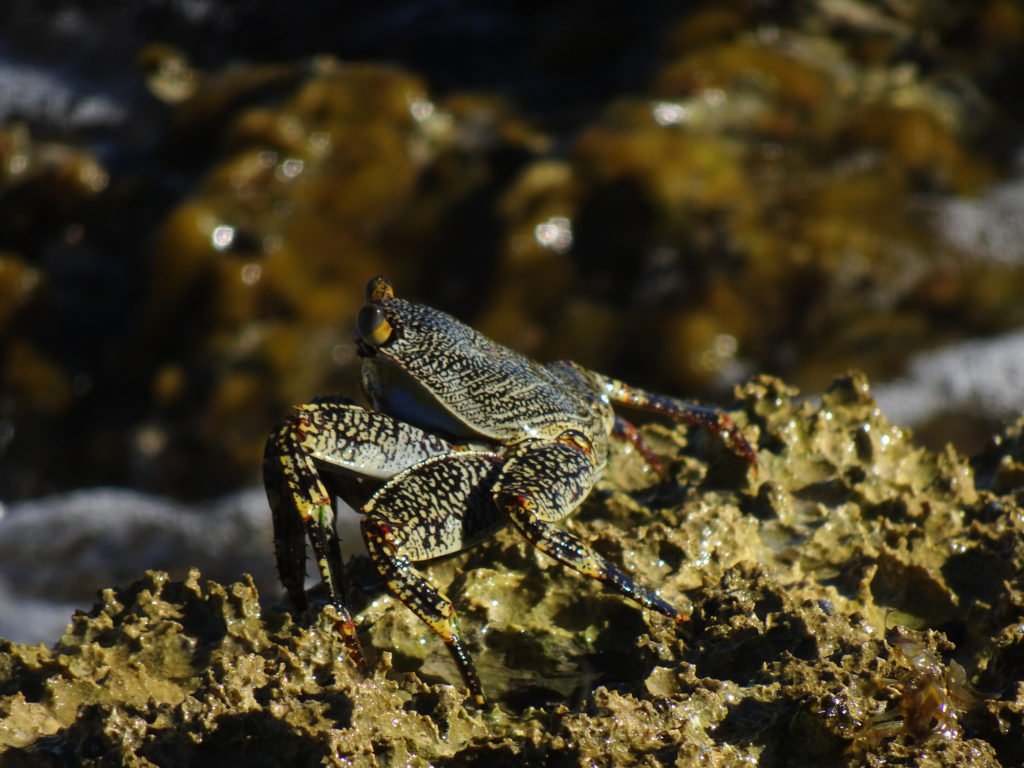
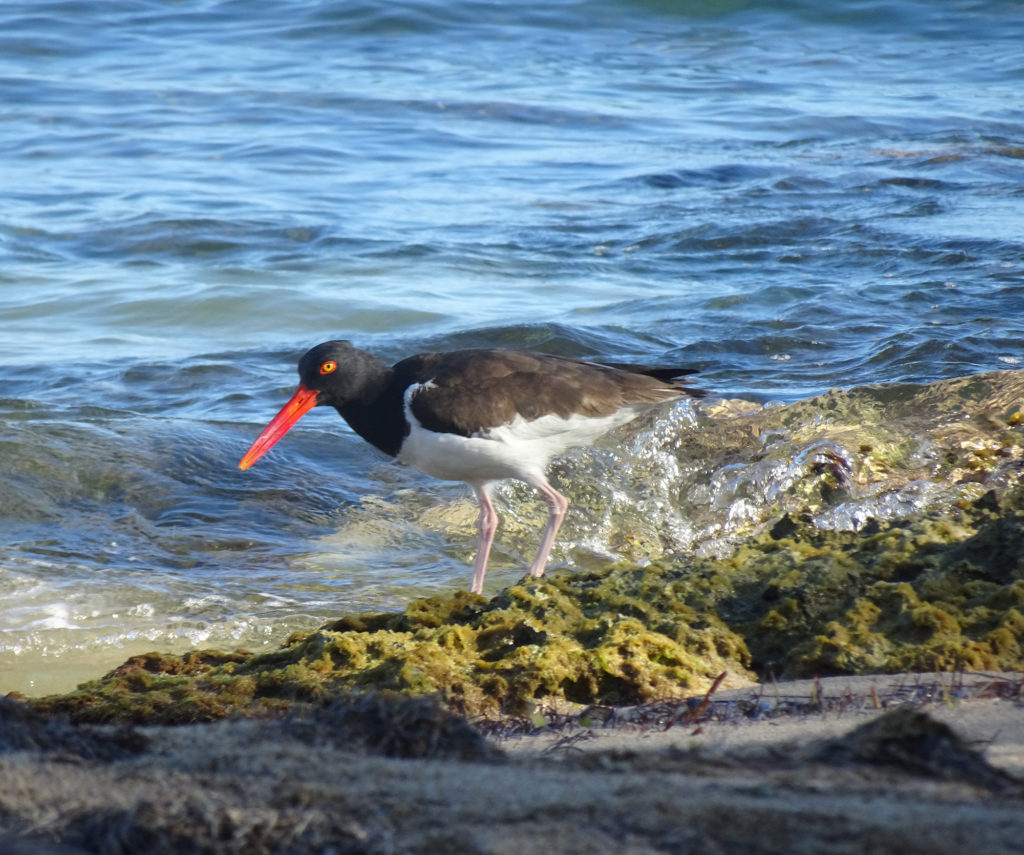
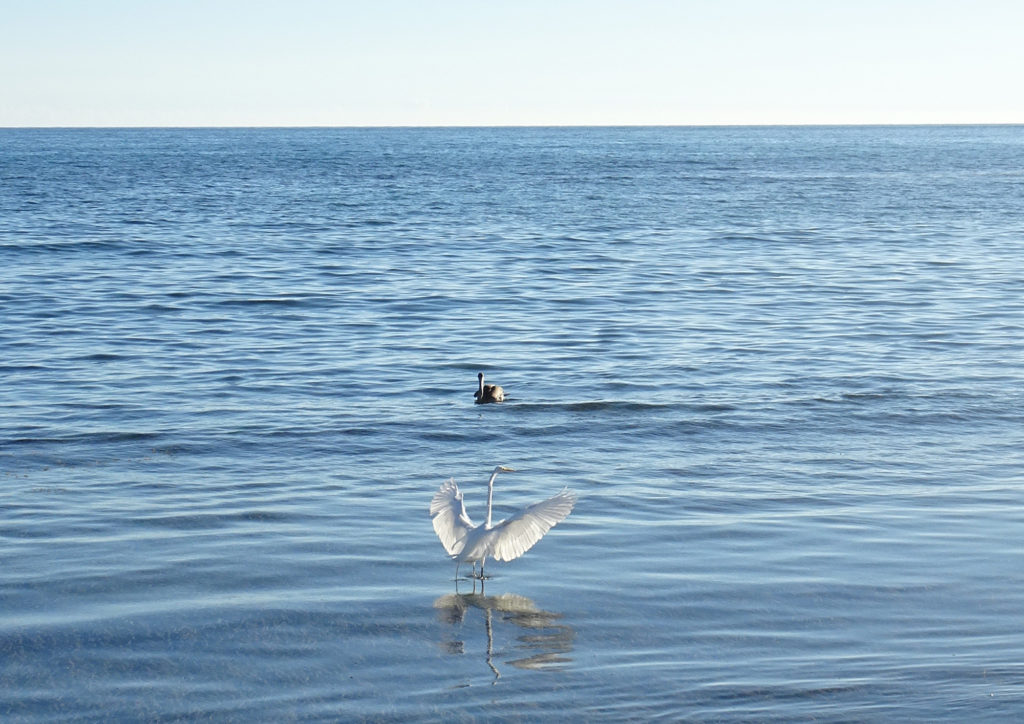
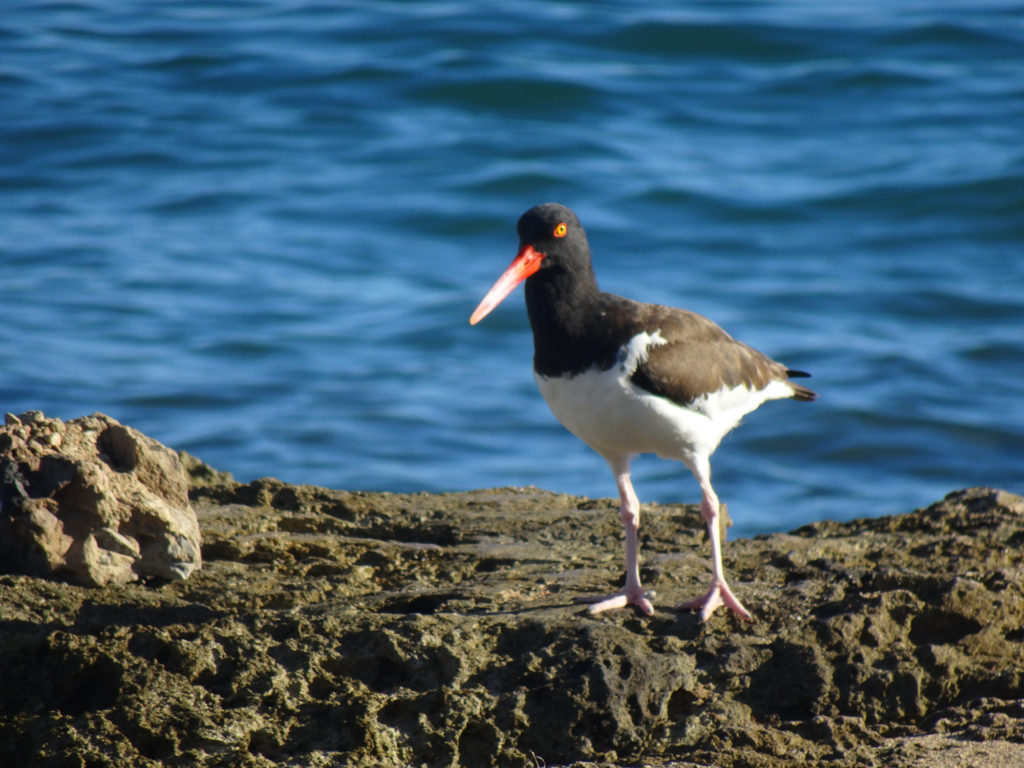
Our day spent hiking and beaching also presented us with captivating flora and fauna! Lisa took a few pictures of her favorites, especially the red-billed oystercatchers. She guessed the name after watching them in action!
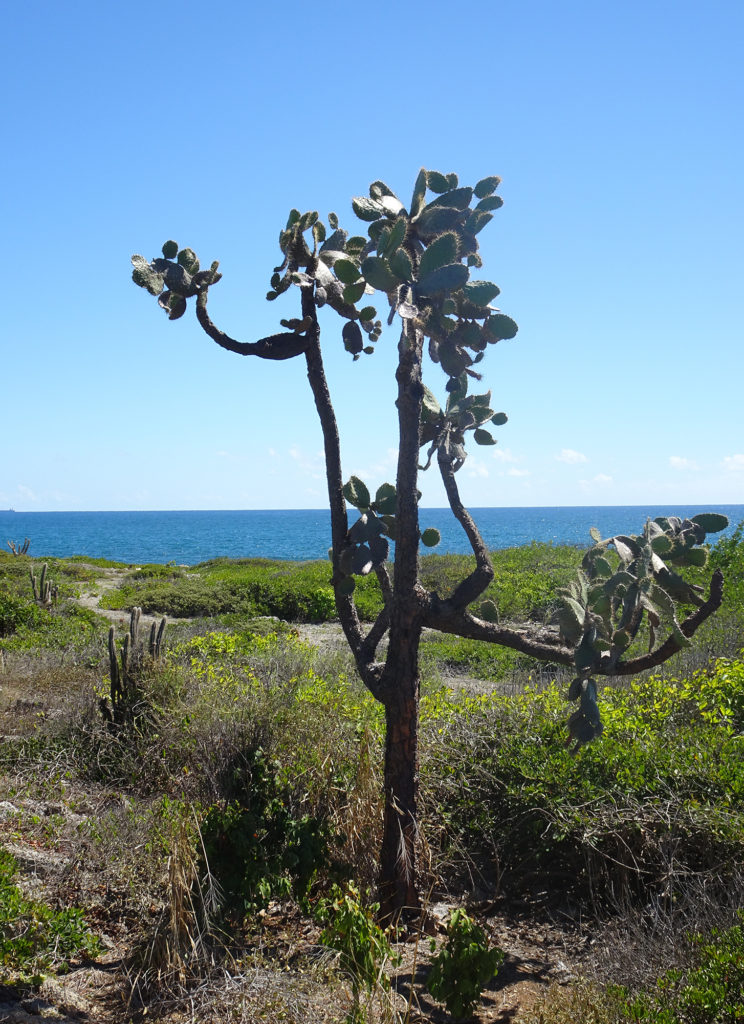
Weird cactus treeCactus by the seaMr. CrabOyster cathingPelican and egret fishingCactiHe can catch oysters with that strong long beak.
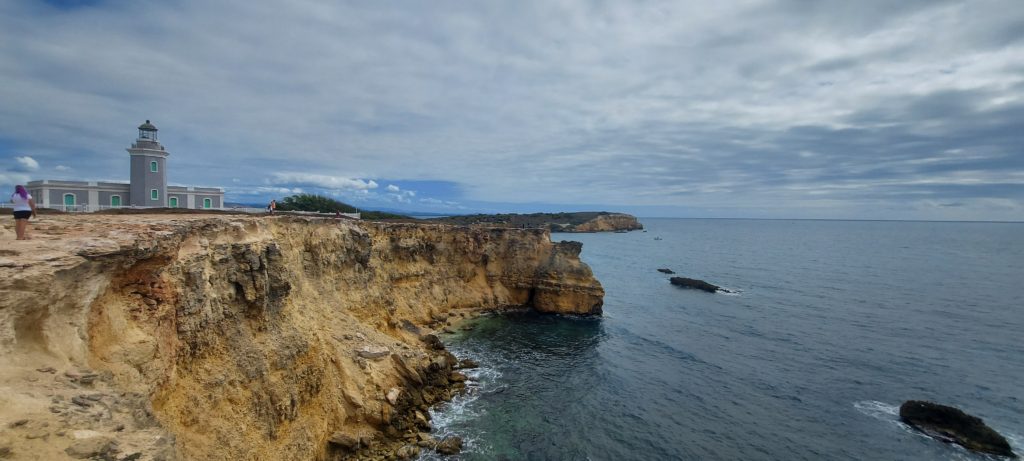
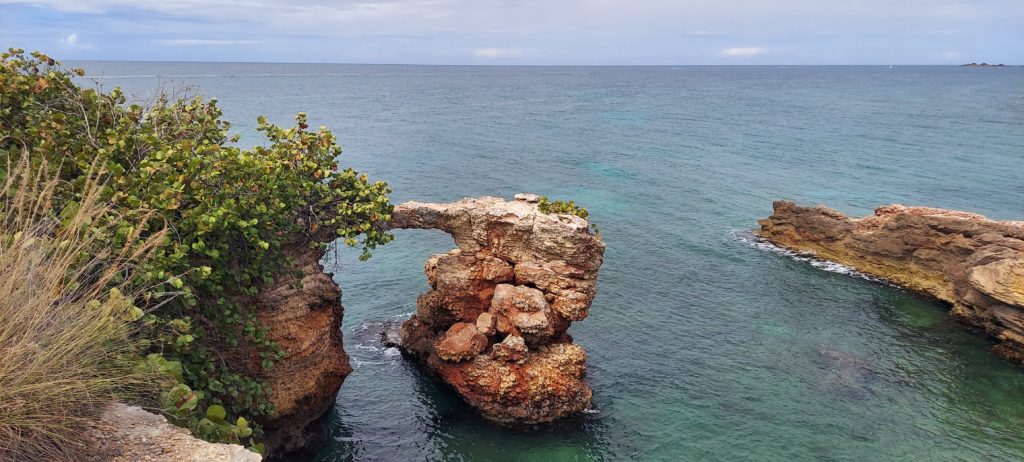
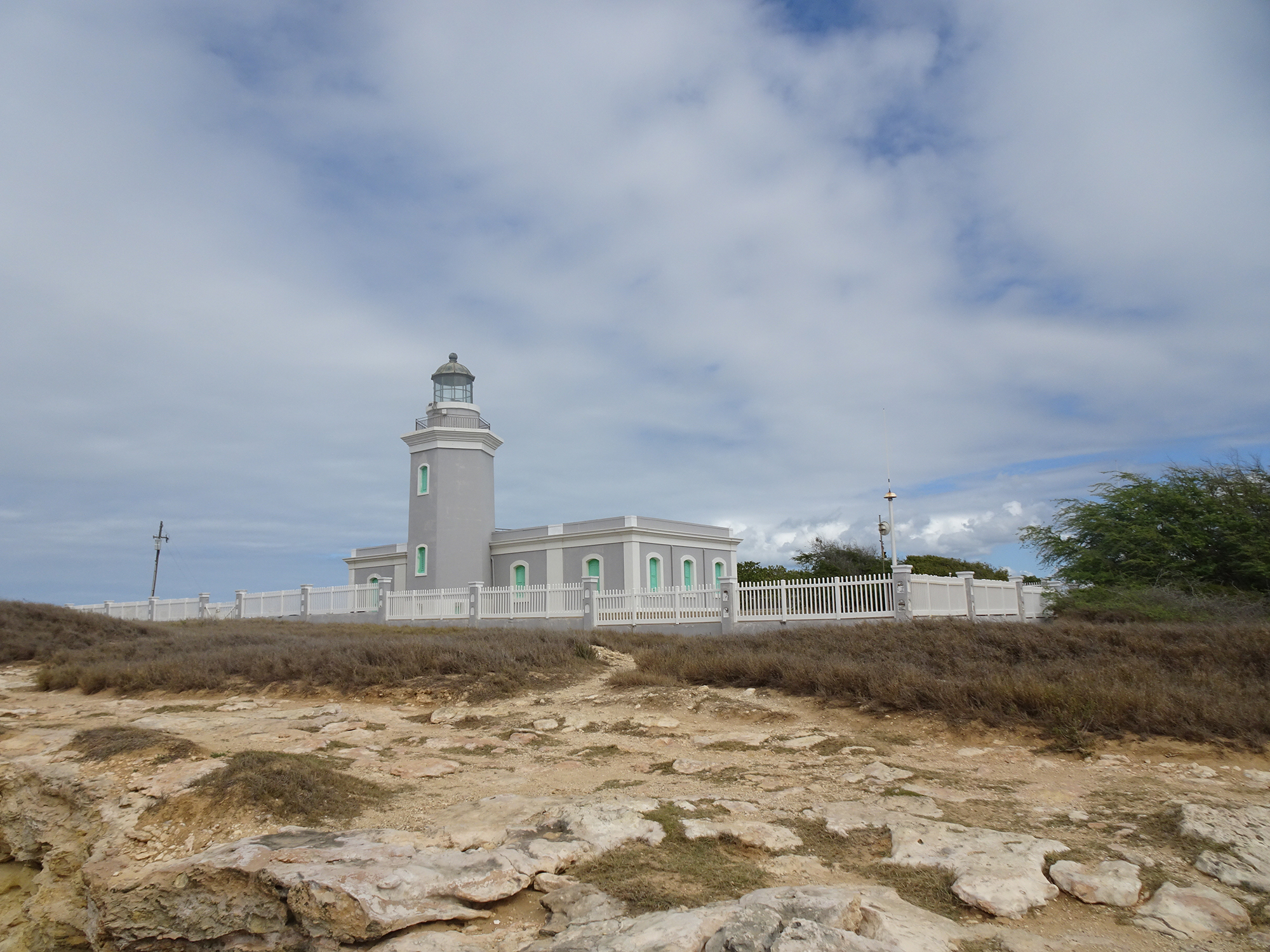
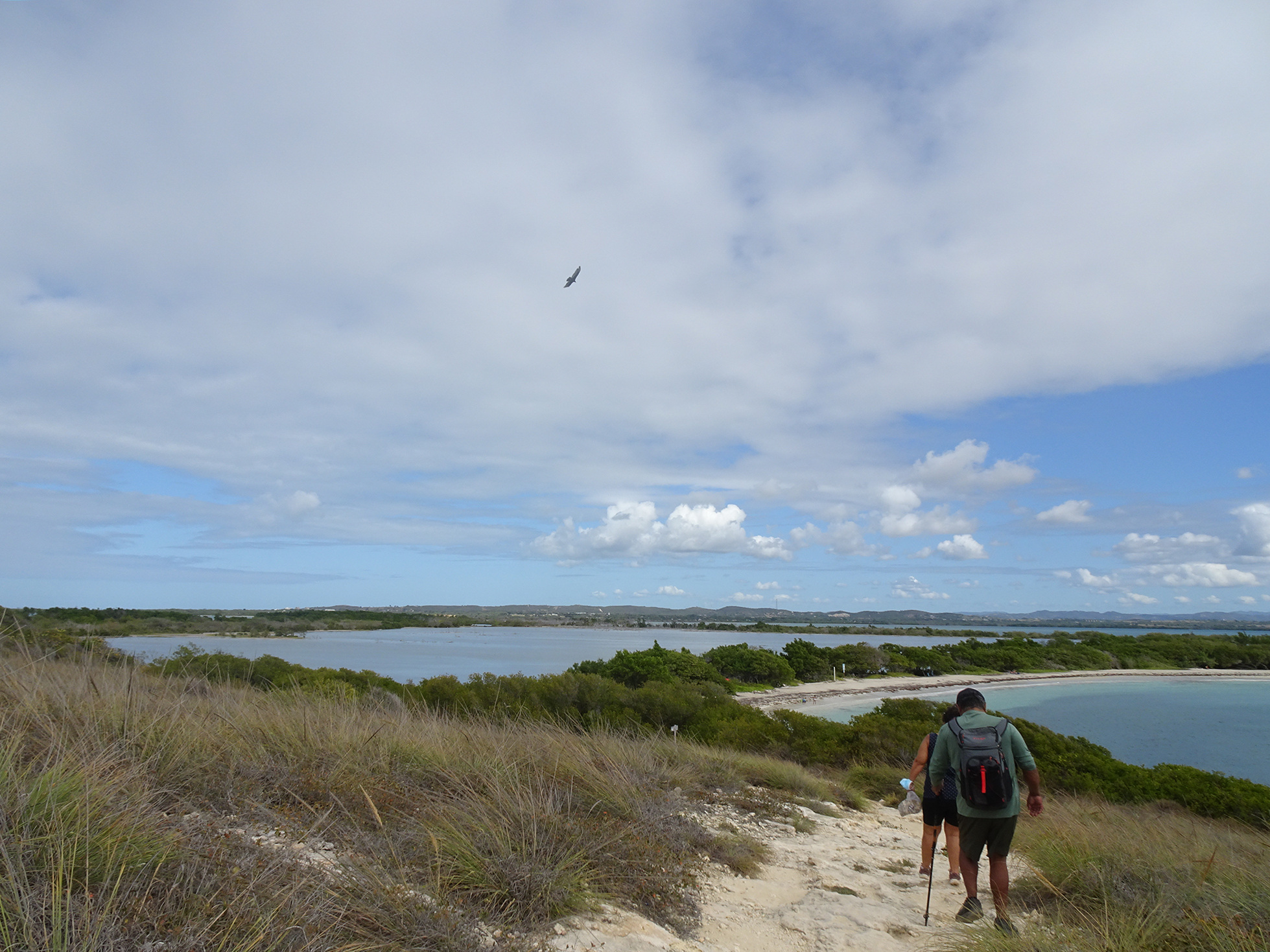
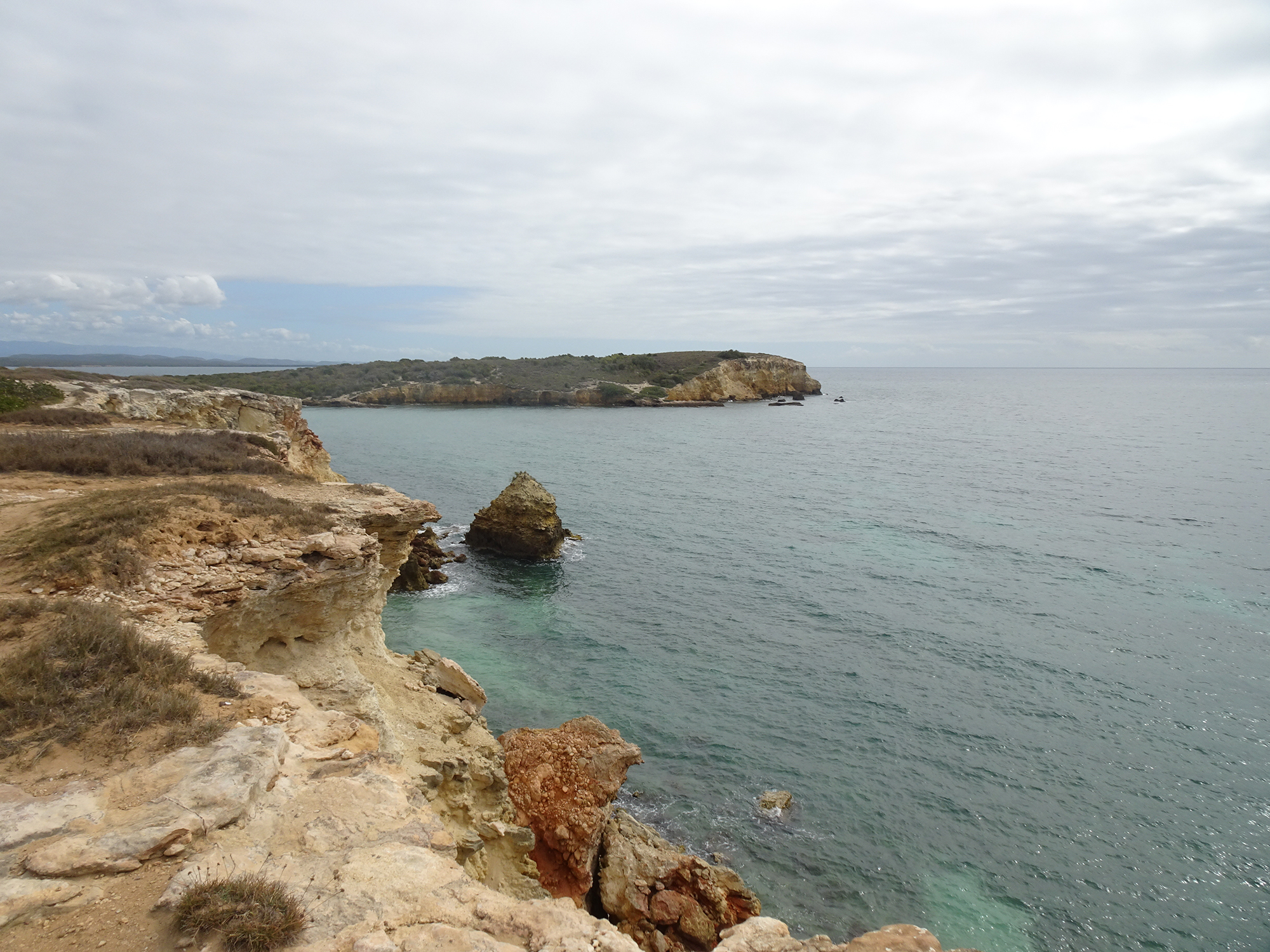
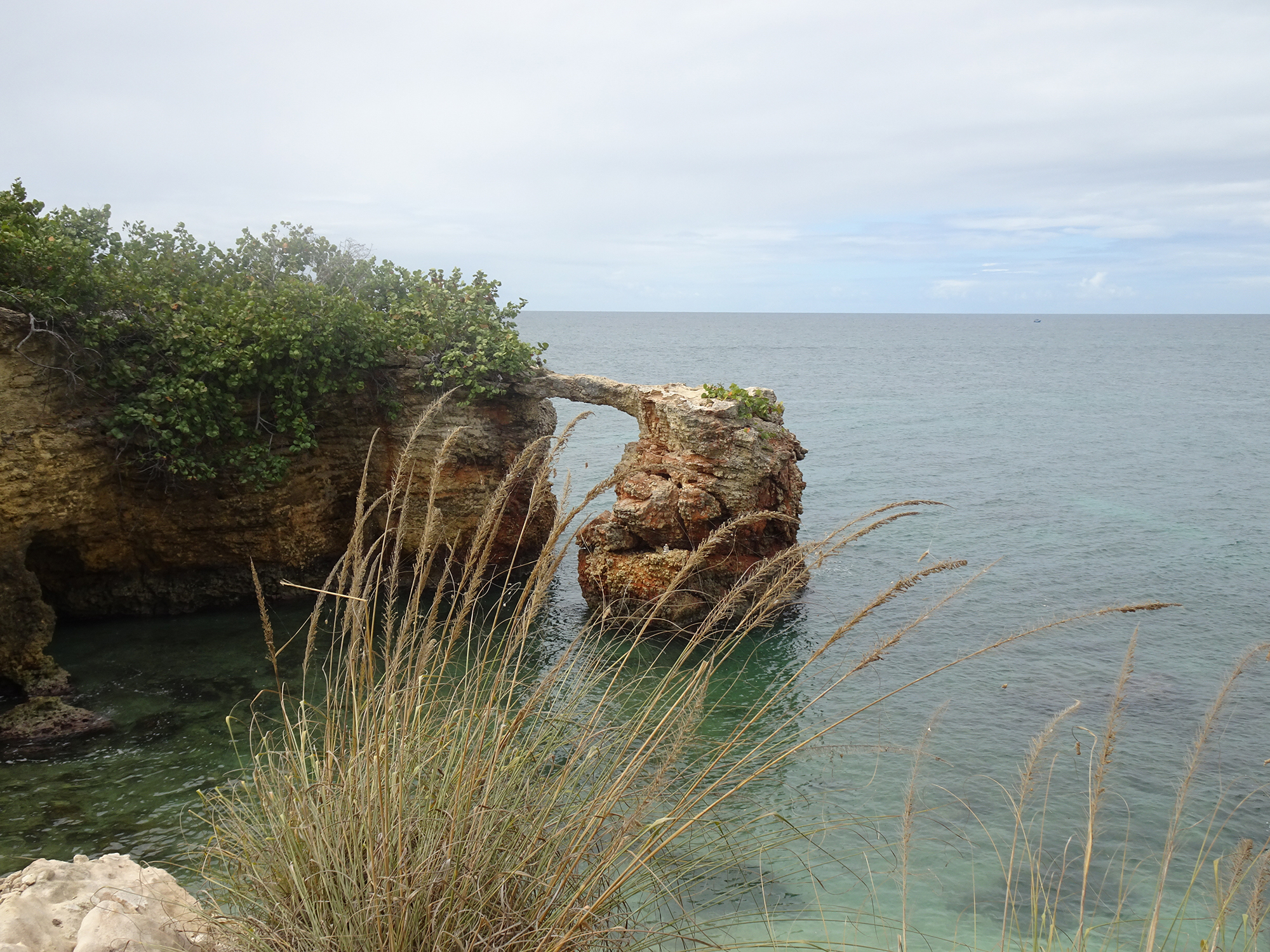
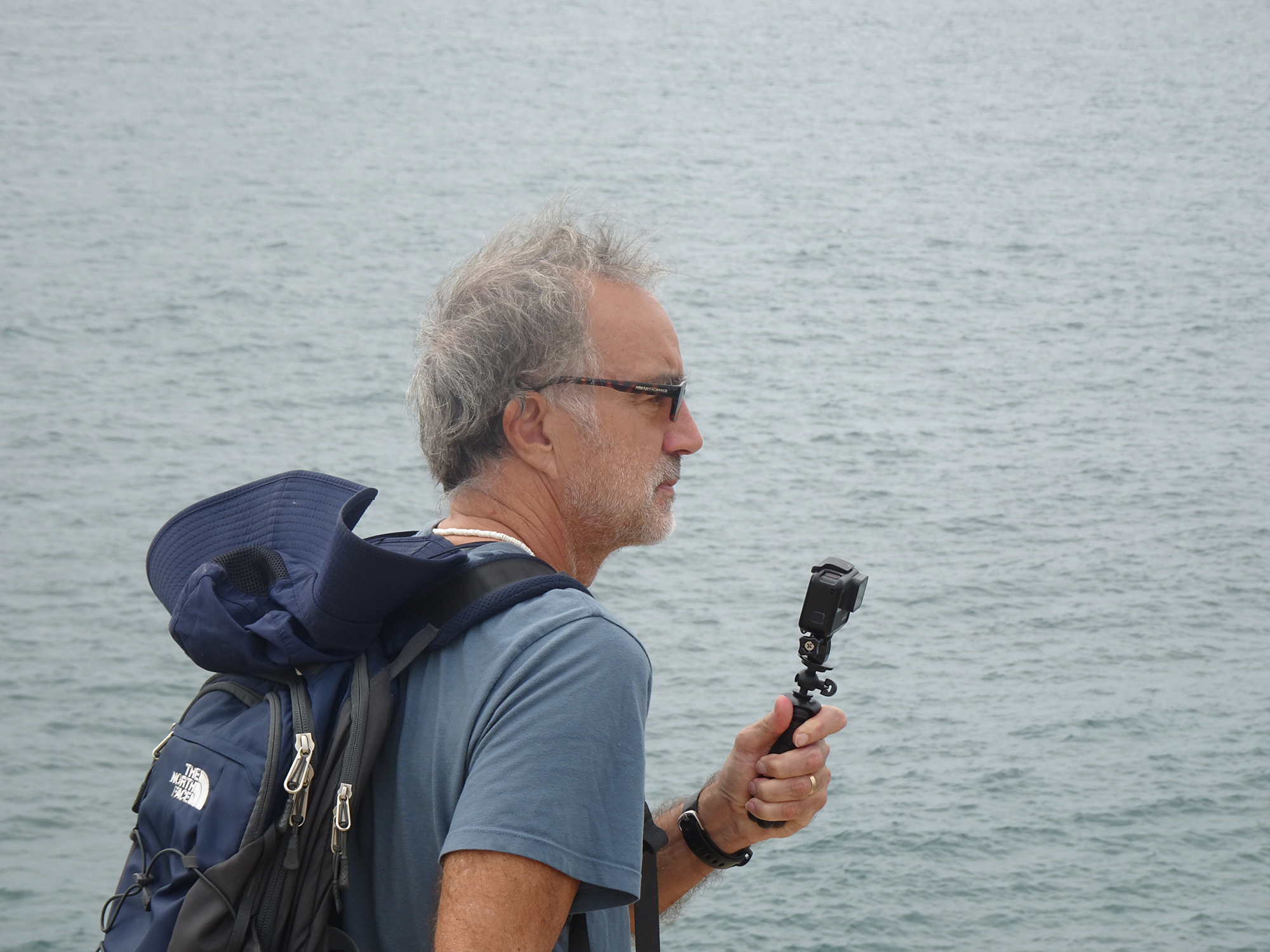
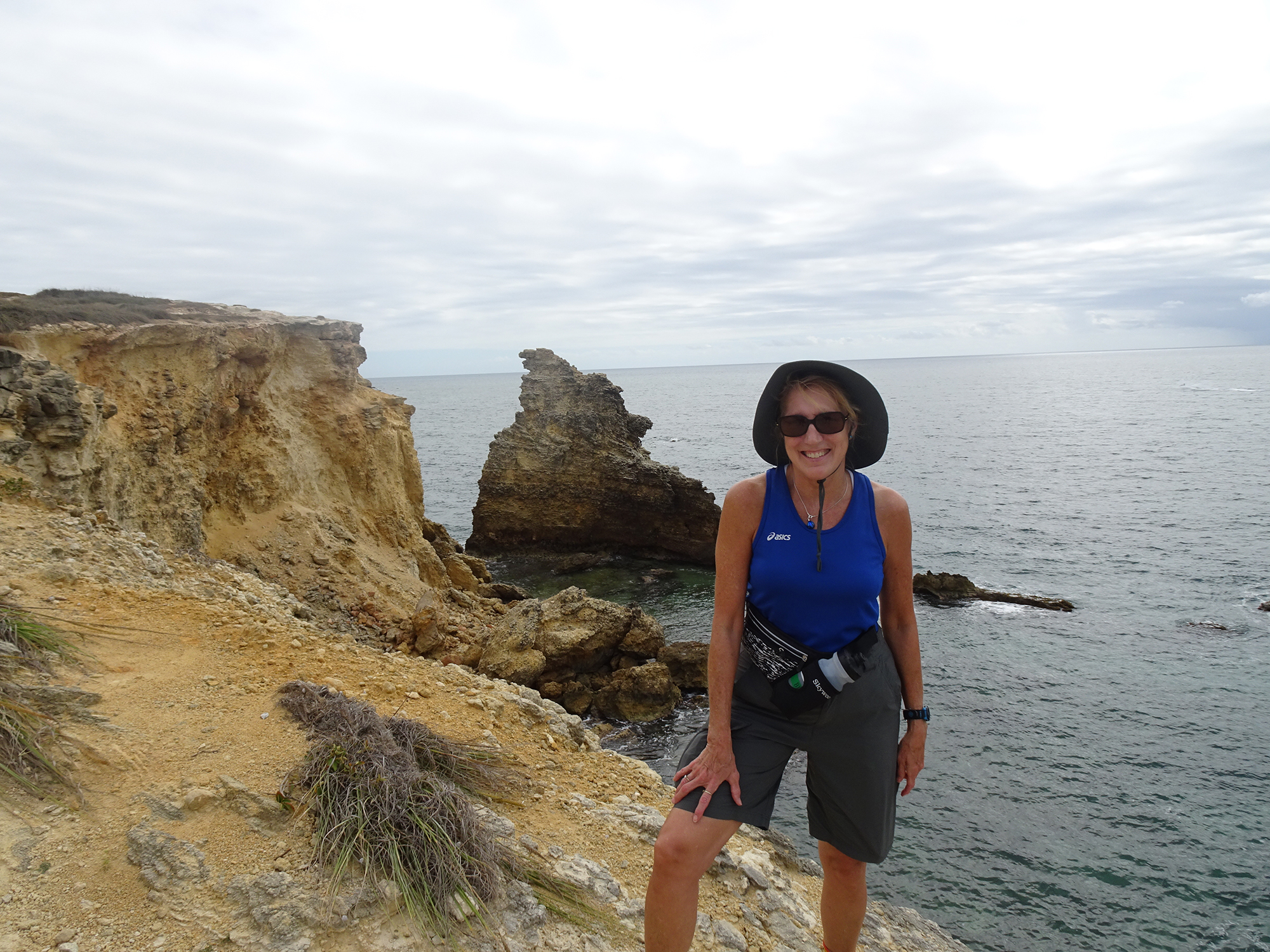
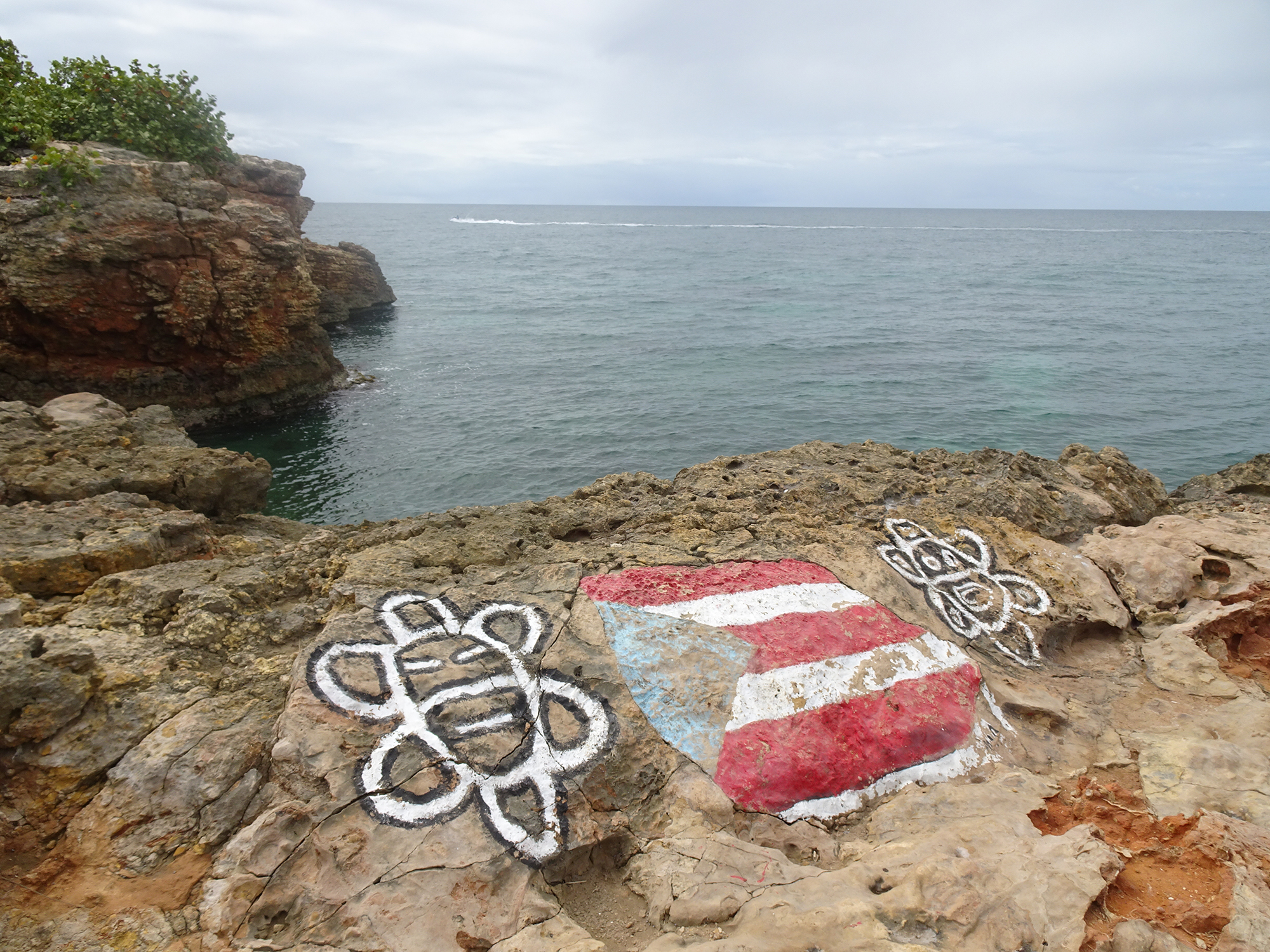
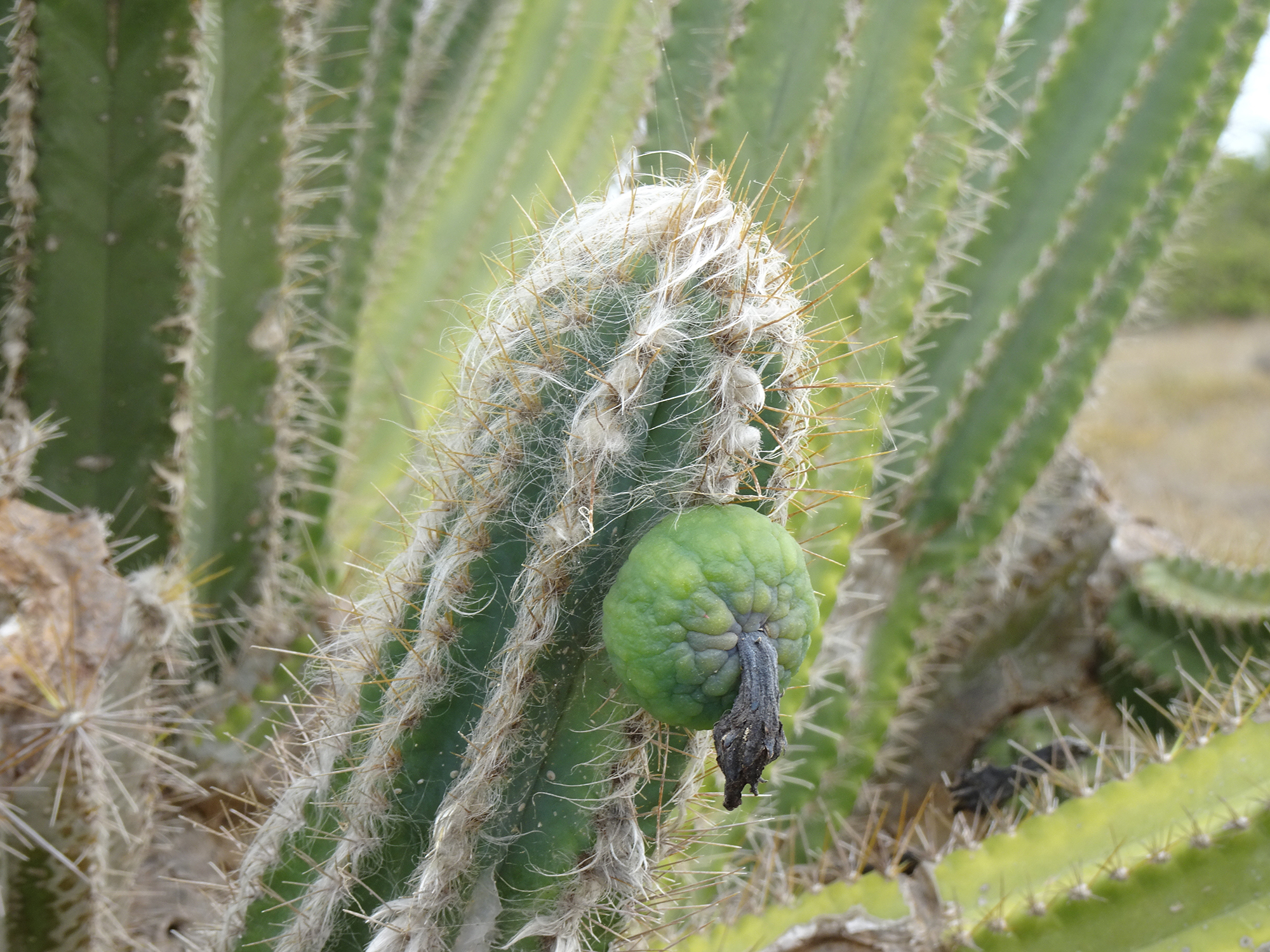
A hike in the nature reserve around the Cabo Rojo Lighthouse (Los Morrillos) served us up spectacular vistas, with stomach-dropping white and red cliffs, fascinating rock formations, crystal-clear Caribbean Sea, and even cacti!
We found the loop trail, part of the Cabo Rojo National Wildlife Refuge, on the All Trails app. It took us around the rocky coastline of this peninsula, then past the salt flats, before dumping us out on Playa Sucia, or La Playela, a gorgeous beach.
It’s located on the southeastern point of Cabo Rojo, on the Morrillos Peninsula, in the southwest corner of Puerto Rico. Learn all about this destination at the Discover Puerto Rico website.
Make sure you come between 9 AM and 5 PM, because the park rangers lock the gate!
Our tour guide and mixology master Joisa made learning to mix mojitos and piña coladas at the Bacardí rum factory a party! Did you know that piña coladas originated in Puerto Rico? Pour yourself a glass of rum and join us for the class!