Greece, Part 3: Thoughts About Greece

Some thoughts about Greece:

  • It is clean! After dirty Naples, it was a refreshing change to see people out sweeping the sidewalks.
  • It is orderly! After chaotic Naples, it was a relief to see street lights and traffic lights and people who waited or the light to turn before crossing the street.
  • It is affordable! With a hotel in a prime location costing only $90 a night for a triple and meals costing as little as $6 for an entrée, we would recommend it to anyone seeking to visit a European capital on a budget. Entrance to the Acropolis was only 5 euros ($6), the National Archeological Museum was 10 euros, the Temple of Zeus was free on Sundays, the Olympic Stadium was only 5 euros – and everything was free for age 18 and under (with ID), or for EU students up to age 25. We could have taken a really nice bus from the airport for only 6 euros each, but we chose to take a taxi, which was also quite reasonable. The HoHo bus was by far the cheapest we’ve taken.
  • The food in Athens offered a different twist on the Mediterranean food we’ve had in the States, and quite wonderful. The desserts were amazing and the ice cream was excellent. The restaurants were stylish and innovative, and really made an effort to provide a comfortable atmosphere and entice people to come in and eat. Every one had a different selection, though many had the standards: moussaka, baklava, kebabs, yogurt, etc. Surprisingly, I never saw falafel on a menu.
  • There are cats everywhere. A black cat with no name resided at the café in front of the Arethusa, claiming a booth for herself out front and sleeping there all day, curled into a furry ball and occasionally opening one green eye, which delighted Lexie (who was missing her cat Ellie). A calico cat guarded the entrance to the National Garden. We ran into scores of cats on the Greek islands.
  • The weather is lovely. It was sunny and in the high 60s-mid 70s while we were there. When we ran, around 7:30 in the morning, the temperature was in the high 50s. I’m sure it gets hot in summer; the long pull-out awnings the restaurants on the islands have is proof of that. But they were tucked in for our visit and we enjoyed the warm sun.

I think early November was a great time to visit because it was officially “winter,” which meant fewer crowds for popular sites, but the weather was quite pleasant.
Two words: Visit Greece!

Italy, Part 4: Solofra, and Radical Discoveries

After we left Naples, we traveled into the mountains to dig deeper into the family history.

Solofra


My grandfather Domenic Troisi was actually born in a small mountain town called Solofra, about half an hour east of the city of Salerno. His father, Beniamino Troisi, met his mother, Maria Michele Buongiorno, in Solofra when she was working for his brother, the local priest. Here’s an excerpt from my grandfather’s Memory Book for his 50th anniversary:
BENIAMINO TROISI FU BIAGIO met Maria Michele Buongiorno at the home of Father Carmine Troisi who was later elevated to the Canonico and Primicerio Curato to the Parochial and Collegiate Church St. Michele Arcangelo of Solofra Province of Avellino, Italy, December 21, 1941. Miss Buongiorno at the time she met Beniamino, brother of the priest, was keeping house for Father Troisi. Both the Troisis and the Buongiornos were respected families of Solofra.

Entrance to Terranova Agriturismo
So our little group of family seekers – which consisted of my cousins Janice and Loraine Carapellucci, Loraine’s husband Dave Handley, sister Julie Holm, daughter Lexie and me – converged on Solofra on Oct. 31, settling into a charming farm BnB, Terranova Agriturismo, just outside of the village. Our plan was to experience Domenic’s Solofra by attending Mass at St. Michael the Archangel’s on All Saint’s Day.

Discovering family


But as we were eating an Italian breakfast of bread, pastry, cheese and cappuccino that morning, who should arrive in the BnB’s dining room but a man I’d never seen before who looked slightly familiar, named Alfonso Buongiorno. It turned out that Janice had made contact with Alfonso through a friend back in New York, and he was our third cousin! His great grandfather had been Maria Michele’s brother, so we shared great-great-grandparents.
Alfonso shared my cousin Janice’s passion for genealogy, and a generous Italian sense of hospitality. Over breakfast, he shared many things he had learned about our family over a decade of digging, while I took notes like crazy. 
Here are the highlights:

Revelations

Buongiornos from both sides of the ocean

The first revelation was that the Buongiornos actually lived in Tuscany before coming to Solofra. But before that, they came from the Netherlands and Spain. In Spain, they were likely Sephardic Jews who had been forced to convert to Catholicism. Many families who did this changed their surnames to names like Buongiorno (which means Good Day) or Bonanno (which means good year) so that they could continue practicing Judaism undercover yet still be able to recognize each other.

Alfonso had done a little research on Troisis as well, and said the name was Norman in origin – which Janice, who had also learned this, had taken to mean Normandy, France. No, Alfonso said, it’s actually Norman as in Vikings, most likely from Norway and Sweden! He said many Troisis were blond and blue-eyed because of this heritage.
So we came to Italy to learn we were actually Spanish Jews, Dutch, and Vikings! This helped explain some of the oddities of the DNA test I took last year.

Leather and gold


For the last 500 years, Buongiornos have been tanners, producing fine-quality leather for overseas clients. A member of the family would live in Naples and act as a liaison to sell the product.  They also used to be in the gold business until a king stopped buying their product. Today many of their leather clients are being lost to Chinese mass production and cost undercutting, so the family business is grappling with how to respond to a bit of a crisis. But the family also owns rental properties in Calabria, the southern coast of Italy across from Sicily.

Meeting family


The best part of Solofra was discovering family there! We were invited to Alfonso’s home and met his wife Maria and children Raffaela, 18, and Francisco, 15. We talked genealogy and he showed us a framed family tree he had commissioned. He presented Janice with a binder containing scanned copies of paperwork he had acquired through his own genealogy research, which almost made her drool with anticipation.

The church


The church has a plaque on the outside dedicated to Monsignor Carmine Buongiorno, also called Il Canonico, my great great uncle. Inside there is a chapel set up by the family through an endowment. His gravestone is in the floor of a back room, behind the  sacristy.

All Saints Day


We joined the All Saints Day procession of Solofra residents walking in the rain under dark umbrellas down to the town cemetery, preceded by the town band playing mournful tunes. Once there, where you could buy colorful flowers from a roadside peddler, we entered the heavy gates and split up, looking for old Troisi and Buongiorno graves. As we wandered among the raised monuments, we watched people clean their family members’ graves and decorate them with flowers and pictures. A memorial mass was held in the chapel in the middle, and the choir voices drifted through the alleys between the small houses that held multiple family members’ graves. It was fascinating.

Here is Alfonso’s family tree:

Next up — Italy, Part 5: Lexie learns about her heritage
Greece, Part 2: The Islands, and Observations

On the third day in Greece, we marked the last day of our vacation by giving Lexie a day off to sleep late and do her own thing, while Bob and I embarked on a 12-hour cruise to visit three islands: Hydra, Poros and Aegina. It was a romantic and magical way to close the circle on our five weeks exploring Europe.

The cruise ship headed south through the Aegean Sea for three hours to the farthest island in the morning, and the views were spectacular. We sat on the deck drinking coffee and taking hundreds of pictures, each more beautiful than the next. The cruise ship also featured live Greek music and folkloric dancing, which was surprisingly good.

Hydra 

Hydra was a picturesque walking island (they had donkeys you can rent to get around), and we just bopped around the alleys and up the hillside, where we found trails down to the sea for swimming and a cluster of old cannons. We loved it!

Poros 

We were at Poros for such a short time we barely got a taste; we need to go back. We had time for a glass of ouzo, which made Bob a little woozy, in one of countless sidewalk cafes facing the sea. Then, still ravenous, we split a delicious waffle sundae with Nutella.

Aegina

Aegina, which has a surprisingly large port, is the Pistachio Island, so we bought pistachio liqueur and pistachio-chocolate bark, explored the shops (unfortunately closed because of the late hour), sat on a couch in a tavern facing the sea while we enjoyed some ouzo, and spent sunset on a pier watching the scarlet sun sink behind the distant mountains through the bobbing masts of wooden sailboats.

Our Cruise Ship

Couldn’t finish without some images of our cruise ship and the entertainment and food on board!

Italy, Part 3: Rome

Rome was literally eye-popping. We stepped out of a subway for the first time and were immediately accosted by the enormous, imposing Coliseum. All three of us stopped and gasped simultaneously. The scale of it was, as Lexie put it, “incredible. I don’t even know how to describe it.”

That pretty much describes Rome: Larger than life.

The Colosseum

Since we only had a couple days in Italy’s capital, we decided we had no time to waste waiting in line unnecessarily. So we took a skip-the-line tour of the Colosseum, the largest amphitheater ever built, circa AD 70. (We picked the first person who approached us, but you might want to do more research than that.) Though it was partially destroyed by a major earthquake, it is surprisingly intact, and truly spectacular. We were able to climb fairly high and peered down at the space where gladiators fight and public executions were the spectacle of the day.
The Colosseum

It is flanked by the Roman Forum, which for centuries was the center of day-to-day life in Rome, and Palatine Hill, one of the most ancient parts of the city.

The Forum and Palatine Hill

Our Morning Walking Tour


The second morning, Lexie slept late while Bob and I took the subway to the Trevi Fountain, the largest Baroque fountain in the city and one of the most famous fountains in the world  Again, we got so much more than we expected. It was huge, built into the side of a big stone building, and glorious. Description, legend. It turned out we were there at the least crowded time of the day, so we were able to each throw a coin in the fountain over our left shoulders. (According to legend, one coin means you will return to Rome, two means you will find new romance and three means you will get married. We already have two and three covered.) Suddenly the 1950s song Three Coins in the Fountain makes more sense.

Trevi Fountain

We then had an overpriced breakfast of croissants and cappuccinos across the way from the fountain, basking in the location and the glorious leisure It is in a charming old section of Rome with narrow streets and no cars. We walked along, taking pictures of a large diversity of creative, small shop windows, and came along a Pinocchio shop – ah, yes, that childhood tale about Gepetto, the lonely shoemaker and his wooden doll who turned into a real boy, is Italian in origin!

Gepetto’s workshop

Our wanderings also took us through the Fifth Avenue of Rome – Gucci, Armani, Ermenegildo Zegna, etc. — to the famous Spanish Steps, which we had never heard of, but they are glorious and worth a visit.  It’s127 steps up, and nearby is the apartment where Keats died at the age  of 29 – just a little literary trivia.
Spanish Steps

We found the Pantheon, an ancient temple to the Roman gods converted to a Catholic Church that was simply amazing. It is circular, 142 feet wide and 142 feet tall, with a hole in the roof that lets light in as well as rain, and a drain in the floor. It is one of the best preserved of all Roman buildings because it has been in continuous use and is still used as a church and to host concerts today.  It was also not crowded, and had pews we could sit in to rest our tired feet.

Pantheon

The Vatican

We went back to our apartment (Homeaway did us right; our two-bedroom was gorgeous, comfortable and close to the subway, and since we booked an off-season rental only two weeks before, we were able to get the price lowered) to get Lexie, who had been sleeping late (she is 18, after all), and headed out for the obligatory tour of the Vatican. We chose a 3 PM tour to avoid the morning crowds, which Bob and I had witnessed firsthand the previous morning when we ran past the Vatican and had to dodge the lines. Again, we paid extra to skip the line, and were led through the Vatican Museums by a stylish Liberian woman whose English accent was too thick for Bob to decipher. (Thanks to time spent with a Liberian friend when I lived in New York, I understood her just fine.)
The Vatican Museum (actually, museums) is one of the largest museums in the world, featuring an immense collection amassed by popes throughout the centuries. The tour was a little too quick, but interesting nonetheless, especially the Map Room. I would like to go back in my own and take the time to linger. I also discovered the secret to seeing the Vatican without the crowds is to wait till the afternoon, a time when no Skip the Line premium would have been necessary. Here are some highlights:

The Sistine Chapel was a feast to behold, although Michelangelo’s famous creation image was surprisingly small in the center of the ceiling, and the elbow-to-elbow crowd made it challenging to view. (Sorry, no photos are allowed in the Sistine Chapel.)

St. Peter’s Square

St. Peter’s Basilica was glorious, but I was disappointed to be denied seeing the Pieta sculpture, which was behind a curtain and required a premium to view. I made sure to buy a couple of packable souvenirs and posted postcards to my brother John, who is a Catholic priest, and my stepmother, Katy. Because it was a Saturday evening, I could have gotten a free ticket to see the Pope say Mass the next morning from the nuns in the gift shop. Unfortunately, we planned to travel at the same time, so I didn’t. If you ever travel to Rome, you should know admission is free on the last Sunday of every month, so plan accordingly!

St. Peter’s Basilica

Cats of Rome


Bob stayed an extra day and visited Torre Argentina, the spot where Julius Caesar was killed, a ruin that is now a Cat Sanctuary.

Thoughts on Rome

A few thoughts on Rome:

  • It is OLD.
  • It is Catholic! I realized this, but still, it’s a surprise to see so many nuns and priests and monks in the streets of a city.
  • There are no footpaths or grassy places to run, though there is a path along the Tiber River, which was just a bit too far from our apartment.
  • Because of the density of the center or the city, public transit is limited to the edges and you have to walk a lot, on cobblestones. We skipped the Hop On Hop Off Bus because the reviews made clear the buses couldn’t actually get near the most popular sites, and stops were few and far between.
  • The menu is extremely limited: pizza and pasta. And more pizza. And more pasta. And gelato, gelato, gelato. It’s wonderful! But after a while, no matter how good it is, you get tired of the same menu.
  • There are a lot of beggars, who seemed like a throwback to another time. We saw women in scarves lying on the sidewalk with heads bowed in prayer and cup extended, and young men with gnarled legs and feet propelling themselves on skateboards, distorted hands inside of heavy boots and cups extended.
  • It is larger than life. From the Vatican to the Coliseum to the Fountain of Trevi, everything is so big, it takes your breath away.

Two and a half days was not enough time. We will be back!

Next up — Italy, Part 4: Solofra, and Radical Discoveries

Italy, Part 2: Why Italy

Why Italy?

Italy was actually the impetus for this whole European adventure. 

My cousin Janice Carapellucci has been passionately pursuing our family roots on the Troisi side for a decade, especially the artist Donato Buongiorno, who was my Italian grandfather Domenic Troisi’s uncle and his family’s sponsor when they came to the United States from Naples in 1907. (She collects his work, as he was a fairly prominent artist at the turn of the last century, and hopes to stage a show of his work in New York City in spring 2019. Her website is donatusbuongiorno.com.)
In addition, my sister Julie Holm and her husband Mark visited Italy about a decade ago and found the hometown where my grandfather was born, Solofra, a picturesque village of goldsmiths and leather tanners located in lush mountains about a half hour east of Salerno.
Janice has been planning a family expedition to Naples and Solofra for years. When my daughter Lexie decided to take a gap year before starting college, I decided the timing of the trip this fall provided a wonderful opportunity for her to learn about her Italian family history.
Then it turned into our travel version of If You Give a Mouse a Cookie: If we were going to be in Italy for the family reunion, we may as well go to Rome for a couple days first. And since Spain is close by, we might as well visit our exchange student, Laia, and her family, in Barcelona. And while we were in Europe, we should visit our oldest, Aryk, at Keele University in England. And if we were going to be in England, we need to spend time in London and get tickets to Hamilton in the West End.  And if we were going to be so close to Germany, we needed to visit my brother Pat and his family outside Hamburg. And since Icelandair, with the cheapest flight to Hamburg, offered a free stop-off in Reykjavik, we had to spend a few days in Iceland. And because Italy is so close to Greece, we added Athens.
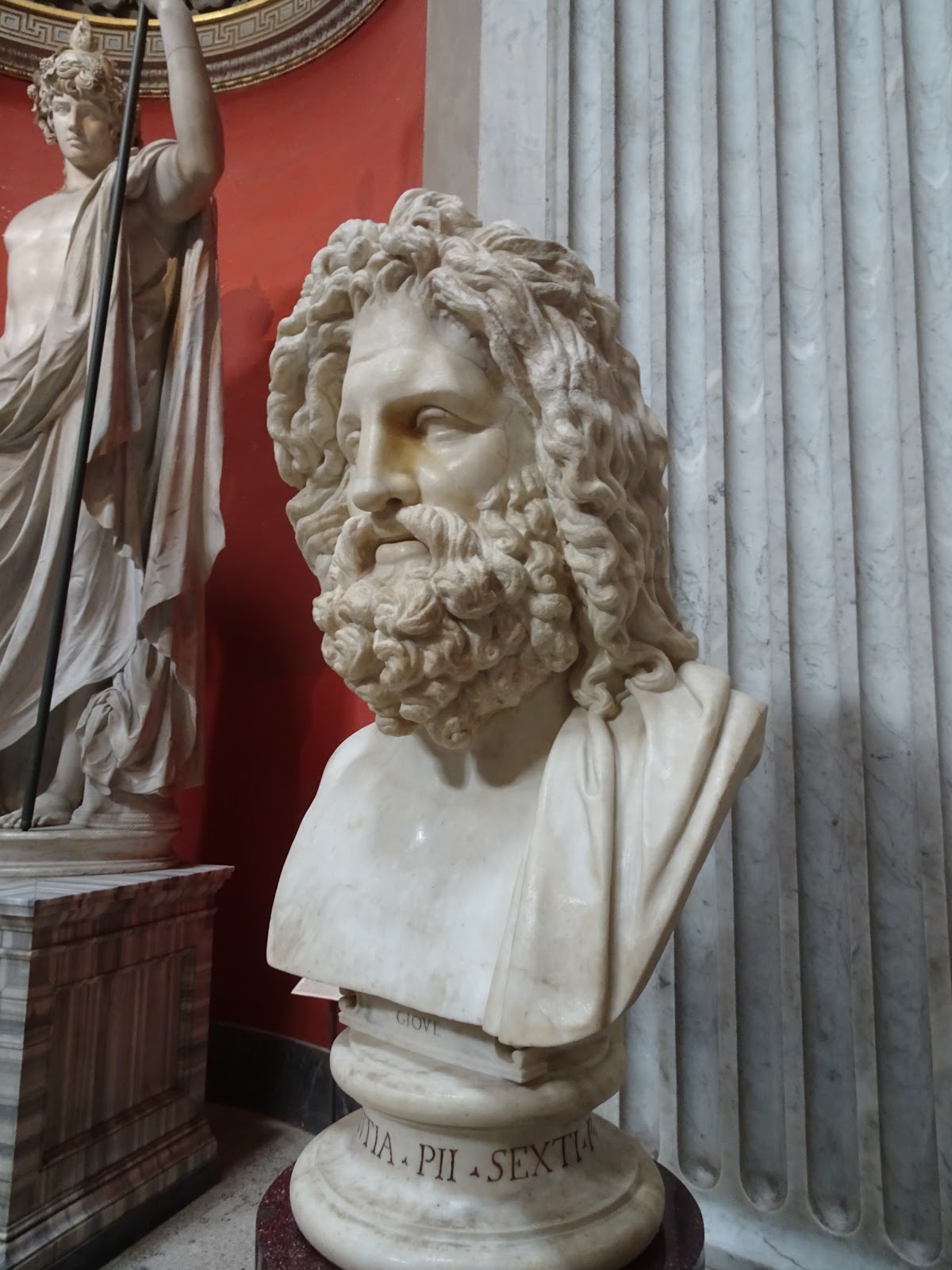
So the Italy portion of our trip can be divided into two distinct sections: sightseeing in Rome and ancestry-seeking in Naples and Solofra. You’ve already seen a report from Naples. I realize we are going out of order, but that’s the nature of travel. These blogs need to be posted when they’re written. Thanks for being flexible!
Next … Italy, Part 3: Rome

Italy, Part 1: Naples

Walking in my Grandfather’s Footsteps

I have one thing to say to my grandfather, Domenico Troisi: Thank you so much for leaving Naples!

A few hours spent around Via Cesare Rossaroll in Naples, Italy, where Domenic lived as a child before immigrating to the United States in 1907, has made me eternally grateful that he came to the United States. This impoverished, filthy, decaying pesthole of a neighborhood, teeming with loud people and louder cars, narrow streets and narrower alleys, ancient buildings with paint peeling off, blowing litter and dog shit everywhere, is beyond depressing.

And this godforsaken alley is where my grandfather lived with his father and two brothers, first in a dingy flat with a shared toilet outside in the hall, and later in a small room separated by a curtain from his father’s “magazino,” or tailoring shop and store combined.
The Memory Book

Domenic described this neighborhood in his 50th Anniversary Memory Book, published in 1970. But his optimistic style does not capture the over-stimulating, exhausting reality of his Neapolitan living situation. Fortunately, my cousin Janice Carapellucci and sister Julie Holm both spent considerable hours and effort researching and digging to locate the home where he lived and the chapels and other landmarks he referenced in his memoir, so that a small group of Troisi cousins could make a pilgrimage to Italy and back to the place from whence we came.

Naples

I’ll be blunt: Naples is no tourist town. It’s working-class, gritty, loud and obnoxious. It reminds me of some parts of NYC and helps me understand how the Big Apple, with so many Italian immigrants, came to develop some of its pushy, in-your-face character. Walking from the train station this morning, first I was hit by multiple flailing elbows while walking the few blocks to get there, then I was almost deafened by a whole line of cars leaning on their horns to express their outrage at some poor sap holding up the line in front of them. This could have happened just as easily on the Lower East Side of Manhattan.

Life off Via Cesar Rosaroll

But back to Domenic. First, his family lived, as his brother D. Paul described in the memoir, in a small apartment: “Our apartment was called a flat, with community toilet out in the hall; the central heating consisted of our cooking stove in which we burned charcoal when we could afford it. We scavenged kindling at the curb market where we picked up discarded boxes and crates.”
Domenic’s alley

After his mother died in 1906, this Spartan lifestyle deteriorated, according to Domenic: “My father gave up the apartment and put what furniture he could salvage (in) back of the store, dividing the room with a curtain across the entire width. He felt that by so doing he could take better care of his three boys. Many of the meals consisted of pans of spaghetti, or paste e faggioli, which were supplied by a restaurant in Porta Capuana in exchange for tailoring and clothes my father made for the family of the restaurant owner. I cooked most of the meals on a small kerosene stove in back of the store.” 

He was only 12.

Transported Back in Time

Walking in the neighborhood where Domenic spent his childhood, I felt transported back in time 110 years. It seems like nothing has changed, except that there are cars and motorbikes clogging the streets now instead of horses and carriages and pushcarts.

Domenic’s door

People still live in the same squalid conditions, with the addition of indoor plumbing. Clotheslines with sheets, socks and pants still flutter in the wind from balconies above the alleyways. Homemade Roman Catholic shrines to the Virgin Mary and assorted saints can be found in every alcove, with some large ones dominating street corners, festooned with plastic flowers and Holy Water, better maintained than any of the nearby homes. People still live their lives in public with their doors wide open. You can look in as you walk by and see an extended family sharing one small, dark living space, a small kitchen behind, people hanging outside the door, smoking.

The whole place probably smells better, thanks to modern plumbing and the absence of horse manure in the streets (although there was plenty of dog poop). Otherwise, it’s largely unchanged.

Where We Came From and What It Means

Seeing where you came from can make you even more grateful about where you are now. In the decision by Domenic’s father, Beniamino, to board the Steamship Bulgaria, we dodged a bullet. No wonder a squalid tenement on the Upper East Side, where Domenic, his father and two brothers lived with his uncle’s family after they arrived in New York in 1907, “was almost a luxury for us.”

Domenic, Donato and Dante (L-R)

No wonder Domenic was so driven to get ahead, to get educated, to learn English, to improve his living situations, to build that glorious house on Vernon Avenue in Williamsport, PA, where my mother and her nine brothers and sisters grew up.

Walking in Domenic’s footsteps was physically draining and emotionally exhausting. I’m glad I did it. And I am really, really glad he left. 
Grazie, Nonno.

London, Part 3: Running & Other Activities

Running in Kensington Gardens and Hyde Park


The most wonderful surprise for Bob and me was the quality of the running in London. Truly magnificent! Kensington Gardens was a block and a half away from the flat we rented, and it is glorious. We were running along, talking about how it reminded us of Central Park, when we realized we were in the back yard of the Royal residences, separated by just a polo field. We speculated about which “cottage” (really, mansions) belonged to Wills and Kate, and which housed Harry and Meghan. Next thing you knew we were at Kensington Palace! Its gardens were beautful and it is actually open to visitors, though we never got there to see the Princess Diana Fashion Exhibit. 

We discovered Round Pond on one run, the Serpentine on another, the Princess Diana Memorial on another, and green parakeets that let people feed them out of their hands on another. The morning dew made the park glow eerily. 
Kensington Palace

And right beside Kensington Gardens was Hyde Park, not quite as Frederick Olmstead-like, but still large and lovely, with a huge grassy green in the center which doubtless hosts loads of picnickers and probably outdoor concerts in the summertime.

We agreed we would probably get in fantastic running shape if we lived in London, as Kensington Gardens and Hyde Park are only one example of London’s abundance of green spaces.

Other Highlights

Other highlights of our days in London included:
38,000-pound silverplate set at Harrods
Metal art at the V&A
  • We visited the Church of St. Martin in the Fields, near Leicester Square, where we attended a Mozart concert in the evening in tribute to my parents, who when they lived outside of London in the late 1980s used to attend classical concerts there.
  • We discovered the London Film Festival was going on and went to see the hysterically funny documentary “I Used to be Normal: A Boy Band Fangirl Story,” in a far-flung London neighborhood (ethnic, not touristy, sort of Queens-like) after an unusual and unexpectedly delicious meal at a Turkish restaurant.
  • We visited the Victoria and Albert Museum, aka the V&A, which focuses on design and saw a new history of photography exhibition that had been dedicated by Catherine, Duchess of Cambridge  (just Kate to us commoners), just a few days before. I loved the museum’s display of metal art, and we mostly passed on the paintings of dead people.
  • We spent a couple of hours in the world-famous, over-the-top luxurious Harrods’s Department store, where we perused 2000-pound ($2,600 US) coffeemakers, 38,000-pound ($50,000) silver-plate cutlery sets, 3050-pound ($4000) purses, swords, wine glasses (some only 45 pounds each – $$60) and so much more, each item more decadent, expensive and unnecessary than the next. We bought nothing but bought picnic food in the surprisingly reasonable little deli in the chocolate section and picnicked out in a courtyard by the Tube station.
  • On our last day, we visited the Tower of London, enjoying a tour by a very British Yeoman something-or-other, taking in the Crown Jewels, watching a video of Queen Elizabeth’s coronation in 1953 (poor girl looked terrified, in my opinion), and seeing the extreme excess and ostentatiousness of the soup tureens and salt containers for royal banquets hundreds of years past. We learned about the checkered and grisly past of the royal family, especially Henry IIX, and wondered if Meghan knows what she got herself into.
    Our guide
A beheading about to happen at the Tower of London
And now … goodbye London, off to Italy!

London, Part 2: Harry Potter & the HOHO

Warner Brothers Studio Tour

For me, the highlight of the trip to London was actually more than an hour away: the set where they made the Harry Potter movies.

I took a subway, train and then a bus to experience the Warner Brothers Studio Tour, where all the Harry Potter films were made over ten years. (I have read the series five times, consider JK Rowling my favorite author, and seen all the films multiple times. I think they have done a brilliant job capturing the amazing world that Rowling created.) Many of the sets were there, preserved meticulously, as well as thousands of props, costumes. This is a MUST for any Potterfile. It’s really an incredible interactive museum that celebrates the Harry Potter books and movies and teaches a vast amount about filmmaking and special effects.

You could push your cart of luggage through into the wall at Platform 9 ¾ at Kings Cross Station, walk down Diagon Alley, sit in a booth in the Hogwarts Express, drink Butterbeer, peer into the cupboard under the stairs at 67 Privet Drive, manipulate a CGI Dobby, learn to ride a broom

Other sets on display included the Potions classroom, the Burrow, the Ministry of Magic and Umbridge’s office, the Forbidden Forest (avoid if you are an anachrophobe), Dumbledore’s office. There were intricate plans for Hogwarts castle,
Learning how special effects were done – from shrinking the Knight bus through narrow spaces to making Hagrid tower over Dumbledore to creating a convincing high-speed Quidditch match to lighting up patronuses – was the most fascinating aspect of the tour.

OK, enough from me – read all about it here, and enjoy my Facebook photo album.

Dumbledore’s Office
Harry’s bed in Gryffindor Dorm

Wands

Hop On Hop Off Bus


View from the HoSo

While I was experiencing all things Harry Potter, Bob and Lexie experienced the Hop On Hop Off bus, which Bob calls the HOHO. Because their feet were extremely tired by then, they deemed it the HOSO, for Hop On Stay On, and planted their buts in the front row upstairs, under the glass cover.

For the record, although we have become fans of the HOHO concept when in a new city, we would NOT recommend the Big Bus, because the driver abruptly threw Bob and Lexie (and all other riders) off the bus without warning at 5 PM, saying they were closed. They were not even near a Tube station, and they had given no warning that the tour would end so early. Aryk and I took the Original Tour a year and a half ago and it was much better.

Next .. London, Part 3

Spain, Part 3: Reus

We spent the last three days in Reus, a small city about 75 kilometers from Barcelona, where Laia and her family live. It turns out that Reus is a very compelling destination of its own right! Gaudi was born in Reus, and there’s a Gaudi Center there, as well as a Modernist Tour. (You can’t get away from him in Catalonia!)

Reus has been around since the 1200s, and is full of fascinating architecture, righ history, great shopping, excellent seafood, and of course its signature vermut (Vermouth).

Cambrils


Reus is less than half an hour from the Mediterranean coast, so we visited the beach resort town of Cambrils. Although October is the off-season, it was 74 degrees F. We found a wine tasting festival going on and enjoyed performances by teams forming human castles, a regional passion. Cambrils beachfront stretches along 7 kilometers of coastline. Most people visit the better known beach resort of Salou, but we found Cambrils compelling, with a lively port area bookmarked by two lovely stretches of beach, behind the port is a tourist area of outdoor restaurants with water views on a wide pedestrian sidewalk, and off-shoot streets with shops and bars. 
Cambrils welcomes visitors

The beach

Human castles
Cambrils is often referred to as the food capital of the Costa Daurada, and we had an amazing lunch. Check out our Guide to Spanish restaurants in Cambrils to learn more about the wonderful food.

Montserrat


We also visited Montserrat, a glorious mountain near Barcelona with a monastery atop, including a famous Black Madonna statue. It has some amazing rock formations, which we couldn’t see because of the unusual blanket of fog.

The mountain behind the monastery

Reus

Finally, we just poked around Reus. We tried to visit the town History Museum, but it was closed form 2-5 PM for lunch. Which bring us to …

Time in Spain


The schedule in Spain is very different than the United States. Much more civilized. People sleep later – no kids catching a school bus at 6 AM for school – eat breakfast, work a few hours, have a second breakfast around 11 or 11:30 AM, work a few more hours, then enjoy a long, leisurely dinner between 2 and 5 PM. Businesses close their doors for three hours for this. At 8 or 9, people have a small supper.

This schedule is designed to really give people time to savor food and enjoy each other.

Food in Spain

The most popular food we saw in Barcelona was tapas, tiny plates, as I mentioned. In Reus, Laia’s father made us paella, a signature dish or rice, mussels, squid, calamari, prawns and more. We were also fed cod, turkey, lots of bacon and ham products, and the bounty from the sea, including escargots. Americans have to be adventurous to enjoy Catalan food.

Marius and his paella

Altogether a fascinating experience. Go!

Spain, Part 2: Barcelona

Barcelona is Spain’s second largest city, the capital of the province of Catalonia, one of the most visited cities in Europe, and it is glorious.

It’s easy to see why the Spanish government would put separatist leaders in jail rather than be parted from this gem. Bob and I both fell in love, and added it to our bucket list of places to live when we get to Europe. Located in one of Spain’s wealthiest regions in the Pyrenees, Barcelona, a city of 1.6 million people, is right on the Mediterranean Sea, and is quite hilly.

The beach in Barcelona
The city has a lovely platja (Catalan for beach), and Port Vell, the old port is busy, cosmopolitan and scenic. One of our favorite places to explore was the Gothic Quarter, a meander of alleys and tiny shops off the popular Ramblas pedestrian promenade that attracts visitors worldwide with its shopping and outdoor restaurants.
The Gothic Quarter at night
We ate tapas, of course, which are small plates unique to the region. We took a Hop On Hop Off bus tour, which turned out to be a fantastic way to get an overview of the city. We saw the Olympic Village where the Summer Olympics were held in 1992.

We visited Casa Mila/La Padrera, a masterpiece home on a grand boulevard designed by the visionary Spanish architect Antonin Gaudi, whose modernist influences can be found all over the city (and in fact the region.)

Casa Mila/ La Padrera
The rooftop of Casa Mila/ La Padrera
A door in La Padrera inspired by butterfly wings


We saw the famous Sagrada Familia Cathedral (designed by Gaudi and still unfinished), passed popular FC Barcelona’s football (soccer) stadium. We even ate at a retro-themed American hamburger diner/restaurant called Peggy Sue’s when Lexie expressed the desire for a little “normal” food.

Sagrada Familia
View of Sagrada Familia from the bus

We only had two days in Barcelona, so we will definitely be back to visit Park Guell (more Gaudi), see a flamenco show, spend an evening at Casa Battlo (more Gaudi), eat more tapas, and so much more!

This was a tapa of a visit, just a small taste.

Next … Part 3: Reus


Social media & sharing icons powered by UltimatelySocial
Facebook
Instagram
YouTube
YouTube
Set Youtube Channel ID
Pinterest