
Isla Vieques (Part 2)

The US Navy and Vieques

When Bob and I lived in Puerto Rico in the 1990s, the US Navy owned a large chunk of Vieques. It had bought 22,000 acres, or about two-thirds of the island, from the native inhabitants in the 1940s, and used 8,000 acres on the western end of the island as a naval ammunition depot until 2001, when the property was returned to the island. You can read the history here, including Vieques residents’ health effects from the Naval presence and protests to force the Navy to leave the island.

But long story short, despite negative effects, the long US Navy presence meant that huge swaths of the island were never developed. So today it is the Vieques National Wildlife Refuge, considered one of the most ecologically diverse refuges in the Caribbean and the largest wildlife refuge in the region.
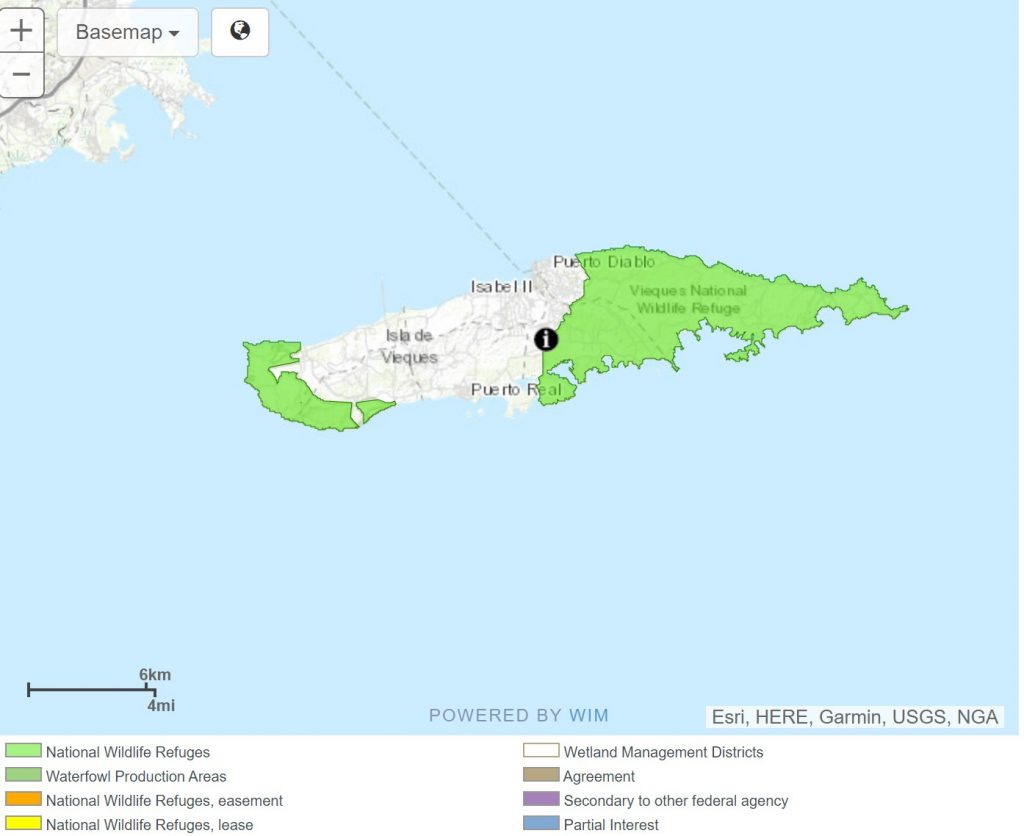
https://www.fws.gov/refuge/Vieques/map.html

It has beautiful, undeveloped beaches and stellar snorkeling, and a few hiking trails.  (Unfortunately, a large chunk of the land is not open to the public because of the danger from possible encounters with unexploded ordnance, which the Navy is slowly cleaning up.)

Beach Hopping & Snorkeling

Snorkeling and pristine beaches are the island’s main draws, and we came with our own gear, prepared to take advantage of both. With only 2½ days to explore, we could barely taste the multitude of beaches started with Chiva Beach (formerly the Naval Base’s Blue Beach), which had a bit of dried sargassum along its shoreline but was still lovely, with clear turquoise water and reefs just a short swim out. There were a number, but we did the best we could! The Vieques Insider website was a great resource for the best places to pull on our fins and masks and wade into the water.

Here are the highlights:
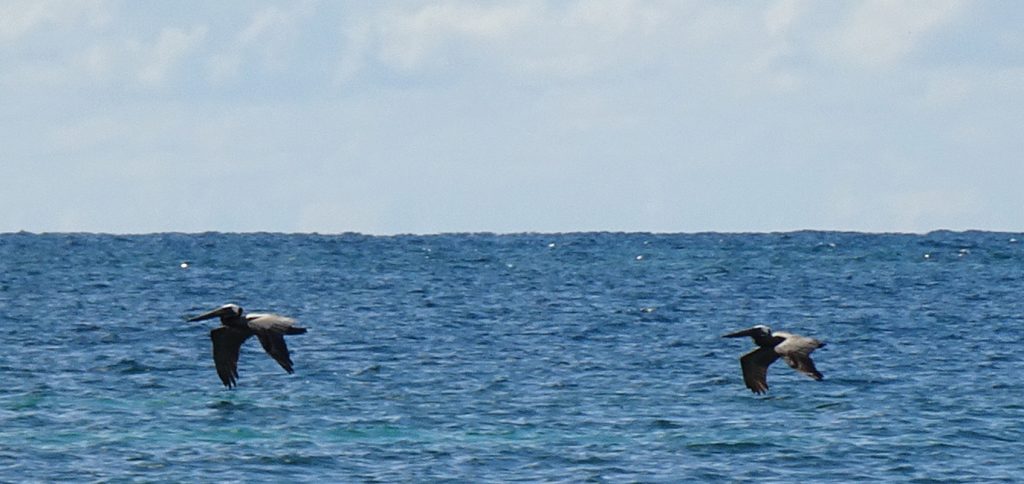
Pelicans were everywhere

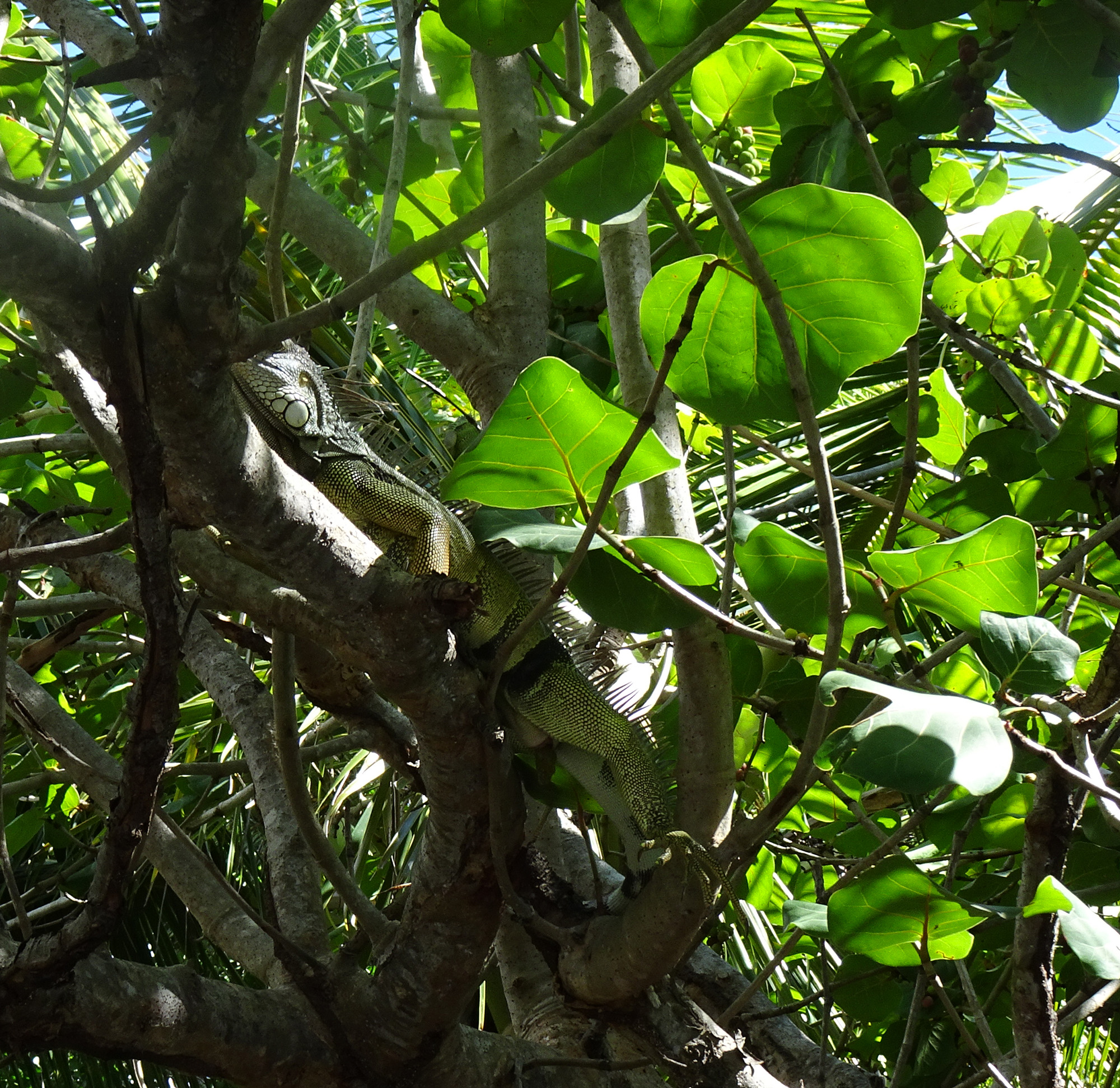
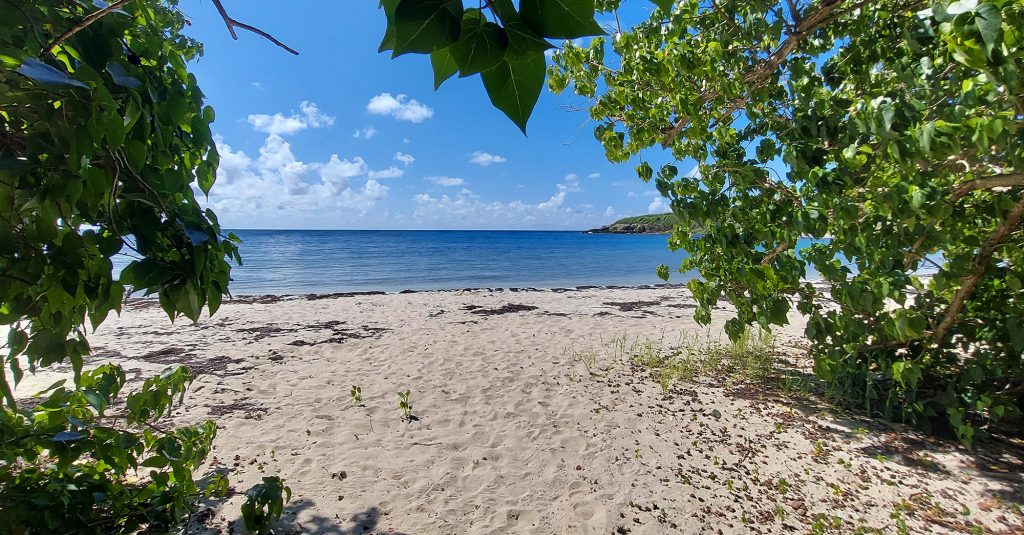
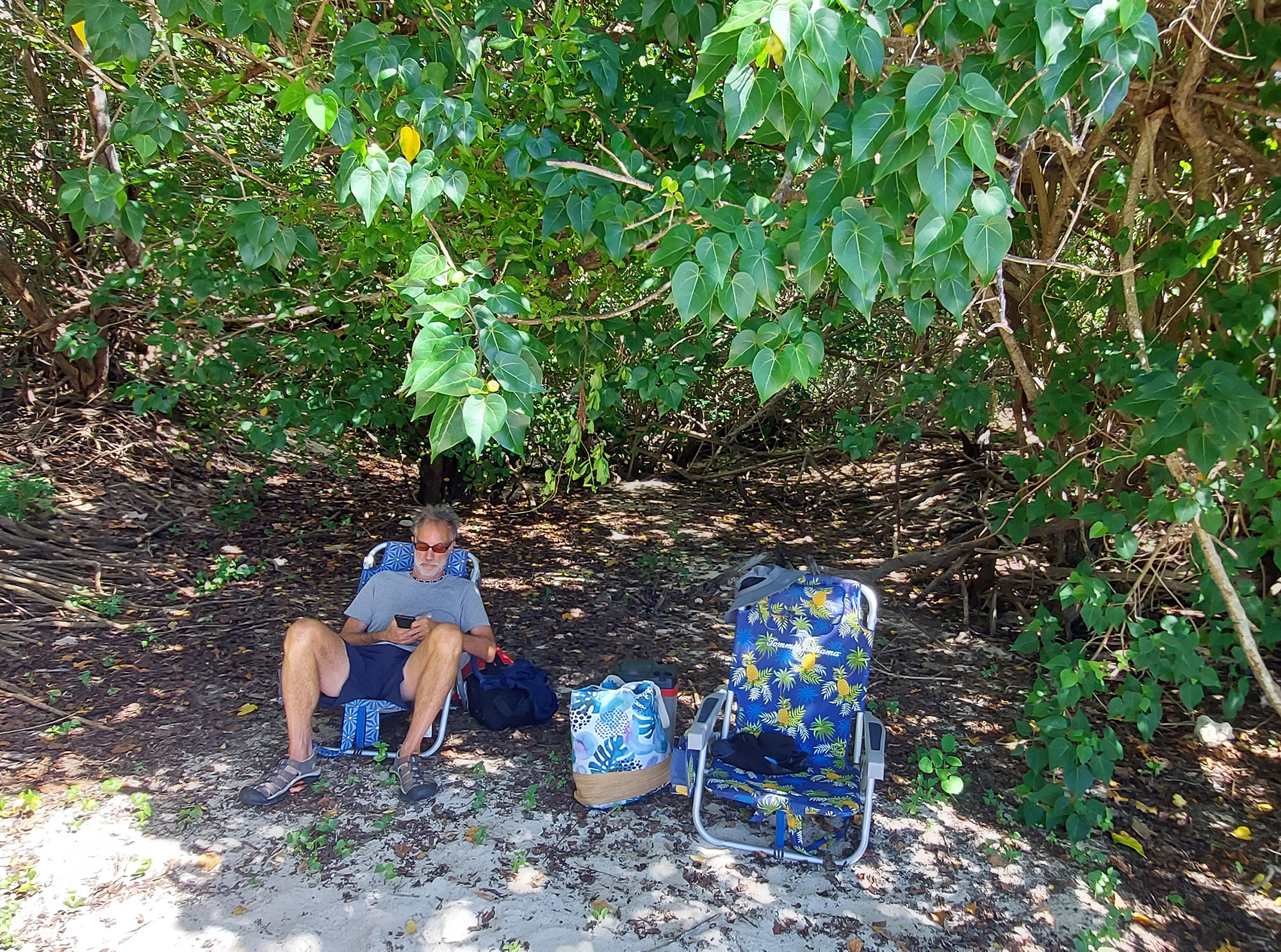
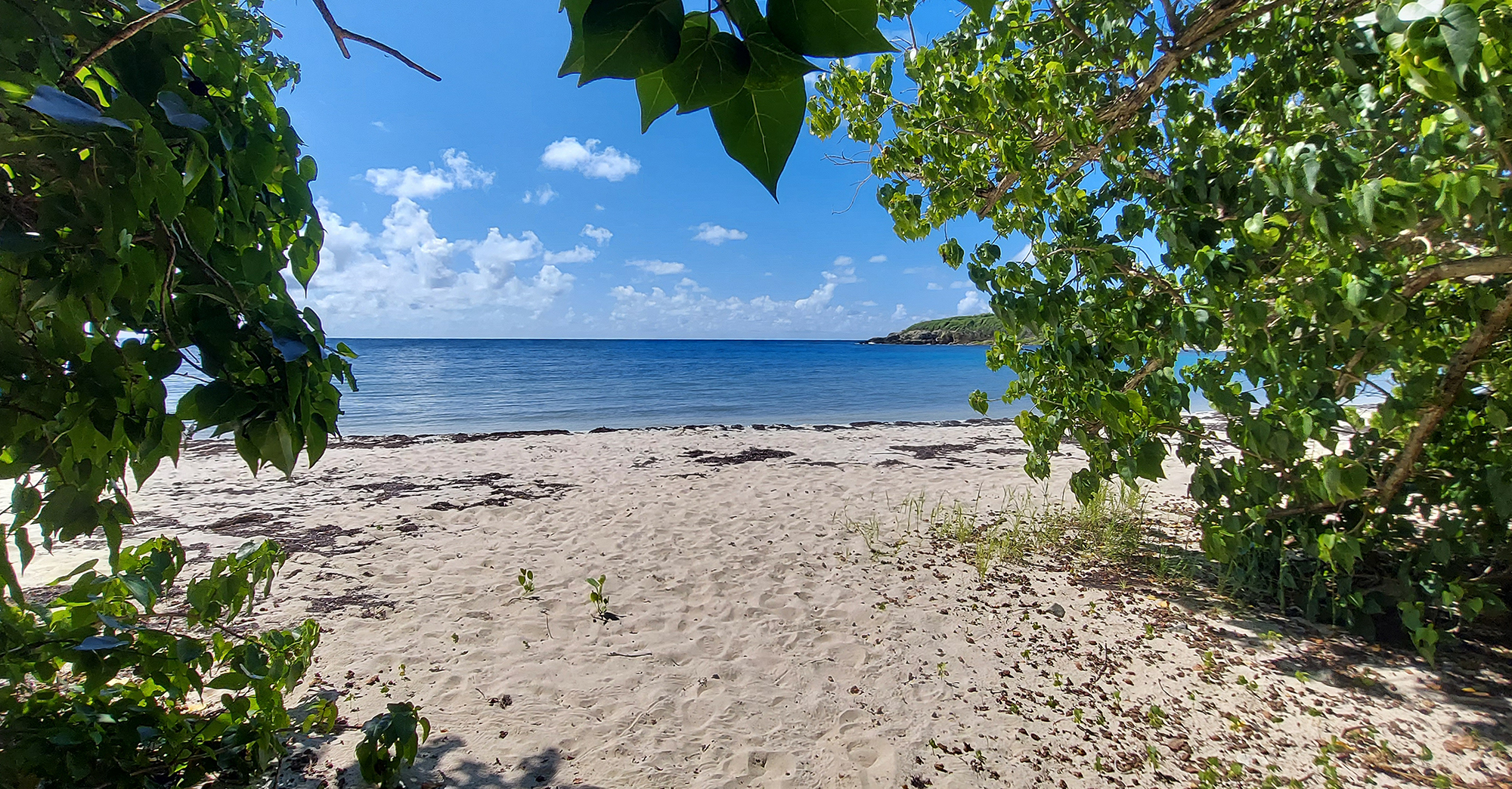
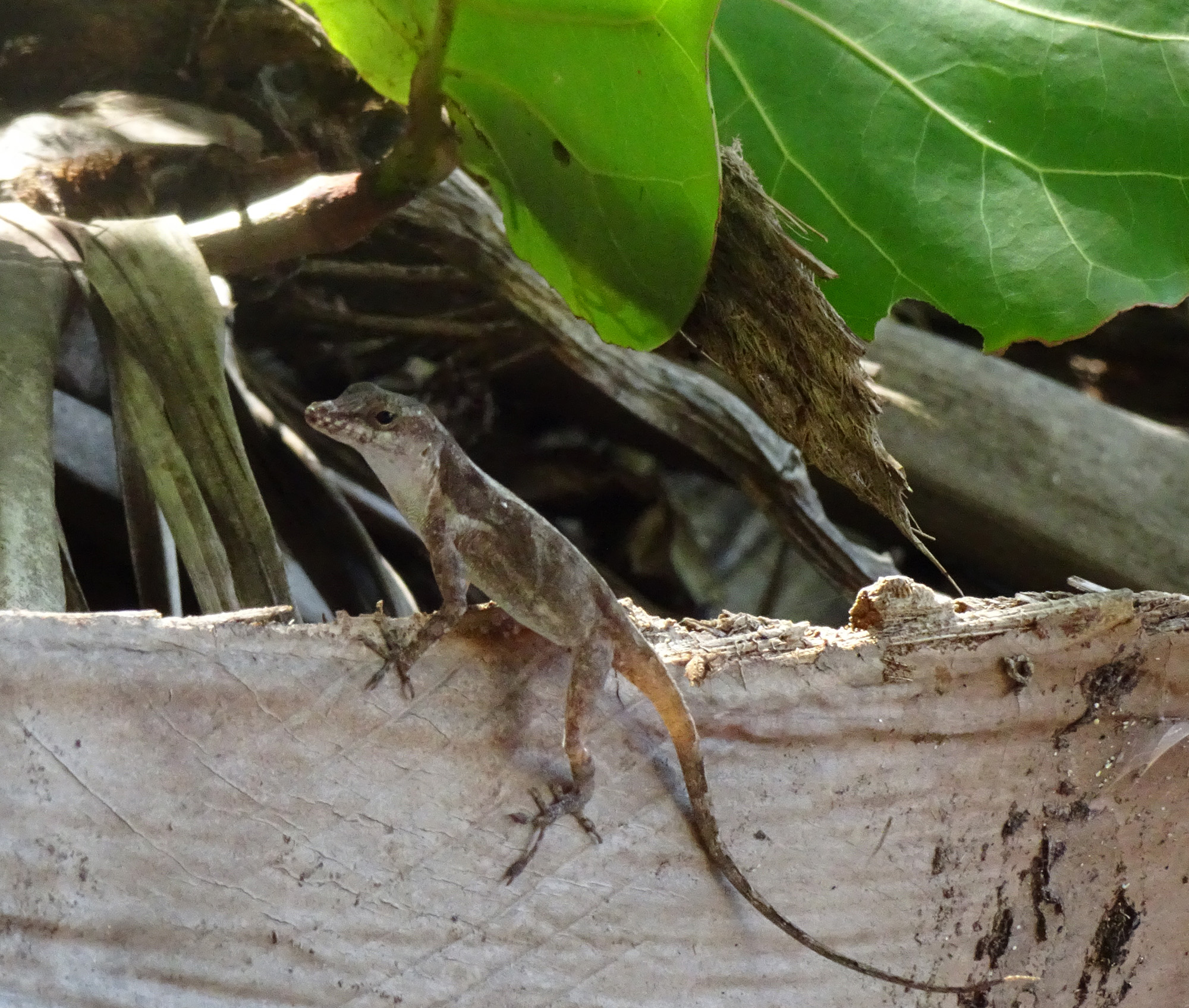
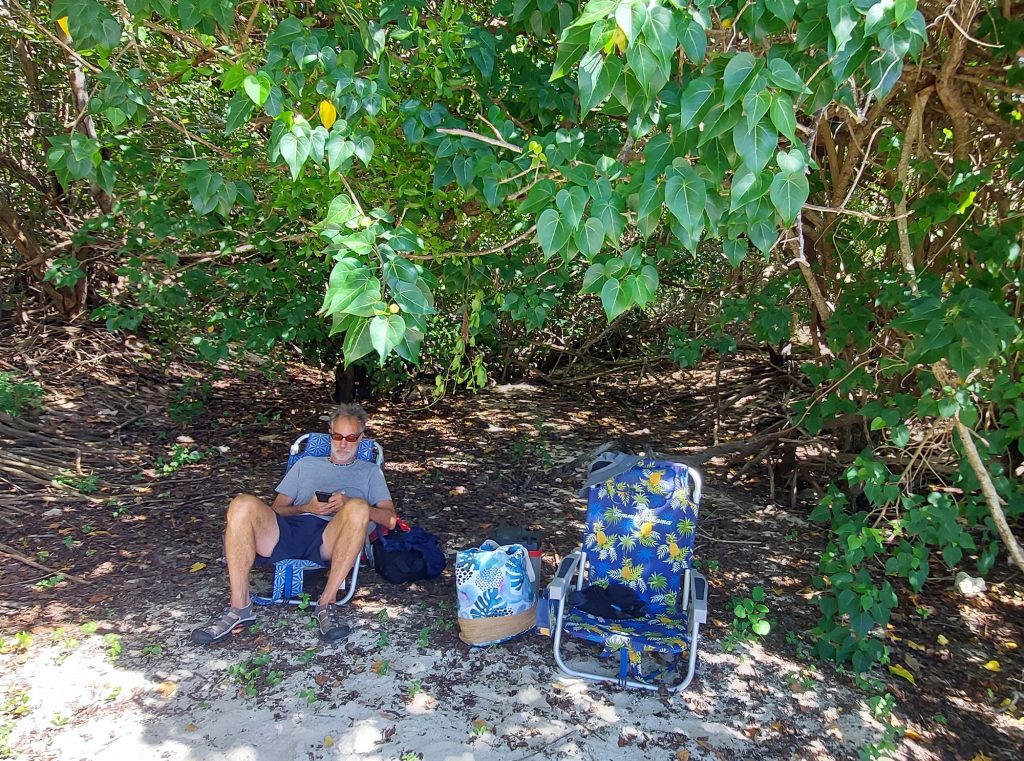
Chiva Beach: We passed a number of individual entrances to the beach, numbered, with parking for just one or two cars at each. We finally chose #10 and settled ourselves in the shade among the mangroves, when a huge iguana pooped spectacularly from a branch behind us. How often do you get to witness that? A little lizard also watched us curiously, and many majestic pelicans flew by.

I snorkeled there and saw some lovely coral and a multitude of undersea life. On my way back into shore, I found myself in the magical middle of an enormous school of dancing silverfish.
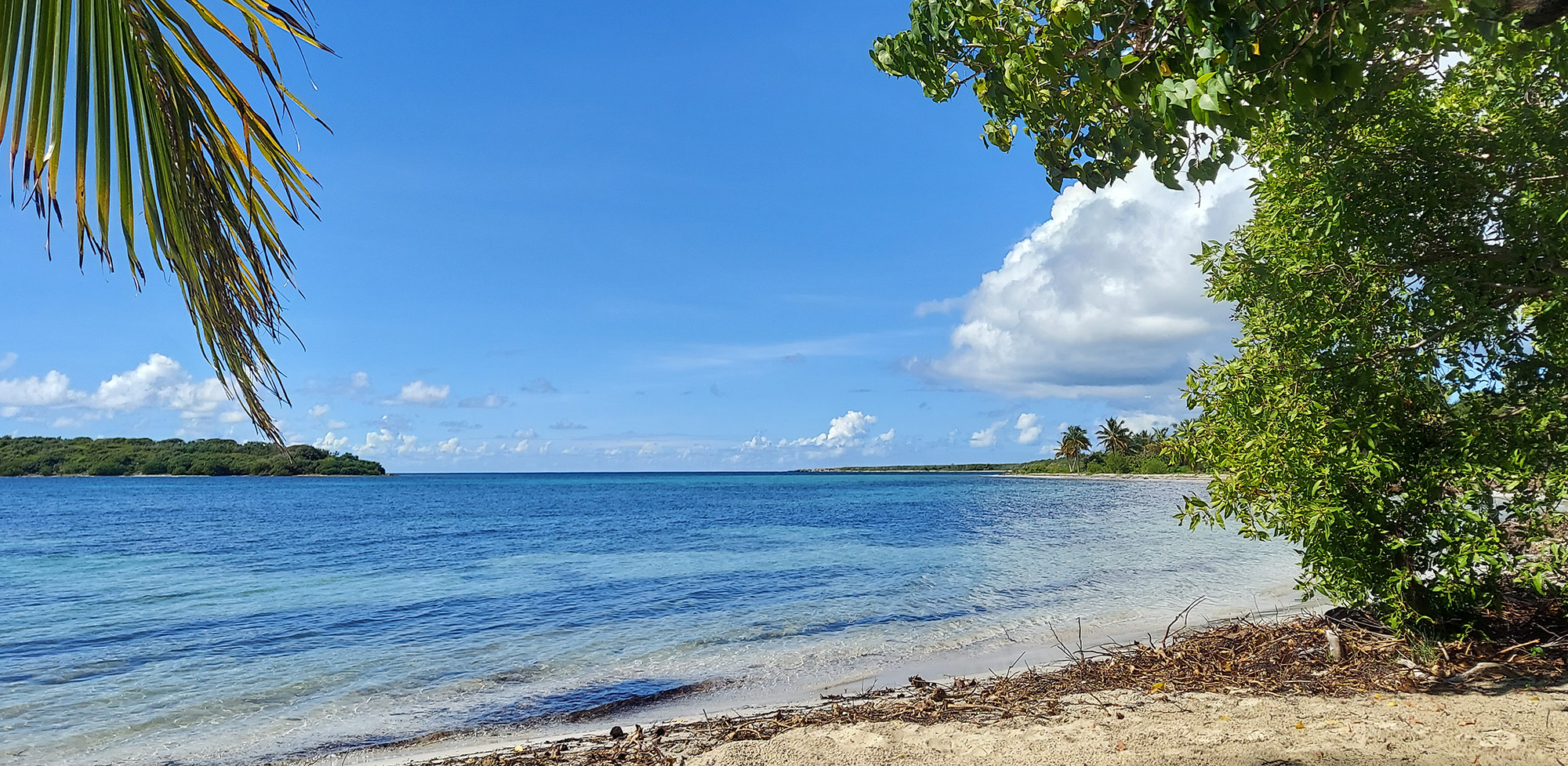
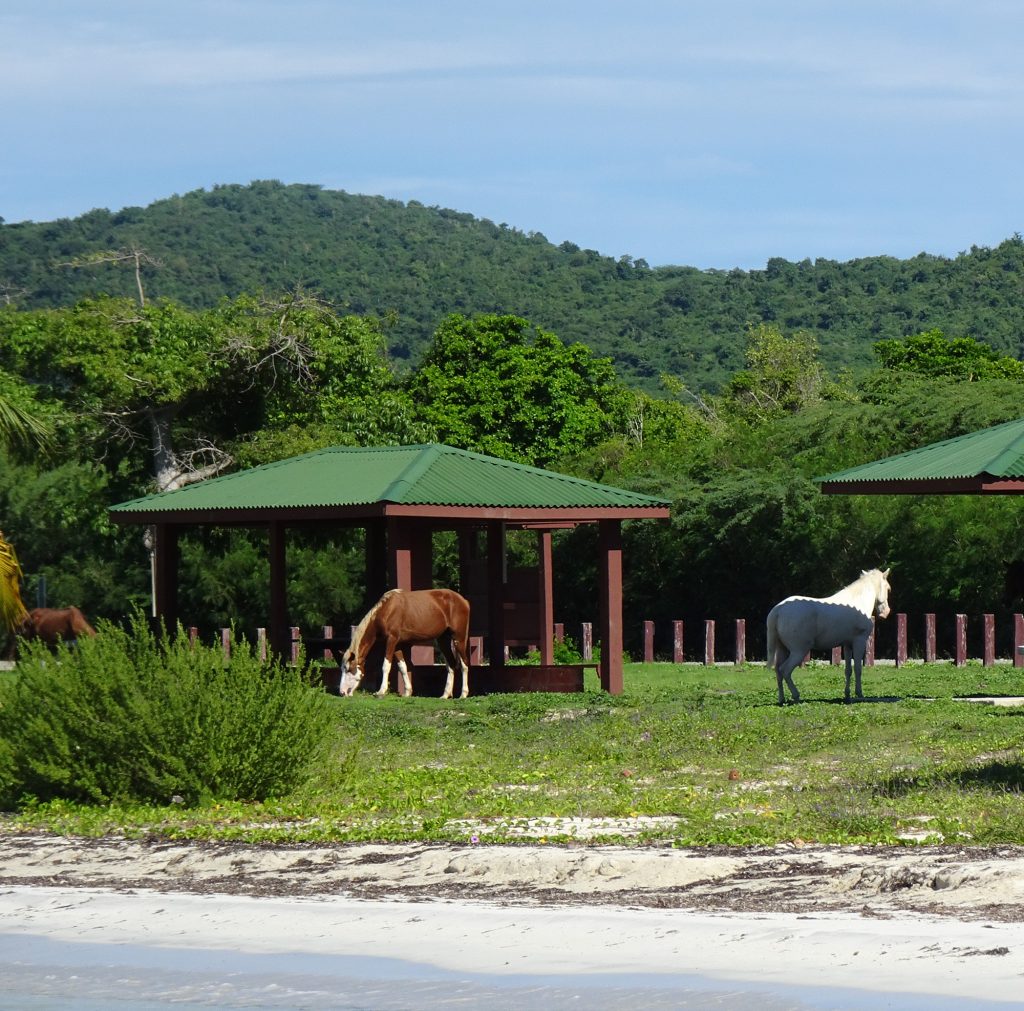
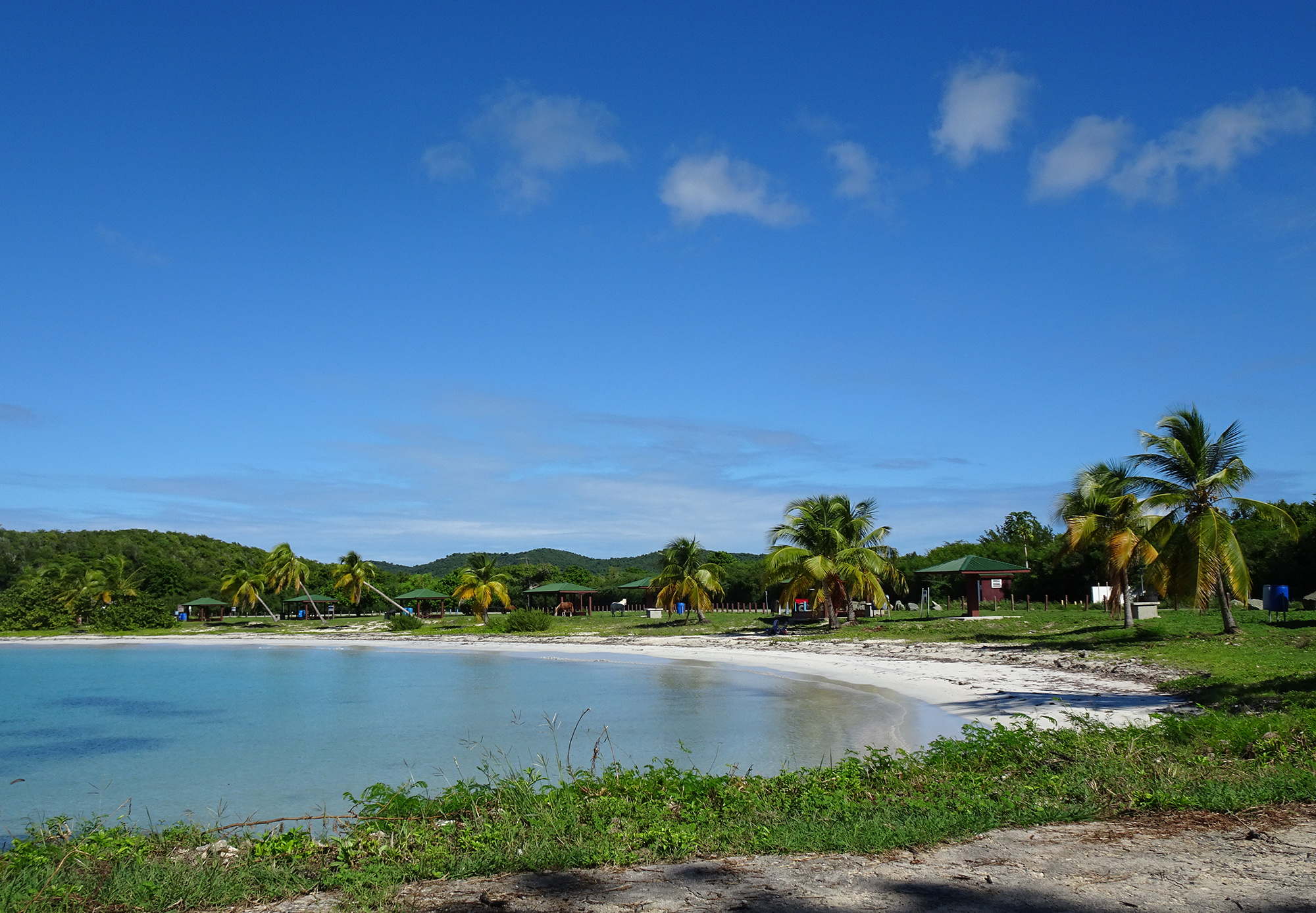
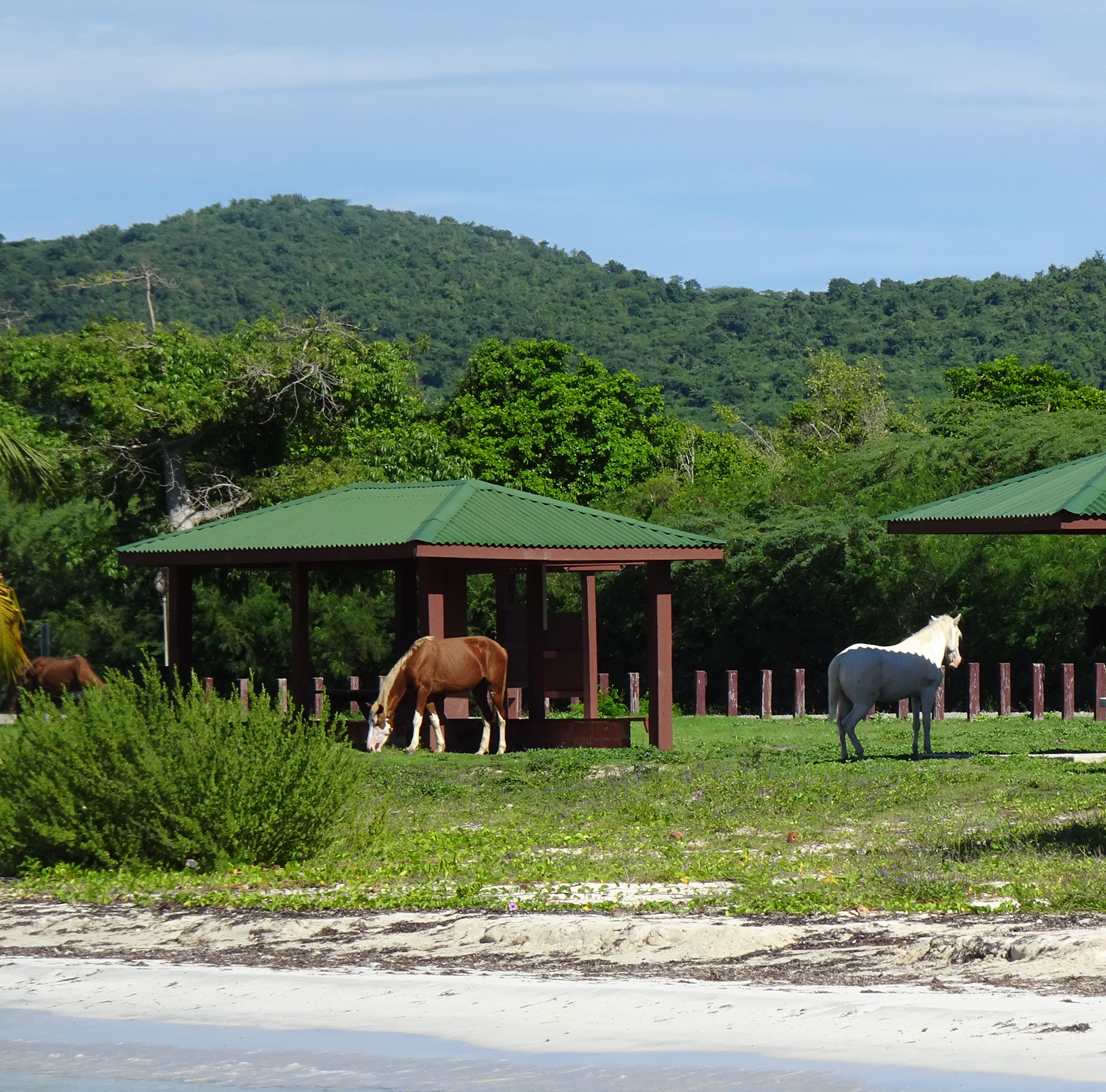
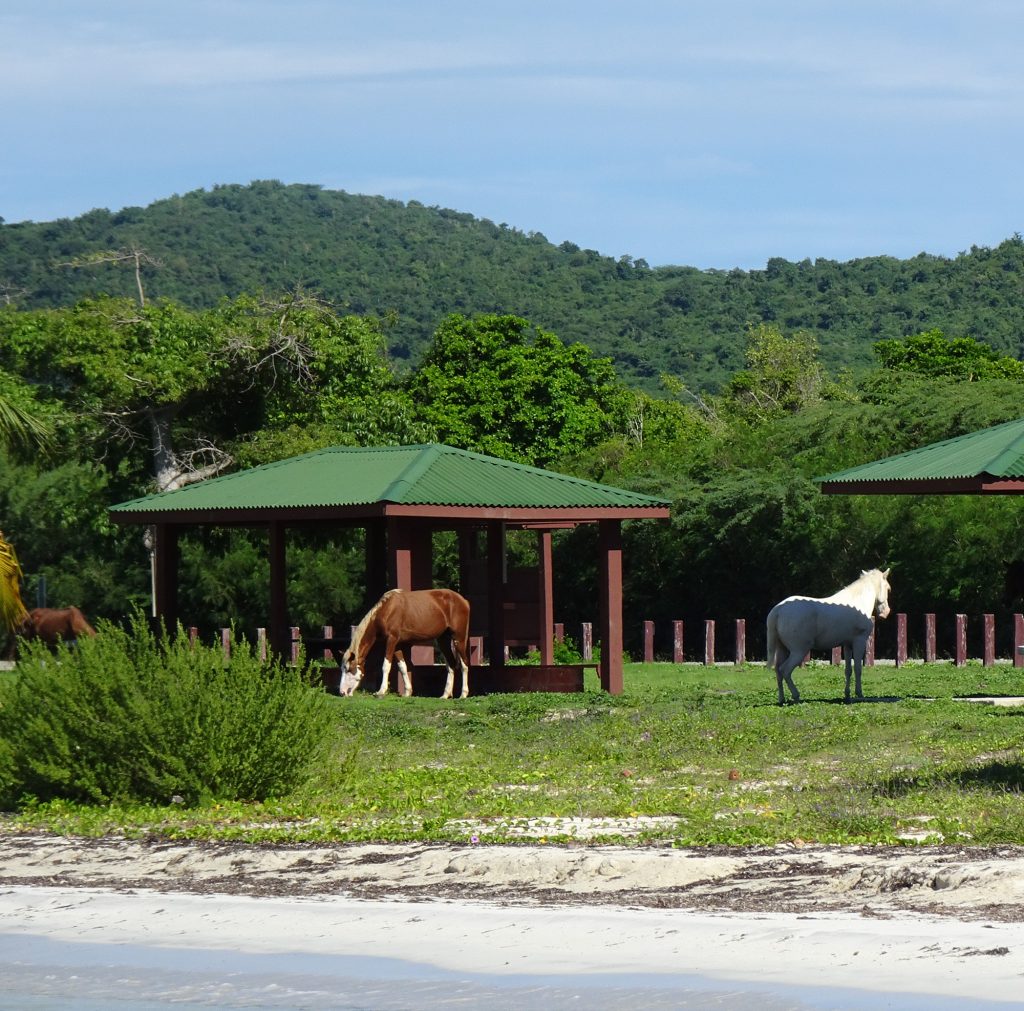
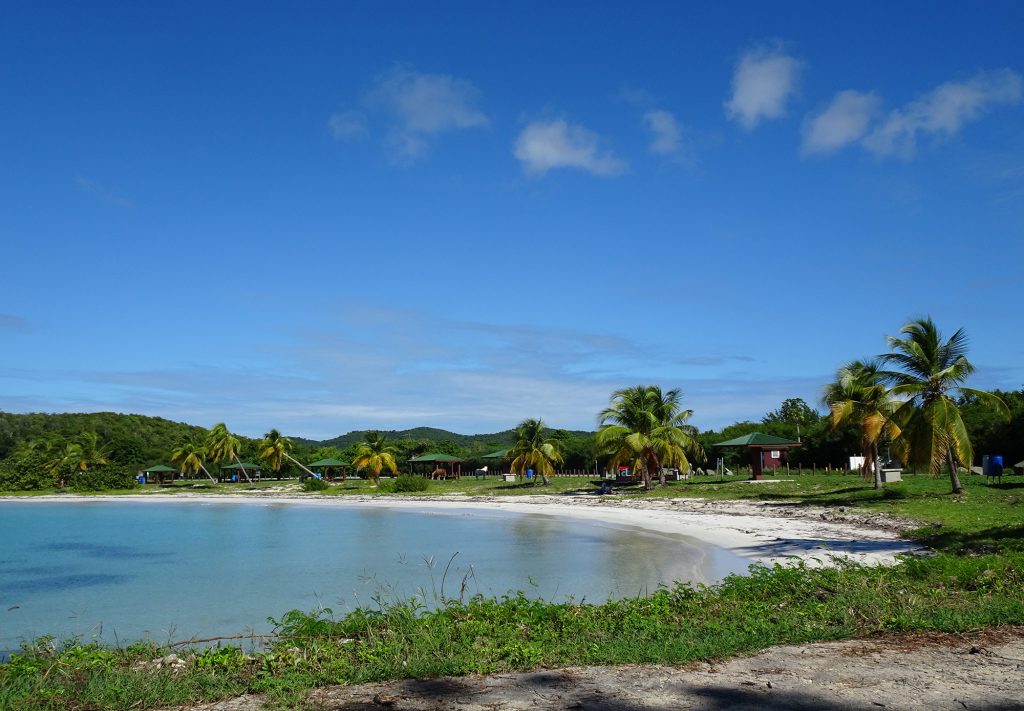
Caracas Beach: Caracas is a larger beach on a bay with lovely, calm water for swimming, and even parking, shelters, and even a bathroom, something the smaller beaches were lacking. There we relaxed on a concrete strip among the trees and watched the visiting horses wander around and forage in the garbage.
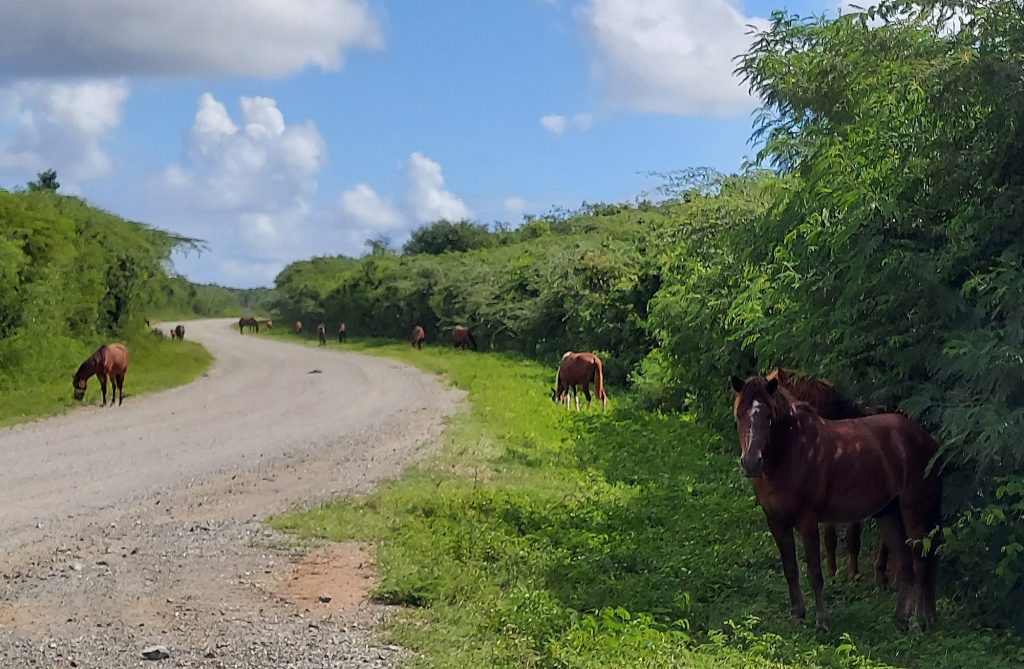
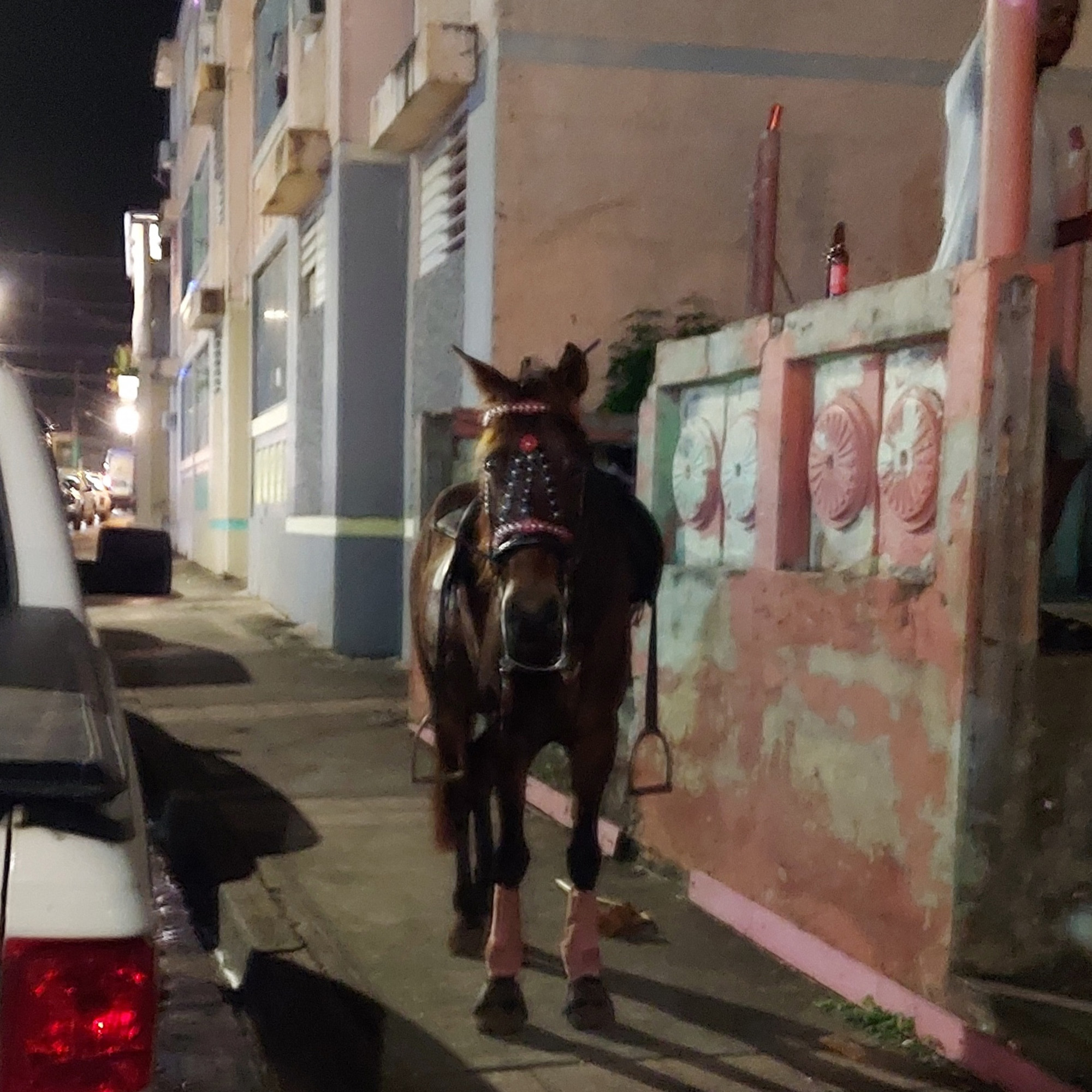
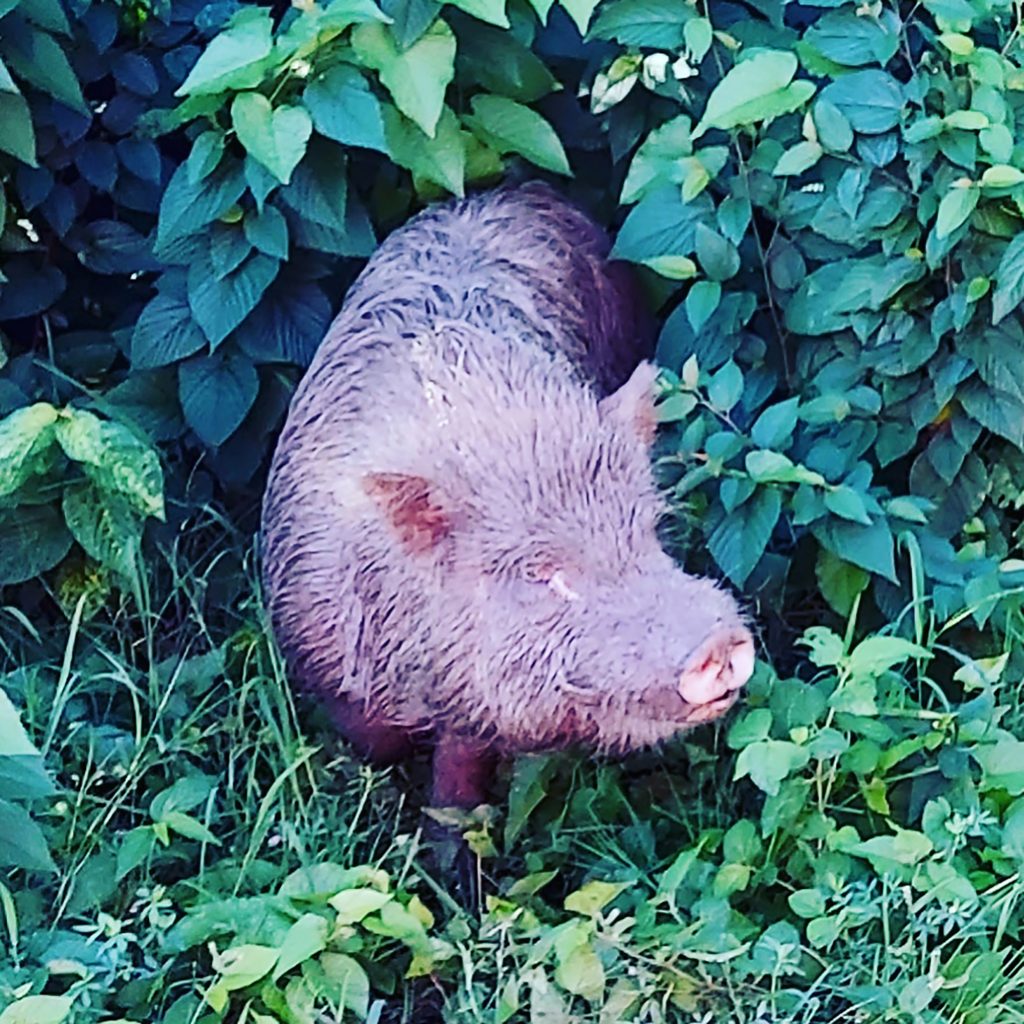
In fact, we ran into horses everywhere we went. Also, weirdly, a wild pig.
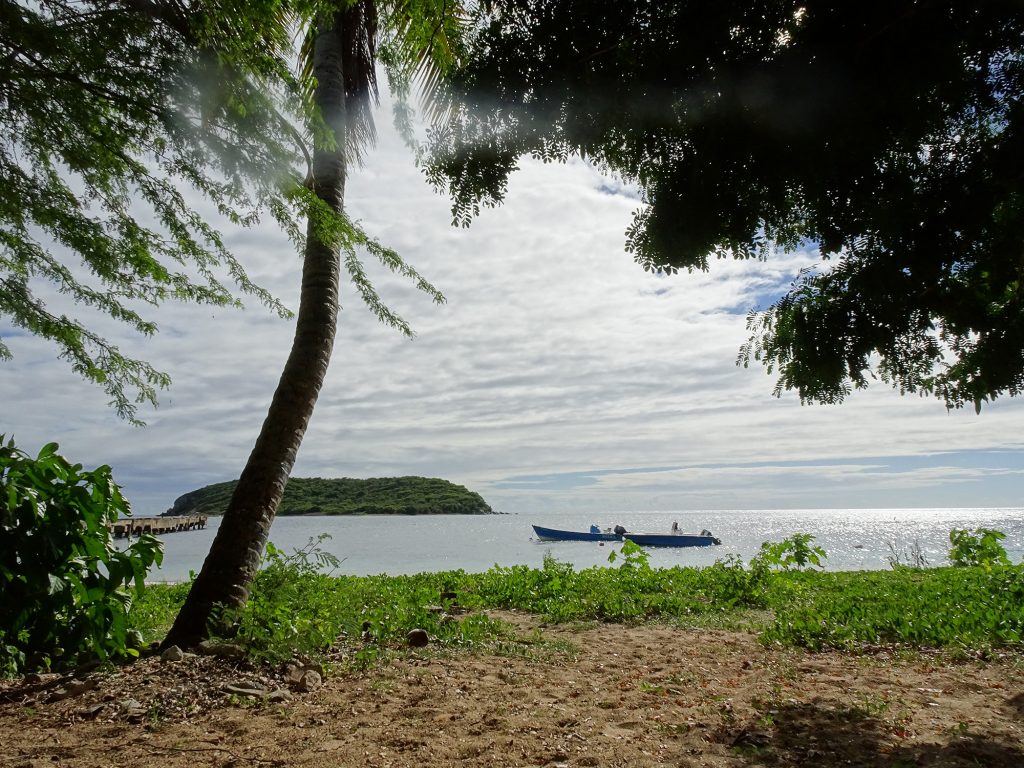
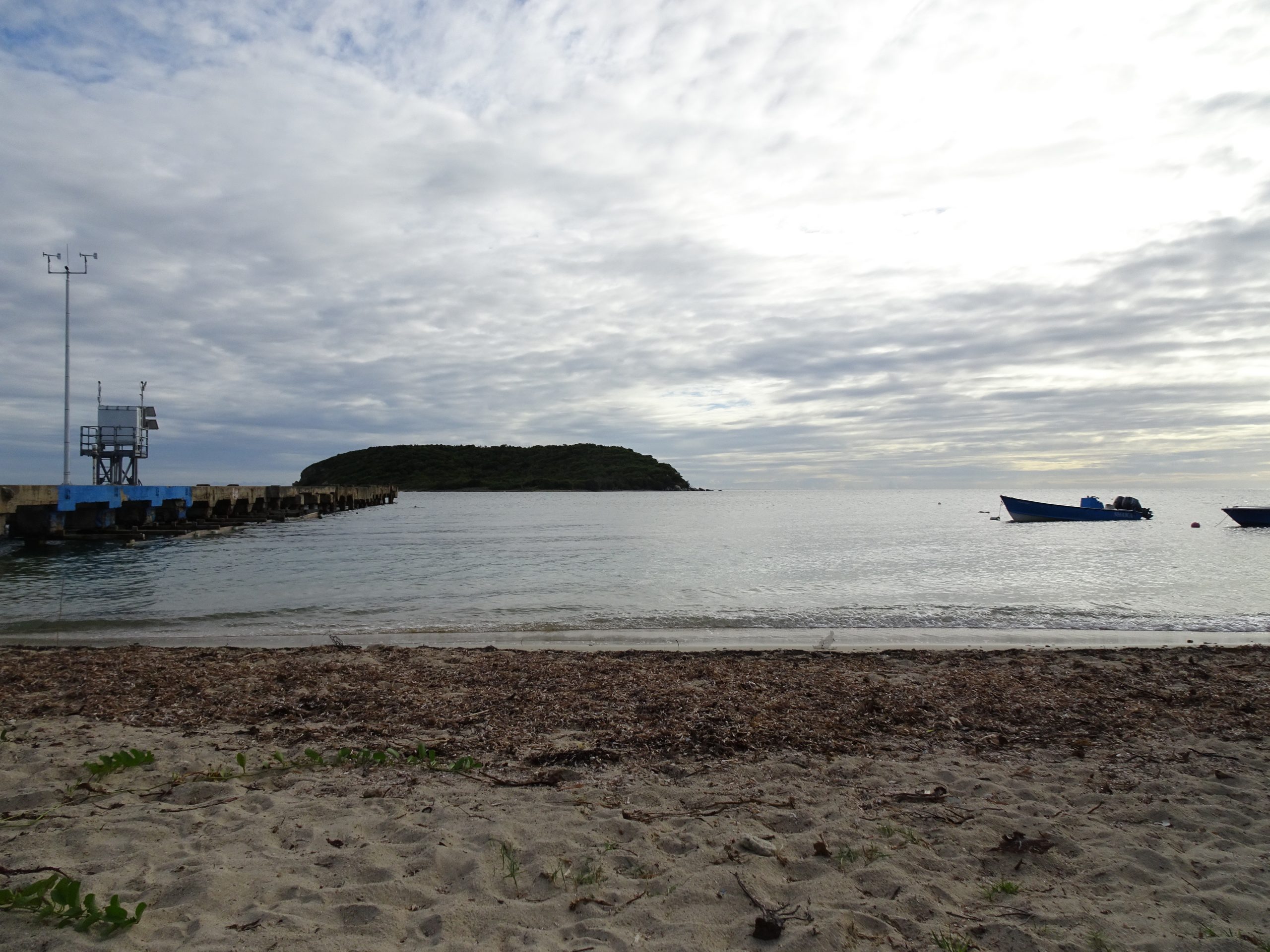
Esperanza Beach: Esperanza Beach, near the town by the same name on the south coast, is primarily a local hangout, a little grittier than the others because of the parking lot behind us in which men smoked weed and teens hung out, but we enjoyed its charms. Its most striking feature is a deserted concrete pier which provides an eerie, fascinating snorkel experience. You can dart between the coral-encrusted pylons and watch fish swimming in and out among old anchors and piles of thick rope abandoned on the seafloor below. I almost ran into huge purple jellyfish a couple of times. People claimed sea turtles hang out underneath the pier, but we weren’t lucky enough to see any. Kids jump off the pier into the water on weekends.
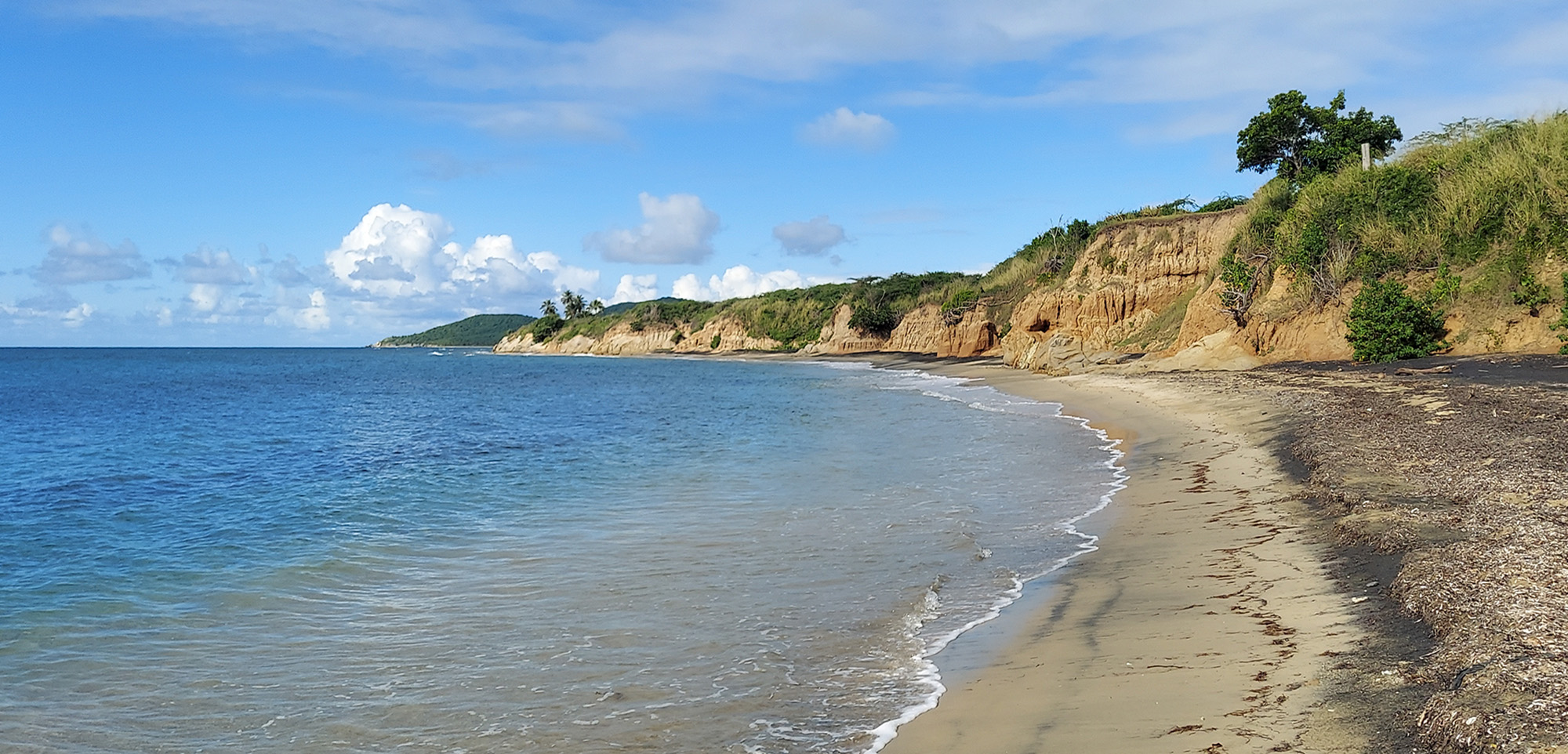
Black Sand Beach: We had to hike for six-tenths of a mile through lush woods to reach Black Sand Beach, though the GPS first took us down a long, incredibly bumpy, narrow dirt road to a cliff near the beach. Black Sand Beach is so named because it boasts volcanic sand, but we found it to be overhyped. The walk was lovely, but the beach itself was not a place where you would want to hang out, and the so-called “black sand” just made the area look dirty. However, the views of the sea crashing into the cliffs were spectacular. Here’s a video of the beach.
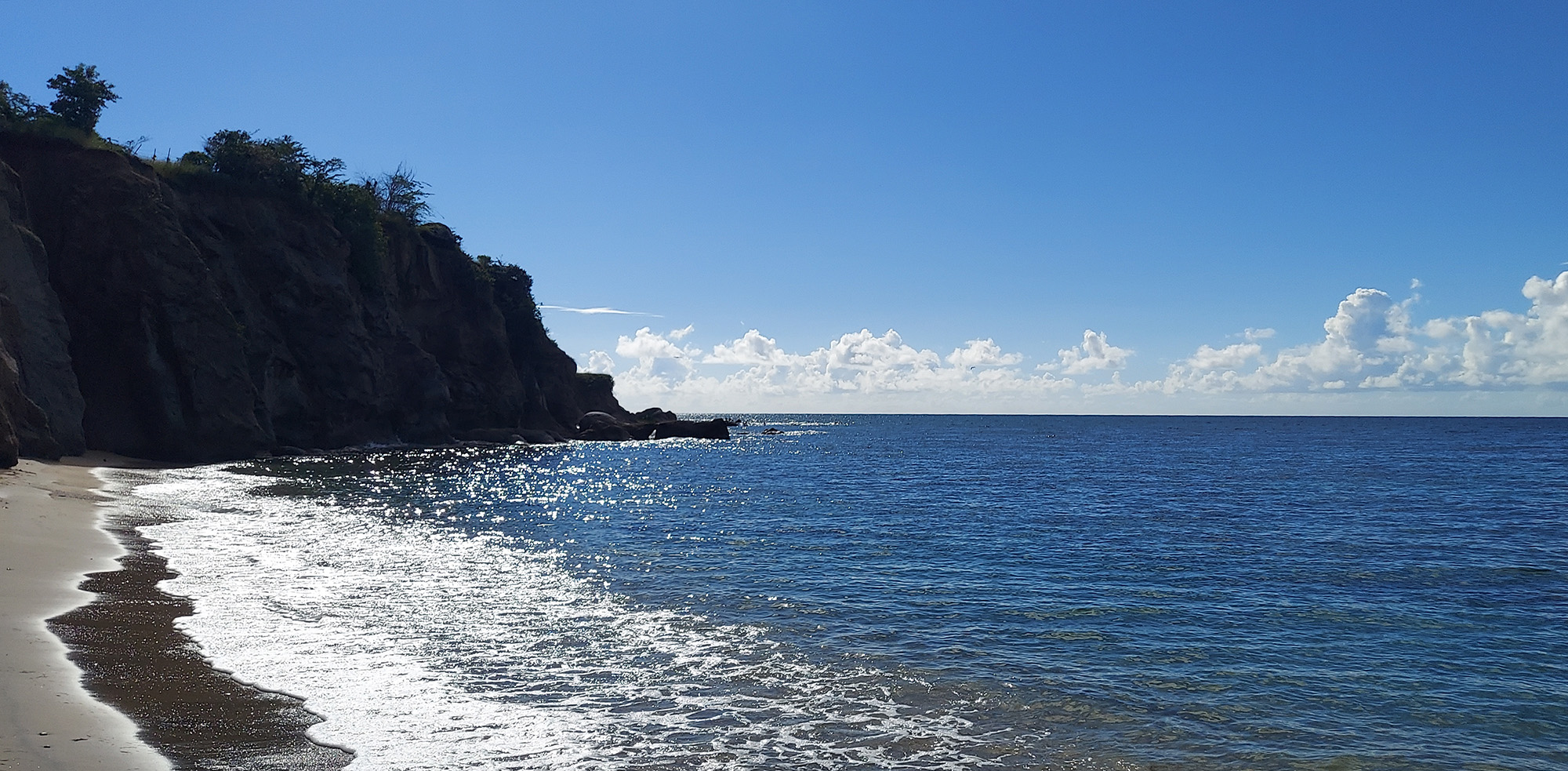
Pata Prieta Beach: Pata Prieta, not far from Chiva, offered some gorgeous snorkeling along the rocky east side of its cove. Among the vast quantity of sea life we encountered while swimming in shallow water above the coral reef, I saw a small barracuda and even an octopus! He was hiding in plain sight on the seafloor, camouflaged among the rocks and plants. I only recognized him because I had seen the documentary My Octopus Teacher on Netflix. He crept along as I watched him, before finally deciding to launch himself and swim away, shedding his rocky camouflage and revealing himself to be a translucent orange swimmer.
Bioluminescent Bay Tour

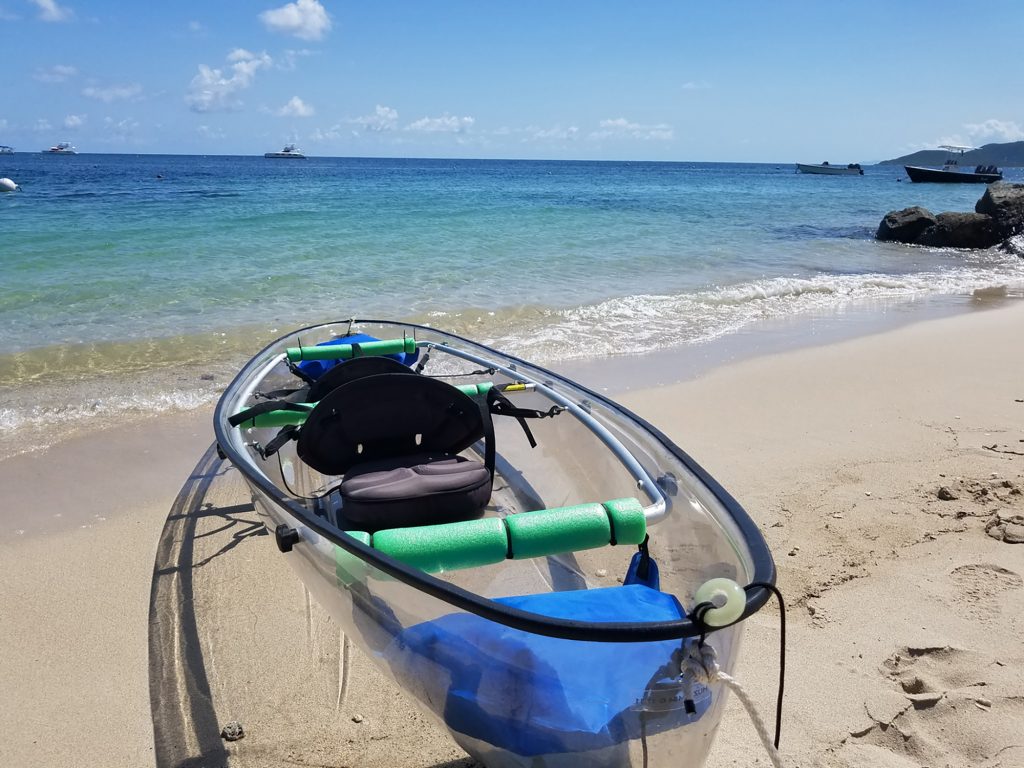
The highlight of our trip was the touristy experience everyone needs to have, a Bioluminescent Bay Tour. We went out in transparent double kayaks the first night to see the brightest bioluminescent bay in the world with Taino Aqua Adventures. Our guide, Kevin, took us out into Mosquito Bay in the darkness of a waxing moon under mercifully cloudy skies, and the water shimmered green, blue, or white (depending on your vision) with every stroke of the paddle. The water also sparkled underneath the boat as we moved through the inky water. It was magical!

But actually, it was science. Kevin explained that the luminescence in the bay is caused by a microorganism, the dinoflagellate Pyrodinium Bahamense, which glows whenever the water is disturbed, leaving a trail of neon blue.

Sorry, because of the darkness and the fact that our hands were busy paddling, we were not able to get any photos or video. You can see what it looks like on Taino Aqua Adventures’ website.
We have so much more to share, but I think you are just going to need to visit Vieques yourself!
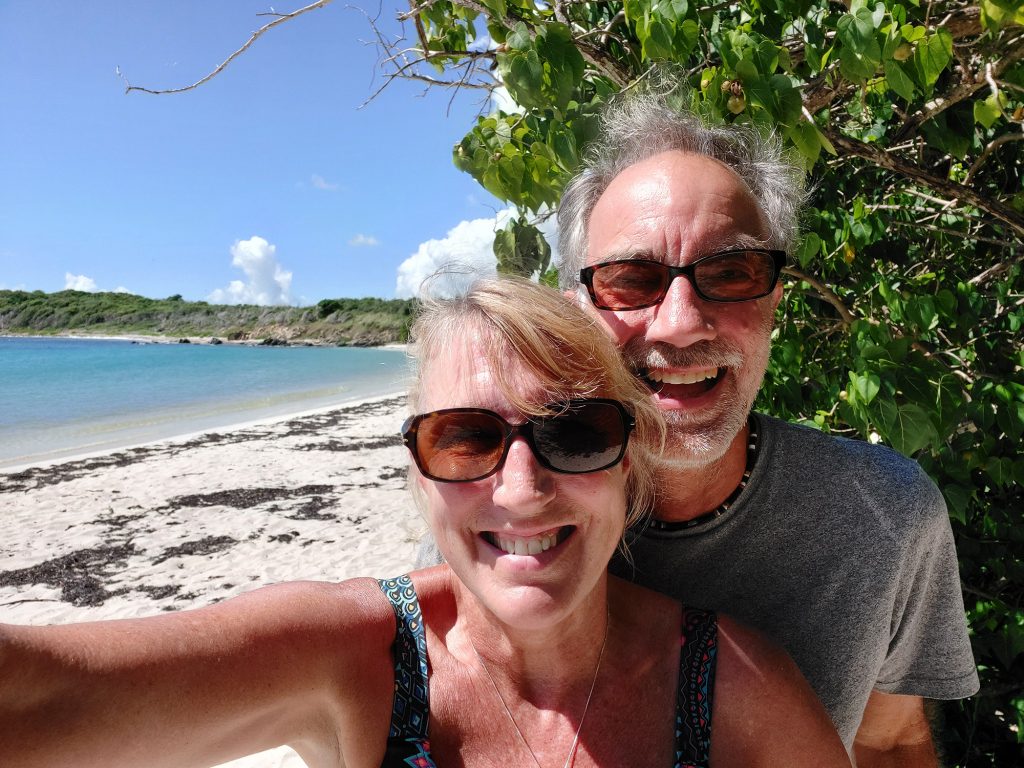
Happy bloggers on Pata Prieta

Here are some resources to get you started:
Vieques.com

Vieques Insider

Discover Puerto Rico

Switching Homes in Puerto Rico

We just spent a glorious month in the northeast coastal town of Luquillo, Puerto Rico. When we left our seventh-floor condo with its glorious view of the ocean after a month’s stay, we thought sadly that there was no way our next place could possibly be as good. Especially since it was in San Juan, a metropolitan area, instead of an idyllic beach town.

We were wrong.

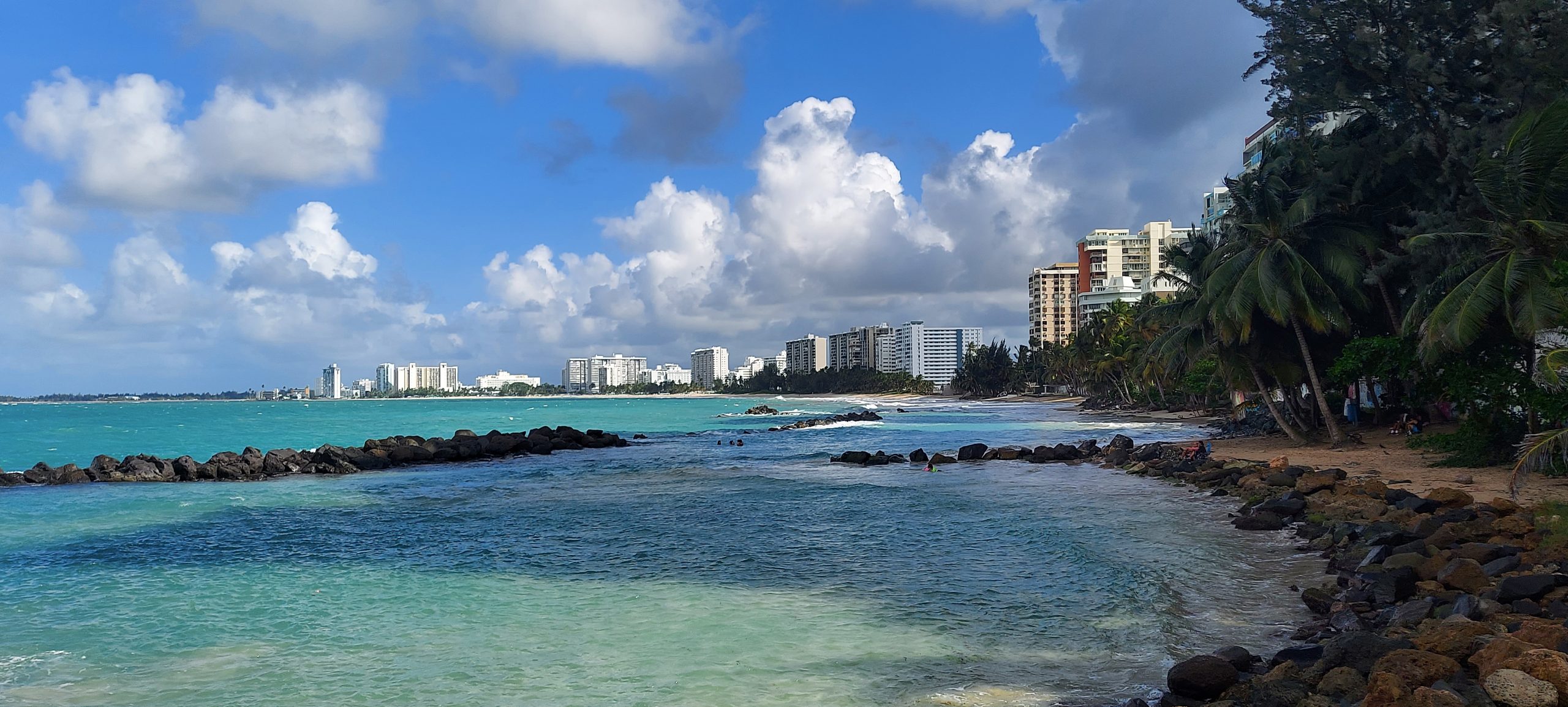
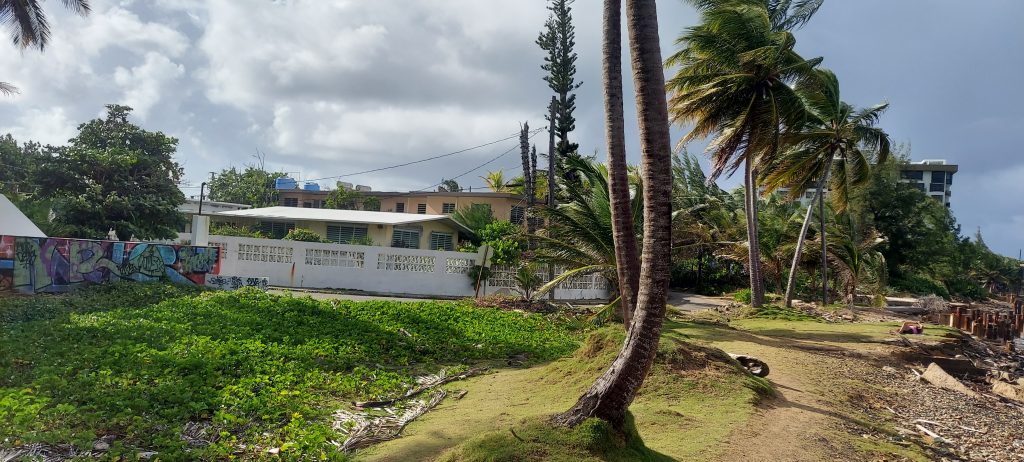
The pink one on top is our house at Punta las Marias. This is the view walking back from the beach.

I Hate Halfways

I always have trouble with the concept of “halfway.” Any time I’m on vacation, I get a little depressed when we pass the midpoint. In my mind, every minute from then on takes me a step closer to the end of vacation.

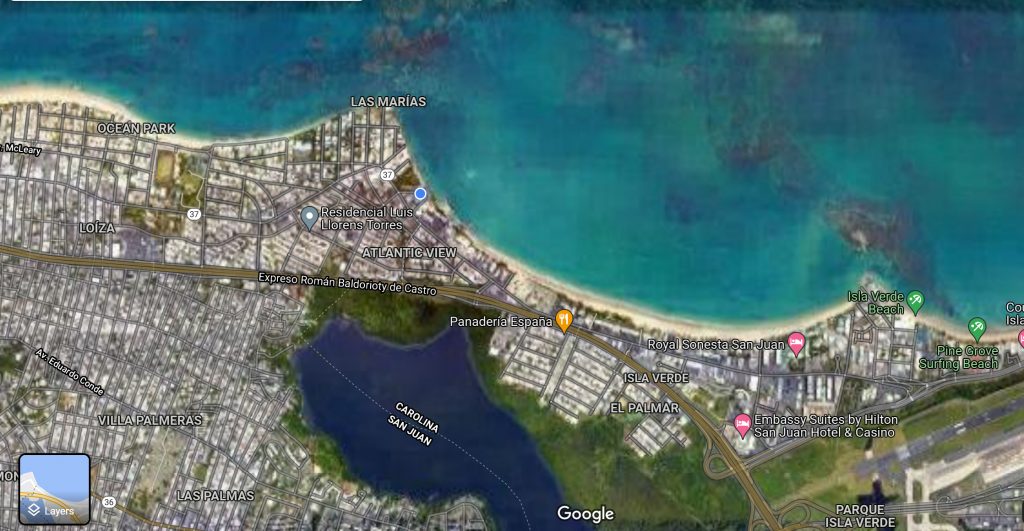
So we have one month left of our stay in Puerto Rico, and that meant moving to our second residence, just 40 minutes west. When we pulled into the driveway of 6 Calle Villa Internacional at Punta Las Marias, a coastal residential neighborhood at the eastern edge of San Juan, we were greeted by John Lombardo, the gregarious American who owns this house, his friendly old dog Lola and cat Putzie. He immediately made us feel at home, giving us a tour of the property and our apartment.

Our house is the blue dot

There are actually four apartments in two adjacent houses united by a covered courtyard. John and his wife Sylvia live in the front building, and there are two units on the ground floor. As he led us to ours, Kaylee in tow in her travel crate, we passed several comfortable seating areas, a desk and chair, two hammocks, and a barbecue grill. Kaylee hissed at the curious cat and dog as they sniffed at her before we ascended the stairs to our apartment.

And what an apartment!

It exceeded all expectations.

First view

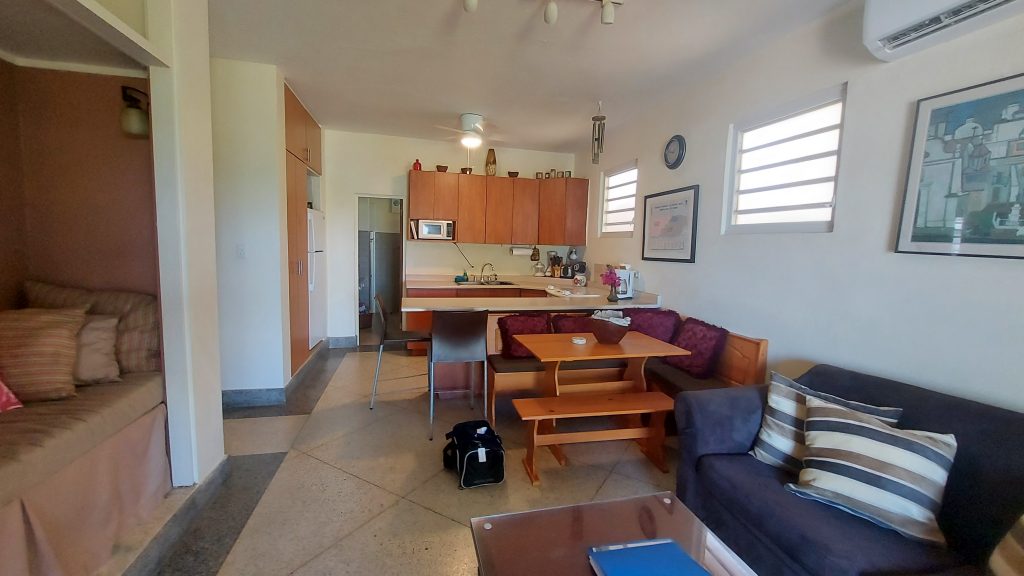
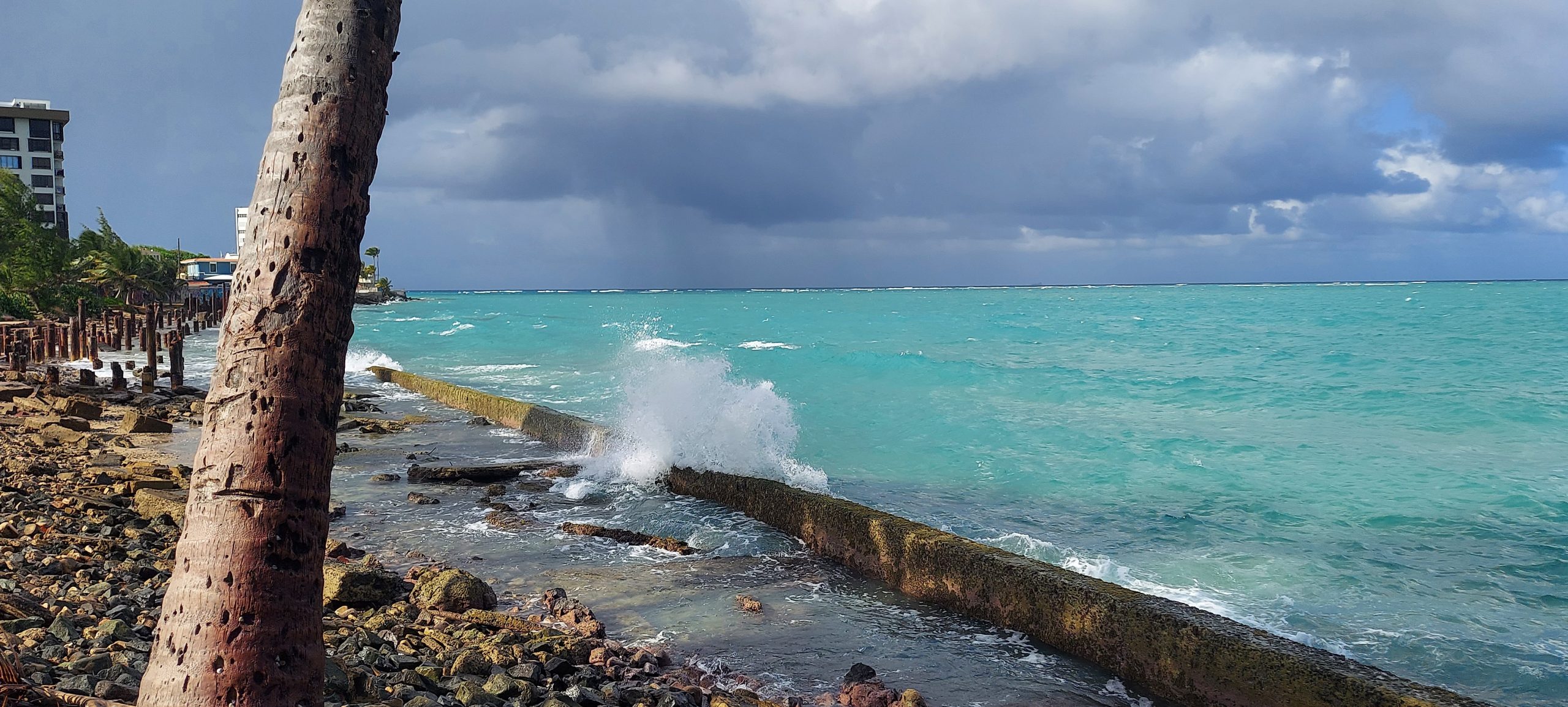
First of all, the ocean is crashing against the rocks literally 50 feet from our front door. Salty breezes chase each other through the apartment. The unit is huge, with two large bedrooms, two large bathrooms, and a generous living/dining/kitchen.

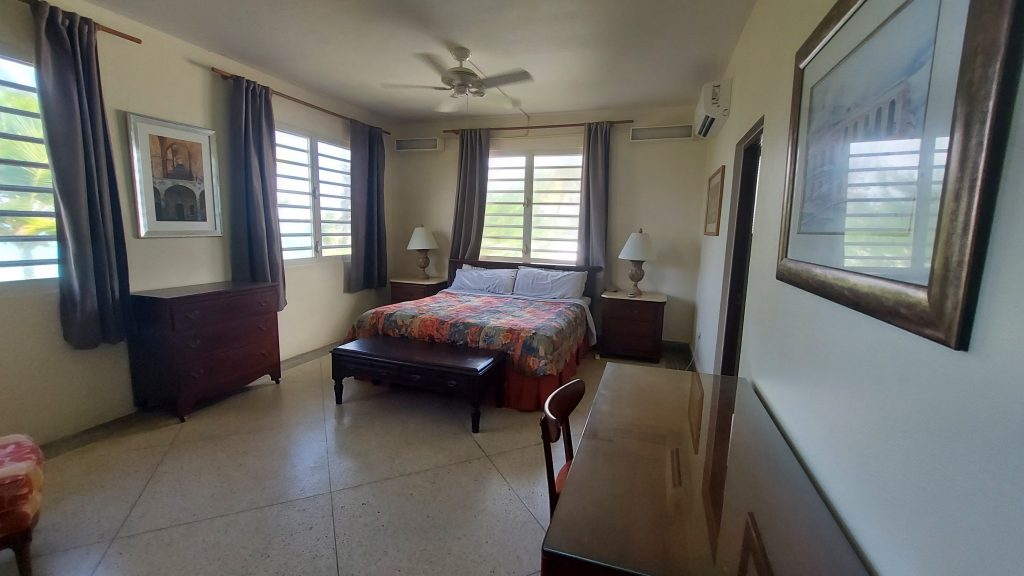
The master bedroom has a king-sized bed, a sitting area, a large desk, and a huge walk-in closet.

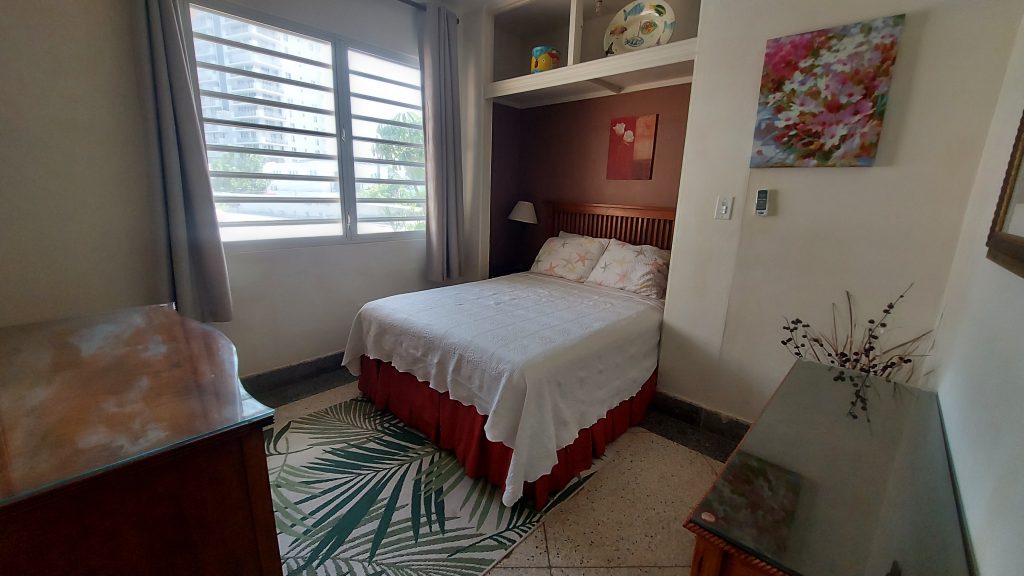
The second bedroom, which Gavin will use when he comes home for Thanksgiving next week, has a queen-sized bed (which Kaylee the cat immediately claimed) and a desk (which Bob immediately claimed).

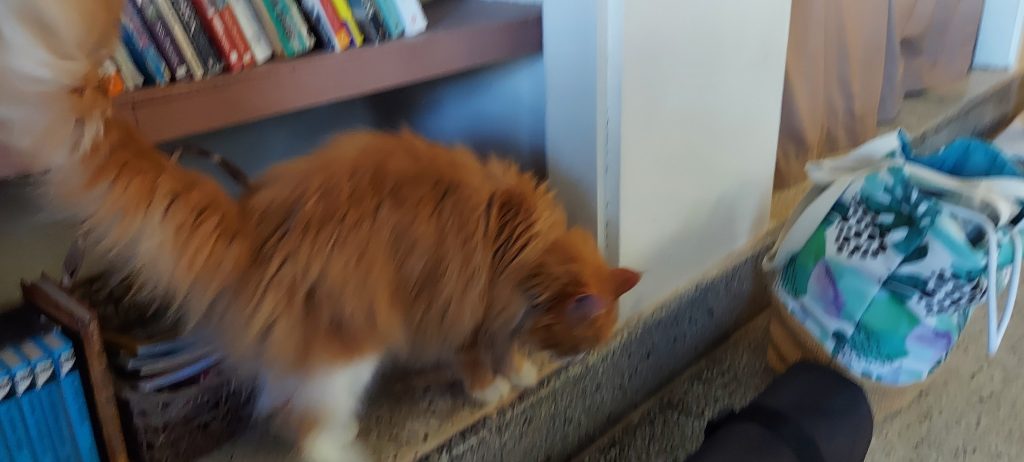
Kaylee also loves the little rug in the living room. When we were in Luquillo, it took her a month to relax into the place. Here she has immediately adjusted.

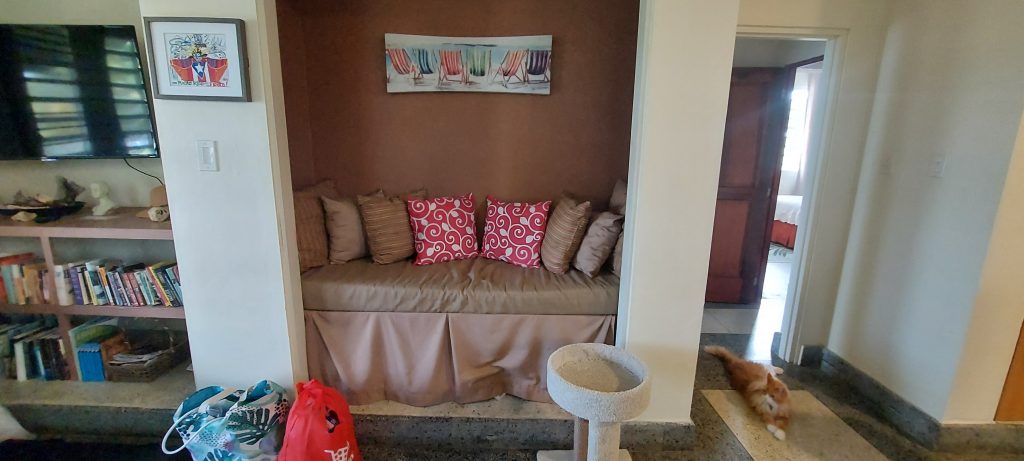
The piece de resistance for me is the reading nook next to a bookshelf.

Great Location

We can walk out to the ocean, turn right, and walk to Isla Verde Beach. We’re a block off Calle Loiza, a street famous for its huge variety of restaurants and coffee shops. There’s an ice cream shop on the corner and a coffee shop with the best brunches in town a block away. Even the grocery store is within walking distance. Old San Juan is a 15-minute drive.

Visiting Cat

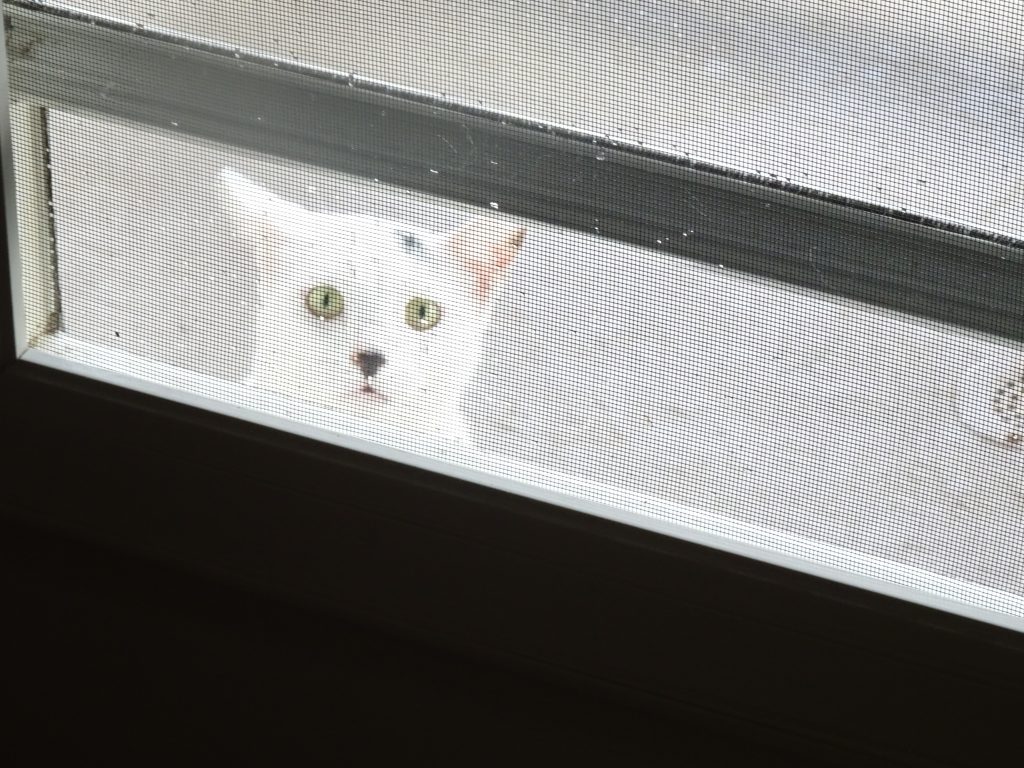
Putzie keeps dropping by to visit. A couple of days ago she licked my yogurt bowl clean on the patio and Kaylee hissed at her through the screen. This morning she returned and peed on the pavement and rug right outside the door, marking the territory as hers. We’ll keep you posted on the kitty drama.

I think we’re going to be happy here. Kaylee certainly is. This place just feels like home.

Isla Vieques: Wild Horses, Snorkeling, and a Bioluminescent Bay (Part 1)
Who would expect to have to stop for wandering horses when driving along a dirt road on a Caribbean island? Or to see swirls of neon blue when you dip your kayak paddle into an inky bay at night? Or to see a cluster of plants and rocks on the seafloor start moving, only to realize that clump is actually a creature?

Surprise! That’s the best word to describe the island of Vieques.

To the uninitiated, Puerto Rico is a popular Caribbean vacation destination, a bigger island than most. But most people are unaware that PR is actually made up of a number of islands. The two largest (besides the mainland), Vieques and Culebra, are tropical paradises sitting a few miles off the east coast, their natural wonders just waiting to be discovered.

 We visited the larger one, Vieques, this week and will spend a couple nights on Culebra in December.

Getting to Vieques

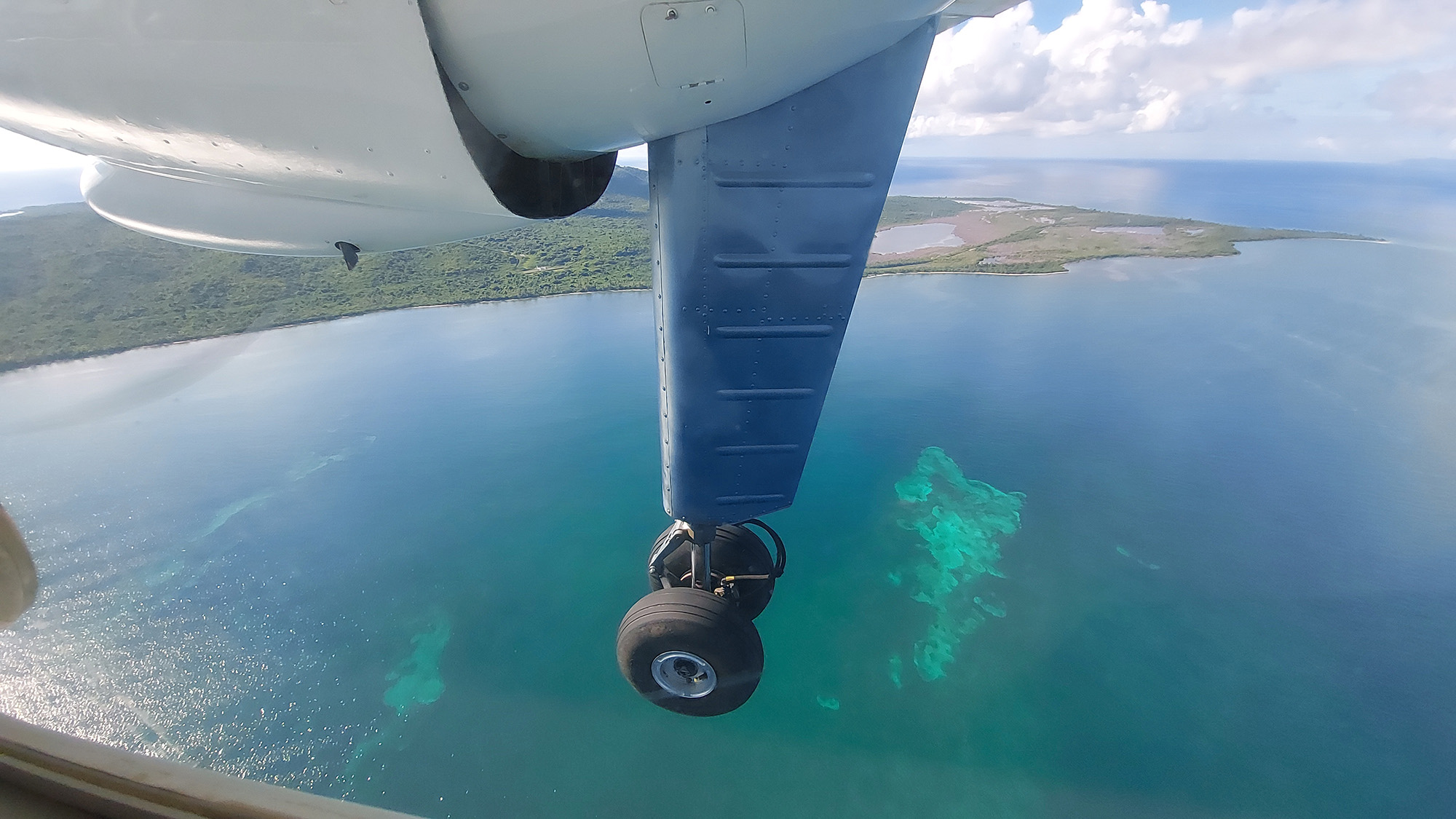
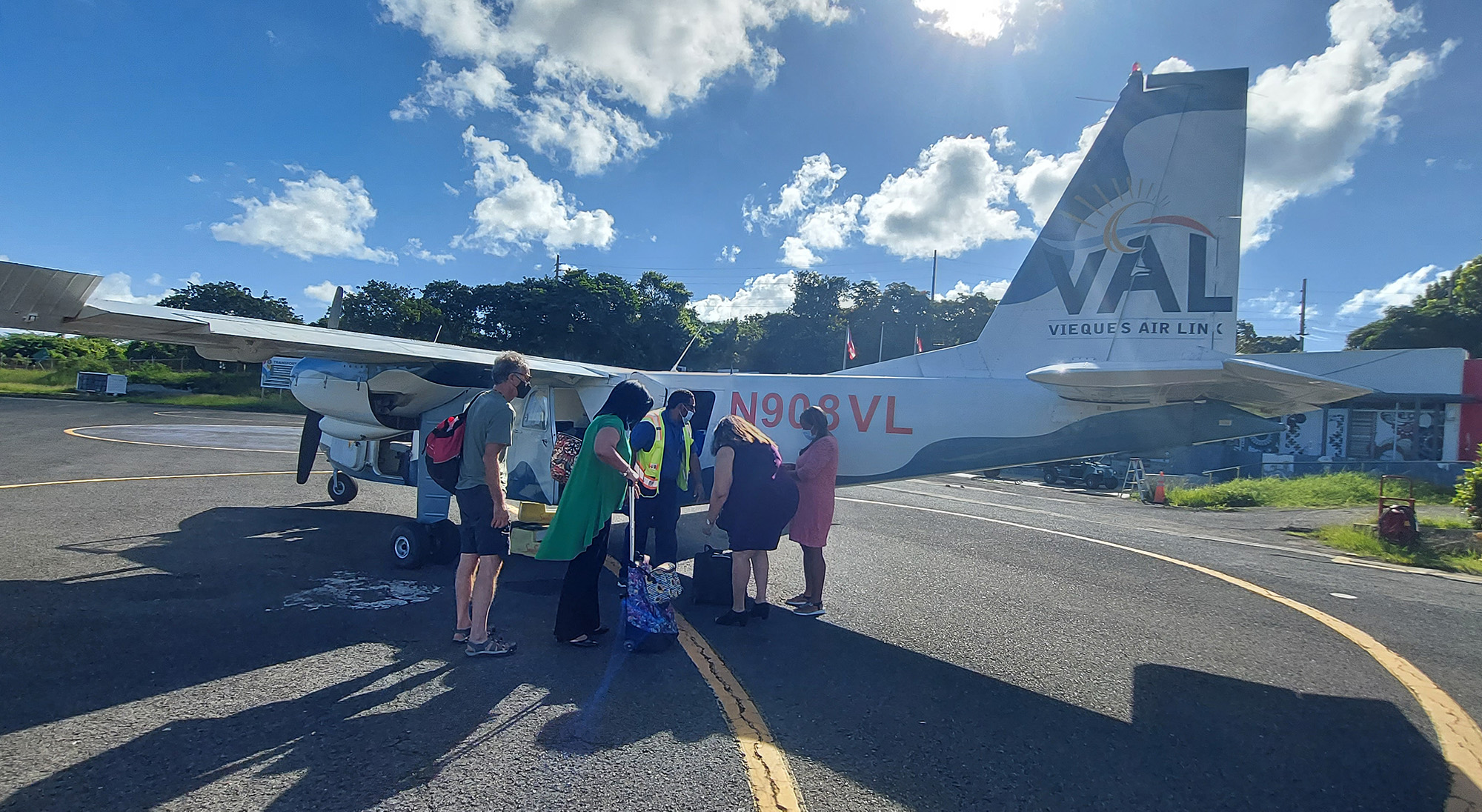
Vieques is located just 7 miles off the east coast of Puerto Rico. You can take a ferry to get there, but we opted for a ten-minute flight on Vieques Air Link from the east coast airport of Ceiba. The flight was $80 round-trip, much more expensive than the $4 R/T ferry ride. But the ferry can be unreliable, waits can be long, and the water can get very rough, inducing seasickness – unless you’re truly unlucky and can’t get on board at all. Get more info here.

We chose comfort, convenience, and guaranteed seats – which meant packing like sardines into a tiny 8-seat plane for the eight-minute flight. There are also flights to Vieques from two airports in San Juan, but which are more expensive. There are also several air providers, but we chose the local one, Vieques Airlink. Get more info here.

Exploring Vieques

People don’t go to Vieques for nightlife. They go for the nature. The island is quiet, lush, and uncrowded, with unmatched natural beauty. Vieques is home to the brightest bioluminescent bay in the world, Mosquito Bay. Travelers will discover countless undeveloped beach coves, as well as the largest natural wildlife refuge in the Caribbean. They’ll also discover rough, bumpy roads, which is why renting a 4WD vehicle is essential.

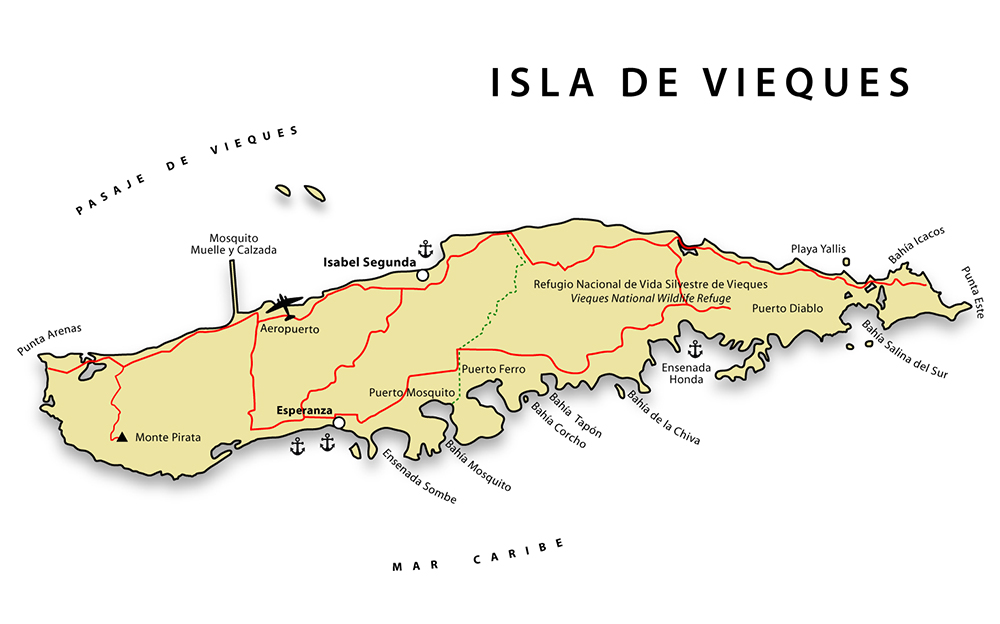
Vieques is 20 miles long and four miles wide. The Atlantic Ocean crashes against its rocky shore on one side, while the Caribbean Sea gently laps the golden sand beaches on the other.

Map of Vieques
https://creativecommons.org/licenses/by-sa/4.0, via Wikimedia Commons

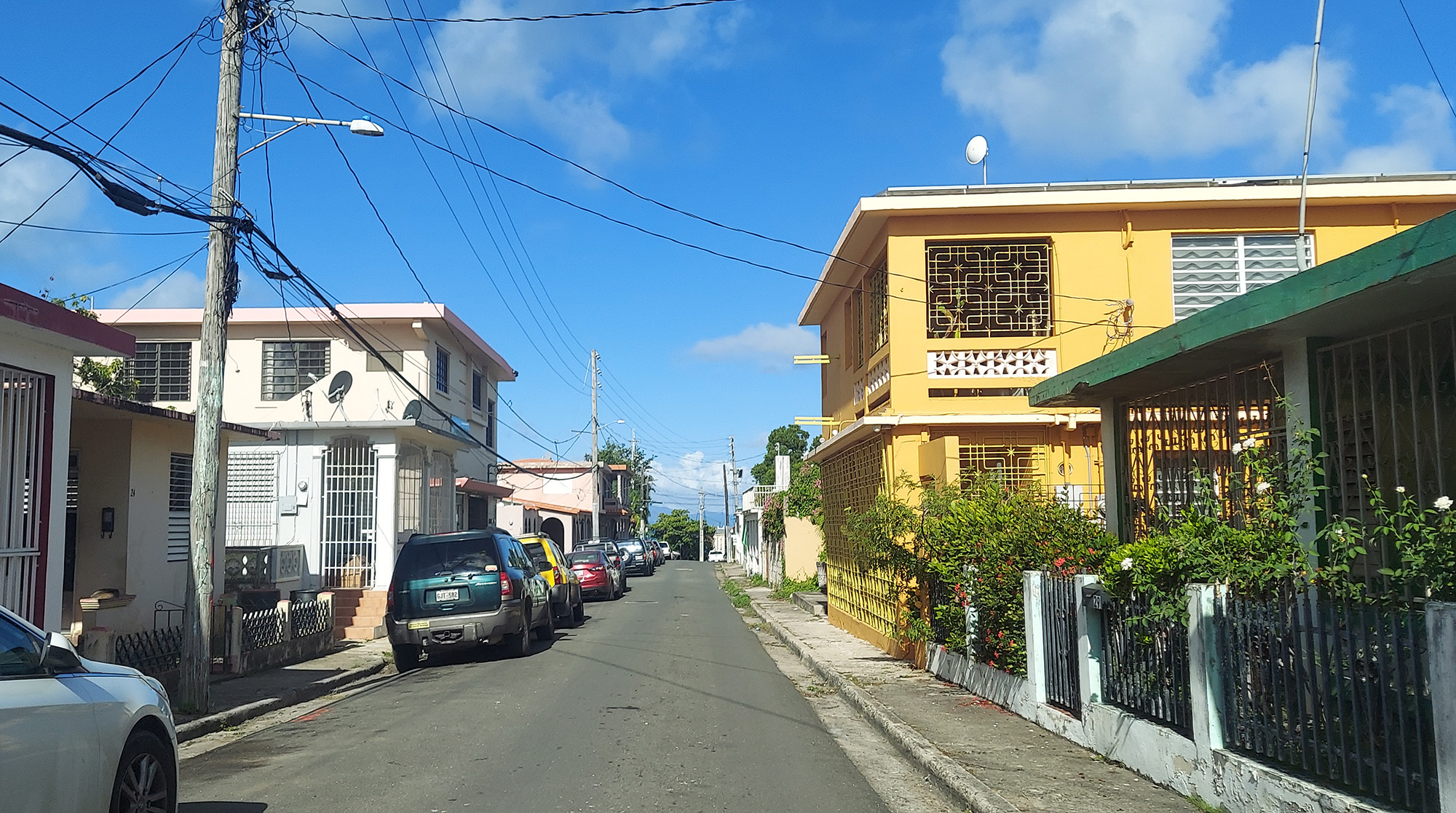
The island has two main towns — Esperanza on the Caribbean coast and Isabel Segunda on the Atlantic coast. Between them, stretching west to east, are lush mountains crisscrossed by narrow dirt roads, with a jumble of colorful concrete houses built to weather hurricanes and the beating sun.

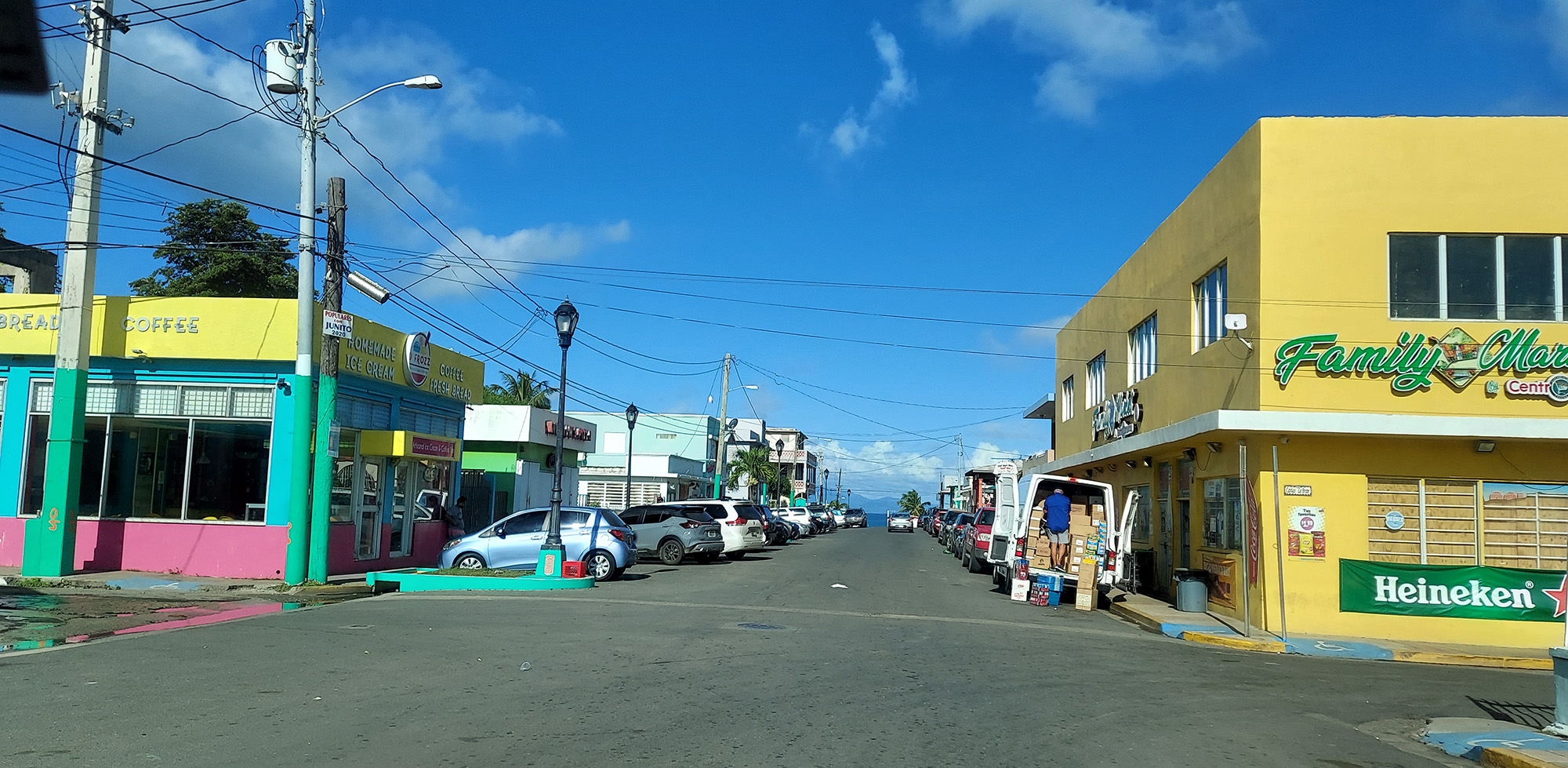
Isabel Segunda, to the north, has all the resources islanders need for their day-to-day lives — a couple of small supermarkets, a few gas stations, Town Hall, the main Plaza, the Ferry Terminal, and a bunch of restaurants and shops.

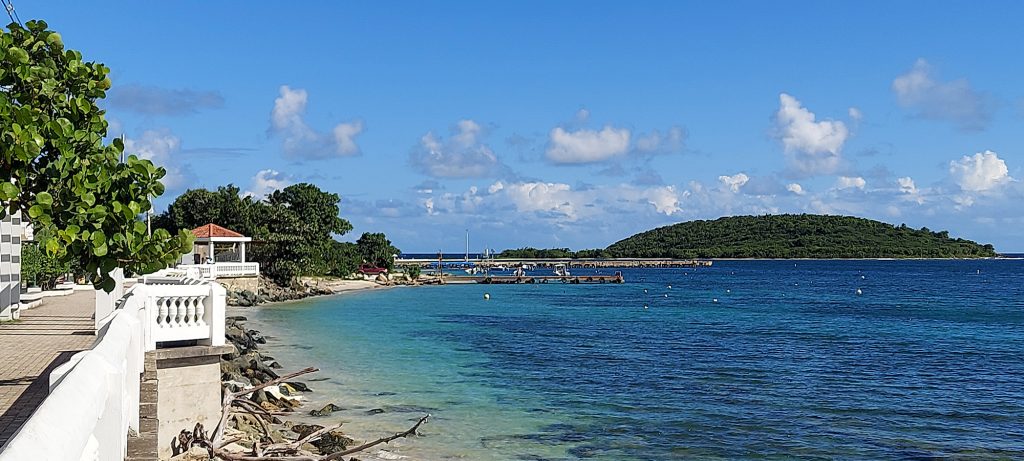
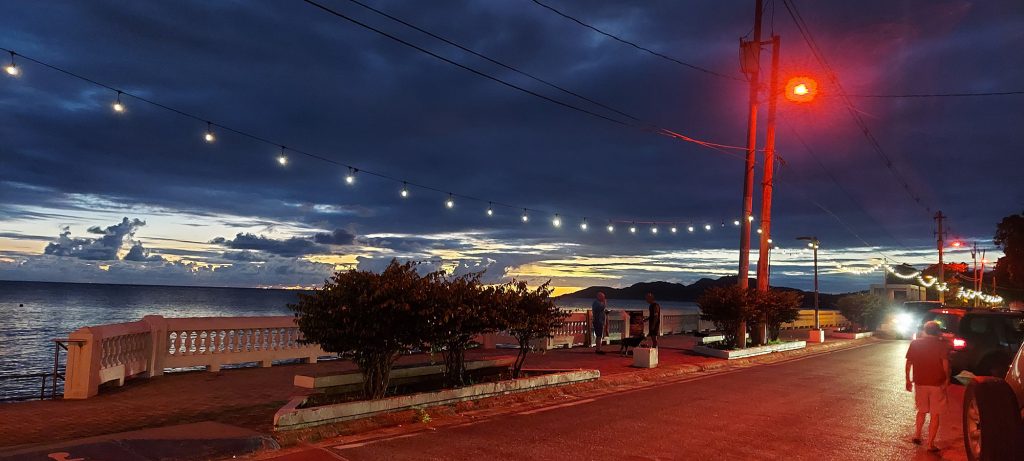
Esperanza, to the south, has a more bohemian island-life vibe, with a number of open-air bars and restaurants boasting overprices pina coladas and American barmaids, facing a malecon (kind of a boardwalk, only built Caribbean-style with concrete instead of wood) along the coast with spectacular views of Esperanza Bay. Esperanza has a beach within walking distance, making it possibly a better choice if you choose (or are forced) to come to Vieques without a vehicle.

Esperanza by day
And by night

All over the island, businesses and homes are painted with colorful murals featuring mermaids, iguanas, horses, and tributes in memory of lost relatives. It’s a truly charming place.

Getting Around

There is no public transit on Vieques, and we read that taxis don’t like going to the deserted beaches, and may not be available to bring you back at the end of the day. So unless you stay in Esperanza, which has lots of restaurants and several beaches within walking distance, you need to rent either a golf cart or a 4WD vehicle.  Why 4WD? Because some of the roads to the beaches, like the one to Black Sand Beach, are car-swallowingly big.

The biggest piece of advice we got about rental cars was to book your car first, then build your vacation around it, because there are a limited number of vehicles available. So the availability of this red jeep at Island Jeep and Coqui Car Rental for Nov. 9-11 pretty much decided our timing!

We didn’t regret the expense. A golf cart would have been cheaper, but they only go about 15 mph, and you have no protection from the tropical heat or sudden rainstorms except the small roof. We experienced some very bumpy roads, and Bob enjoyed tooling around in the jeep on them, while I clenched my teeth.

Our Lodging

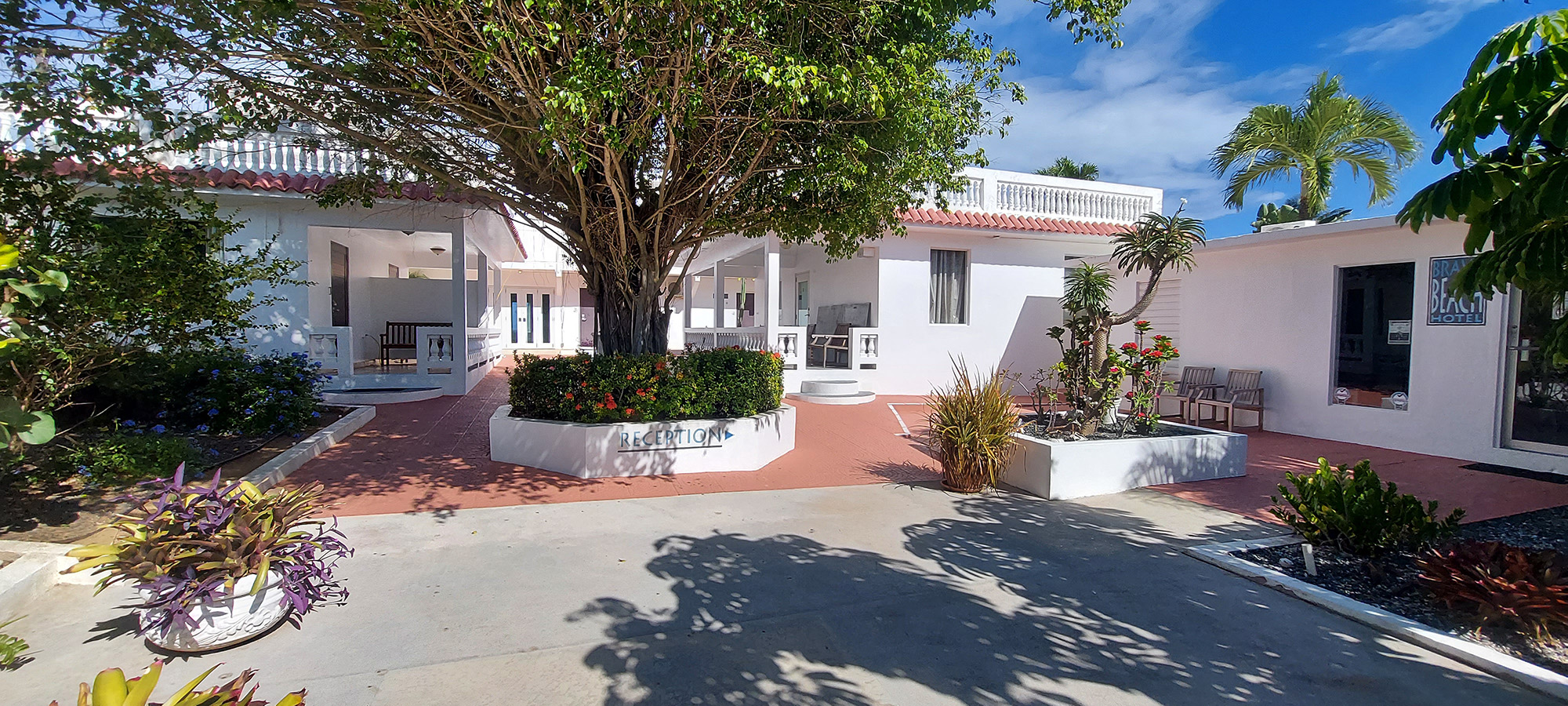
There are no big chain hotels on Vieques. You’ll find a choice of boutique hotels, guesthouses, Airbnbs, and hostels for the backpacking crowd. We stayed at the Bravo Beach Hotel, a boutique hotel located on the edge of Isabel Segunda. For just $90 a night, we had a spacious room with a queen bed, refrigerator, large bathroom, and little porch with a bench.

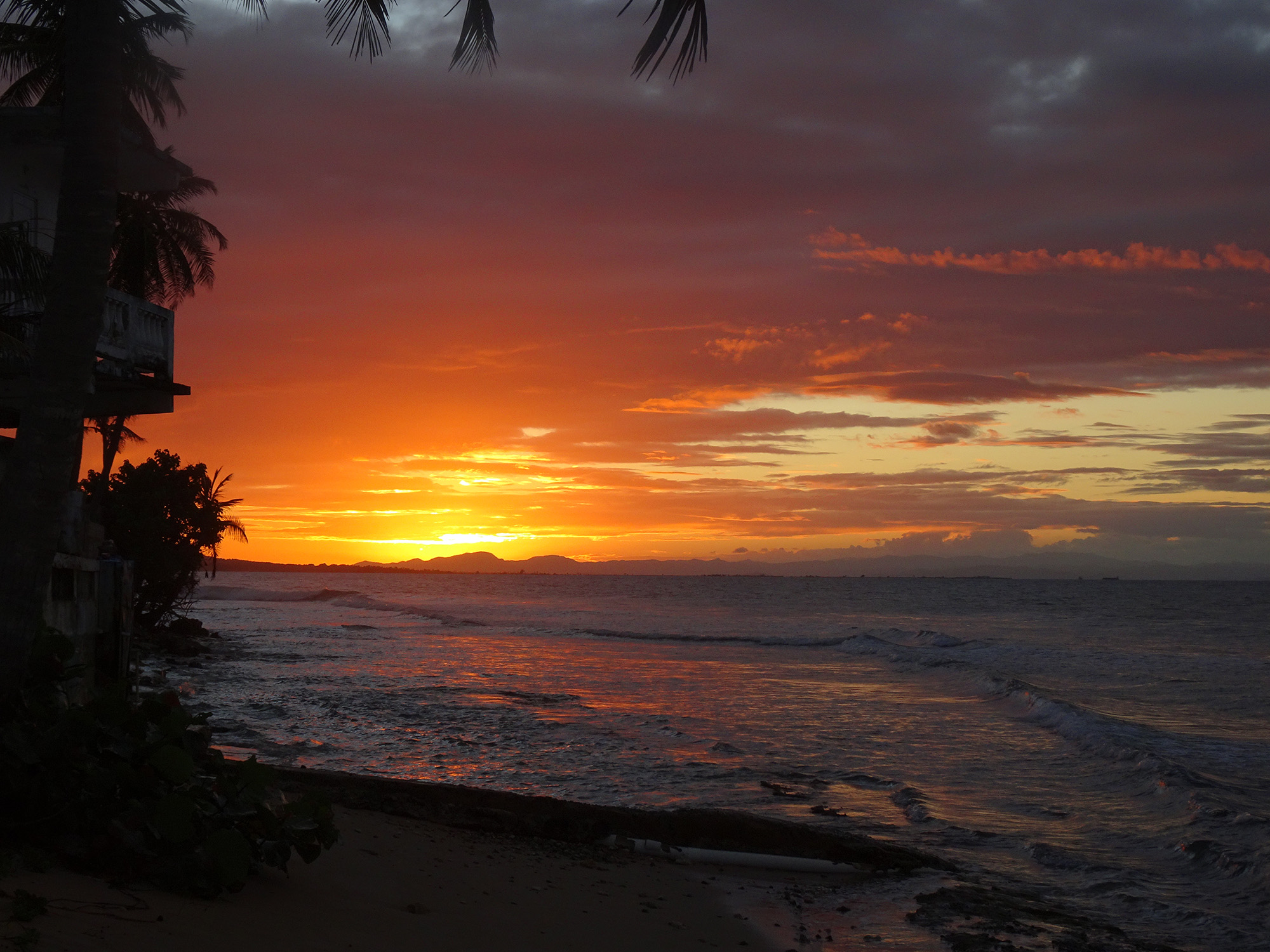
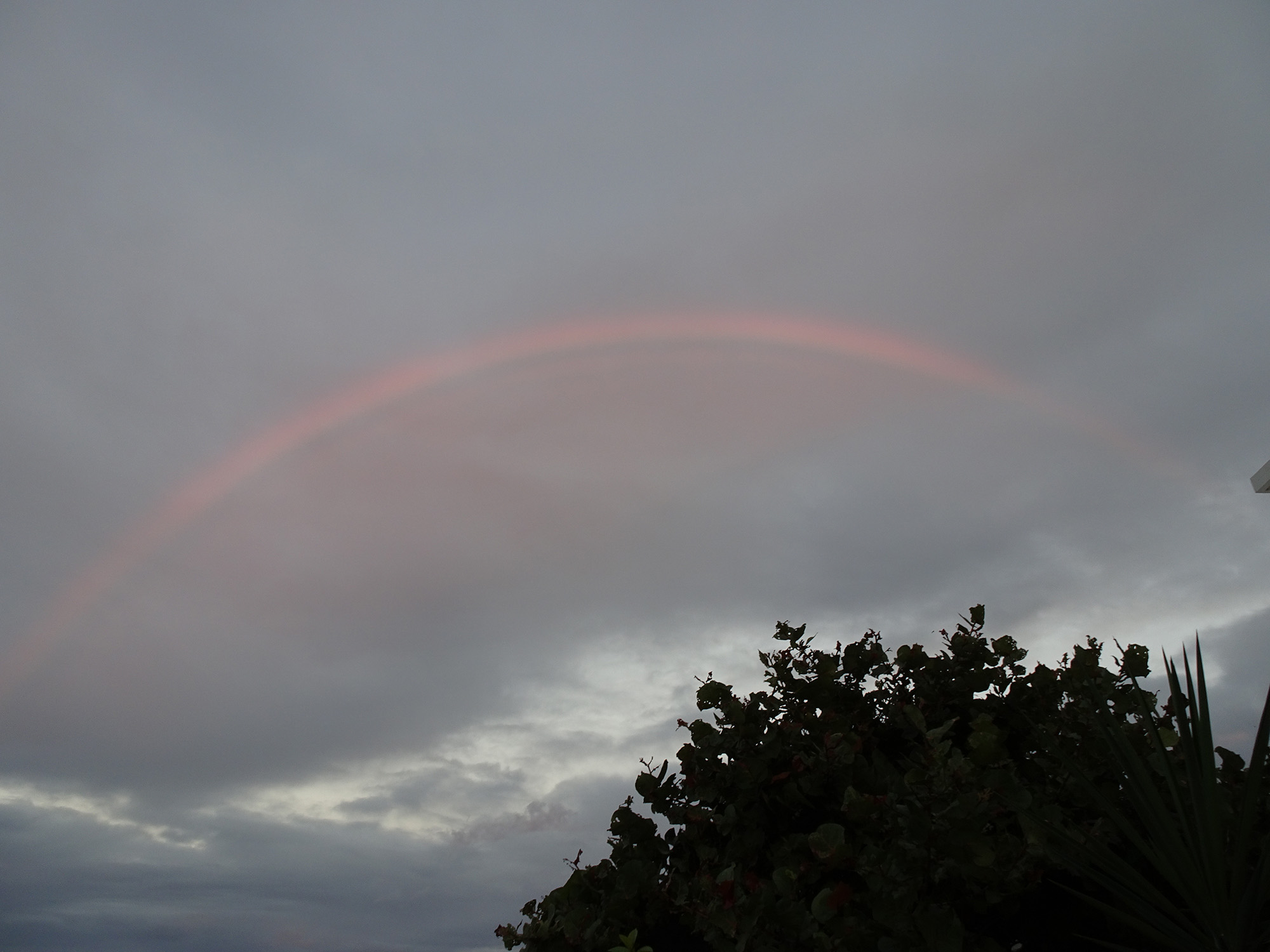
This boutique hotel also had two swimming pools, one of which was right next to the ocean, where I was able to witness a couple of stunning sunsets and one incredible rainbow.

The hotel also gave us the use of beach chairs, swim towels, and even a cooler, which turned out to be really useful since the beaches we visited had no amenities.

The hotel wasn’t serving breakfast because of COVID, but we found a place called El Café de Rincon (Coffee Corner) in a food truck park on the other side of town that we really enjoyed.

Horses

Horses roam freely throughout the island, thousands of them. Everywhere you go you will see them: mothers feeding foals on the roadside, herds hanging out in the nature reserve, horses strolling down the main street or passing through a food truck park, islanders riding horses in a choppy trot up hilly, narrow streets. Their omnipresence feels like a return to a simpler time. Learn all about them here; it’s hilarious!  

We also saw many roosters, a couple of wild pigs, a couple of huge green iguanas, and countless snowy egrets, pelicans, and other seabirds.

Up next in Part 2 … Beaches, spectacular snorkeling, and the world’s brightest bioluminescent bay!

Traveling in COVID Times

Bob and I are thankful to be back on the road, living in Puerto Rico, but COVID dominates the landscape.

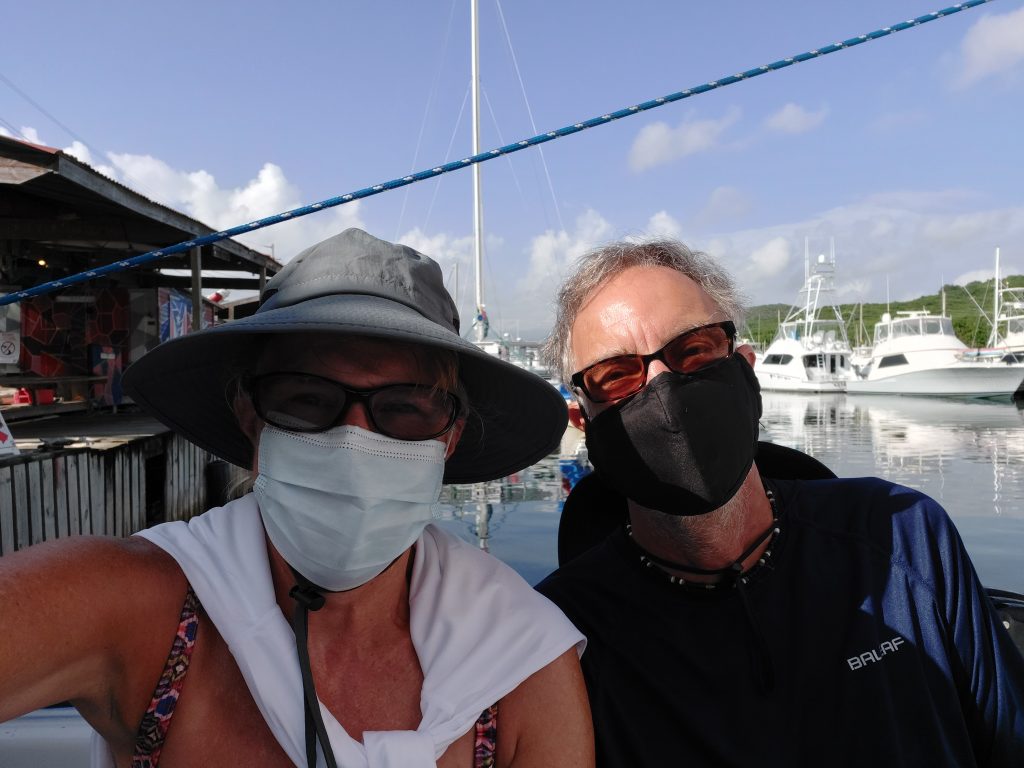
On the catamaran, wearing masks

I’m writing this blog today because I have a dry cough, probably related to forgetting to take my allergy medicine yesterday. It kept me up during the night, and suddenly I thought, What if it’s COVID? I left our bed, took the meds, and lay on the couch till the coughing stopped.

Then this morning, I got a few texts from our oldest child, Aryk, now living in Bath, England, who is visiting a friend for the weekend who lives a few hours away. Aryk had to navigate British Railway, including a connection in a crowded station, to get there. People were coughing in their train compartment, which of course had Aryk worrying: What if it’s COVID? Will I get it? And then will I give it to my immunosuppressed friend?

I did some research into British Rail and discovered the agency is using the most state-of-the-art HEPA filters to keep the air clean in its trains, and scientific studies have not found COVID in their cars or on surfaces. But just to make sure, Aryk took a COVID test before they would unmask to enjoy their time with their friend.

In fact, Aryk, who has to take buses to get anywhere, takes a COVID test every week, just as a precaution. They don’t want to get it, and they don’t want to give it to anyone. And it helps alleviate their chronic anxiety over this nasty pandemic to know, once a week, that they are still COVID-free. Fortunately, the National Health Service (NHS) in England gives these tests away for free, unlike in the United States, where we pay an arm and a leg.

COVID Vigilance

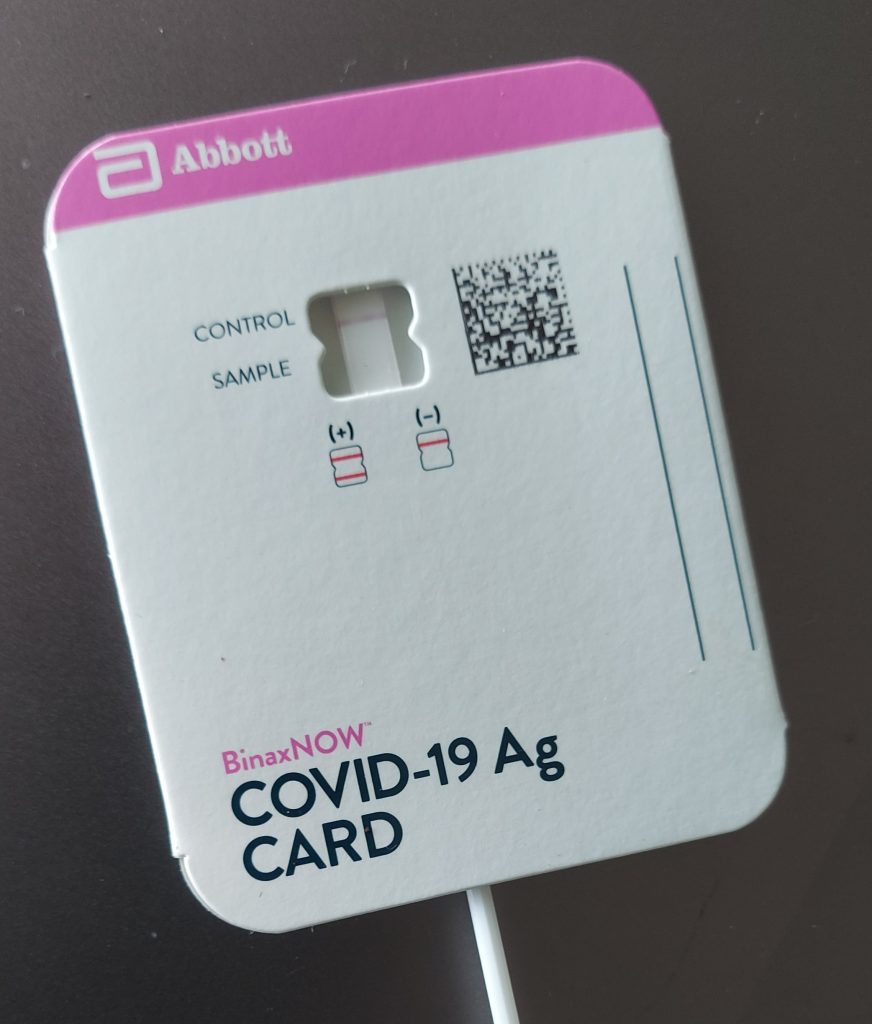
But I found a cheap COVID test source in Wal-Mart and took a test myself today. I don’t want what I think is allergies to make Bob sick, or any of the people around me. Thankfully, it was negative.

One of the reasons we chose to live in Puerto Rico this fall is because warm weather means outdoor living, and outside is the safest place to be during this pandemic.

COVID-19 and Puerto Rico

But of the territory’s proactive response to the virus also played a huge part in our decision. COVID prevention is everywhere here. We got our temperature taken at the airport before we could enter. Even before we boarded our plane, we had to provide documentation of our double-vax status to our airline. Once we arrived on the island, we signed up for a COVID passport program called VacuPass PR, because restaurants need to see proof of vax status to let you in, and we didn’t want to carry our vaccination cards everywhere.

VacuPass PR

People were masks everywhere, even strolling down the street. Today we passed by the town square and saw a Cancer and COVID Prevention Fair going on, with blaring speakers, aerobic dance on a big stage, kids’ activities, and a COVID Vaccine Tent.

Unlike the United States, NO ONE is maskless in Puerto Rico. You cannot walk into our apartment building without a mask on. We had to wear masks to board the catamaran to go snorkeling the other day, although we were soon allowed to remove them. People eating outdoors wear masks until their food or drinks arrive. Heck, they wear them when they’re strolling on the beach! They just this week lifted a curfew on nightlife between midnight and 5 AM.

That is why this island leads the nation in COVID-19 vaccinations, even among children. Still recovering from Hurricane Maria, it needed to avoid overwhelming its health care facilities. The government got right on the pandemic, and the people cooperated. Our experience with Puerto Rican government when we lived here 27 years ago did not include this level of efficiency, and we were surprised and impressed.

Although Bob thinks their mask-wearing is a little excessive, I like it. It makes me feel safe. I took the COVID test today because these people deserve to be protected. It’s respectful. The mask is hot on my face, and I hate it. But I would hate to get COVID a lot more.

And as of today, I am still negative! And for me, traveling in COVID times, being negative is a real positive.

Vacation in England, Part 2: London

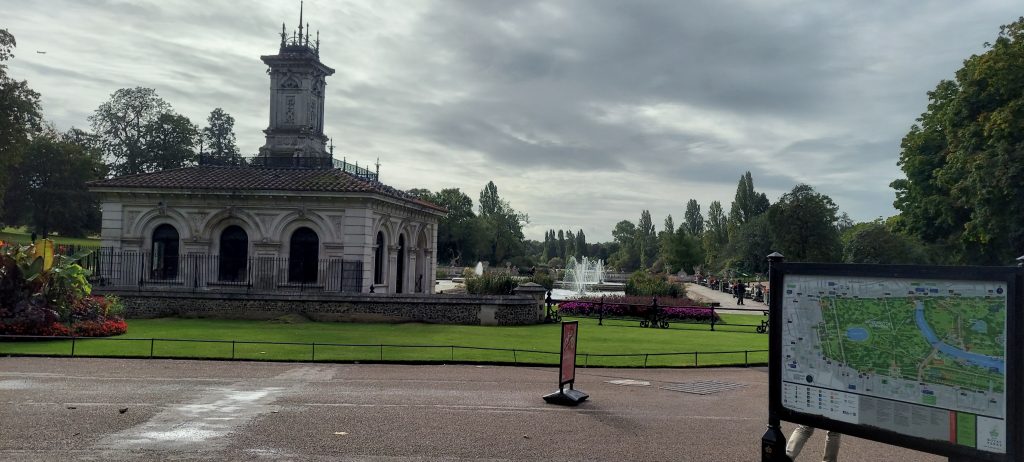
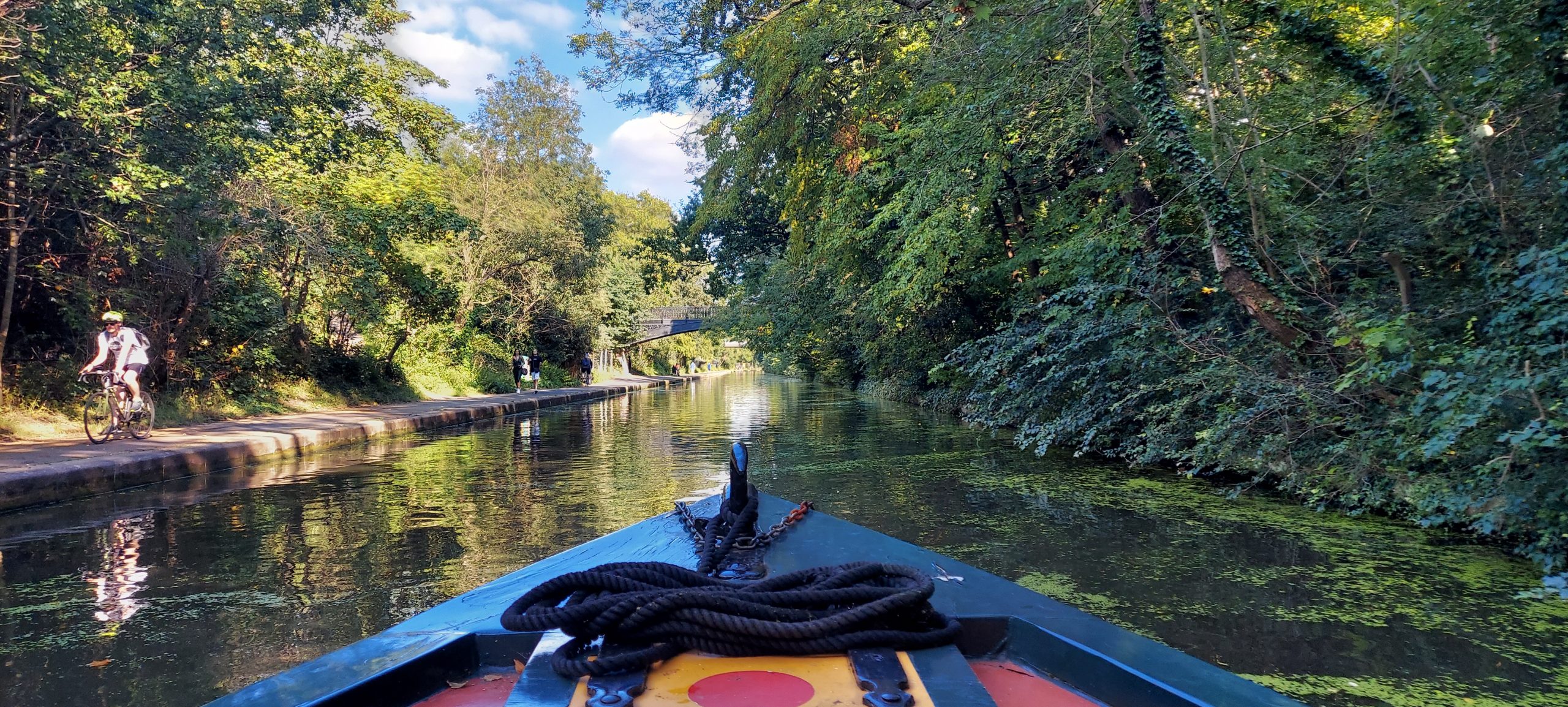
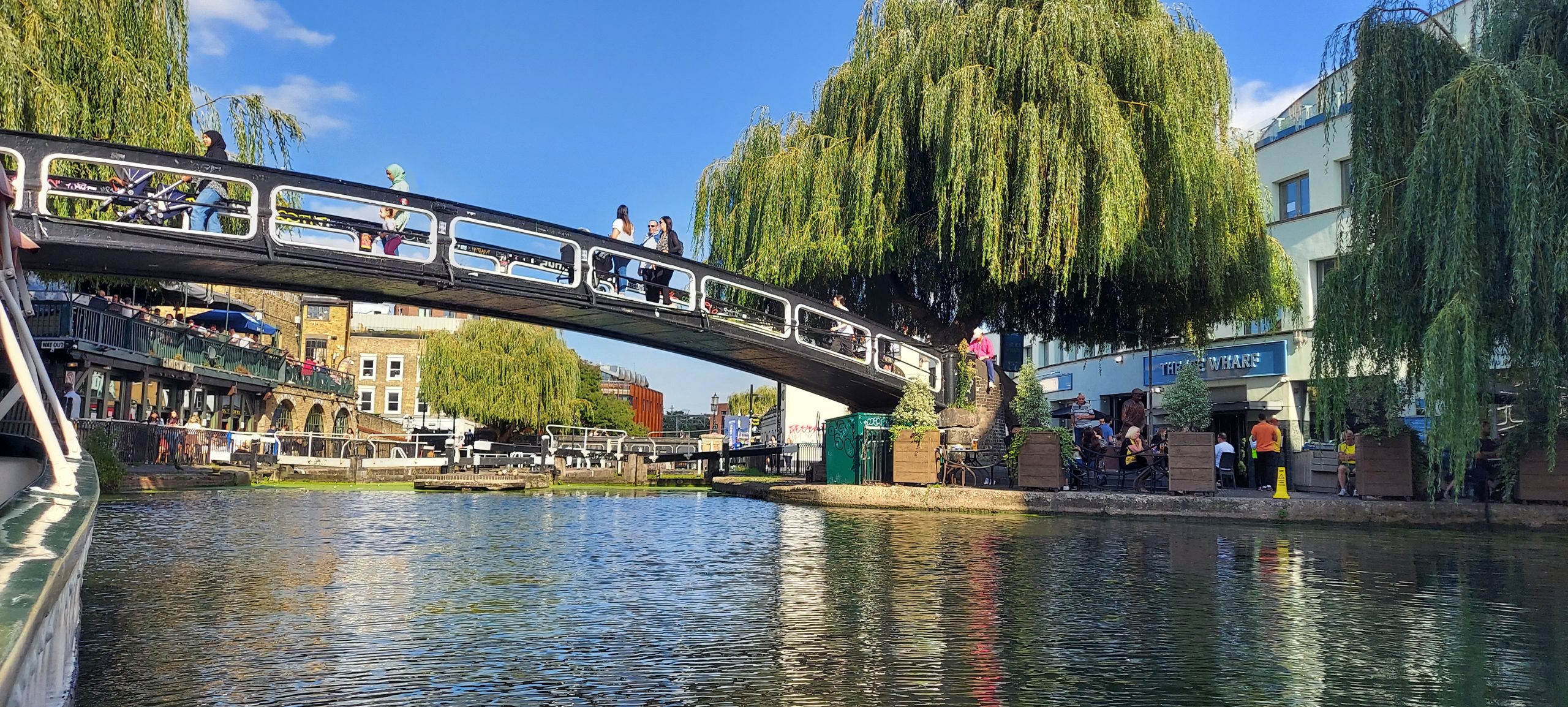
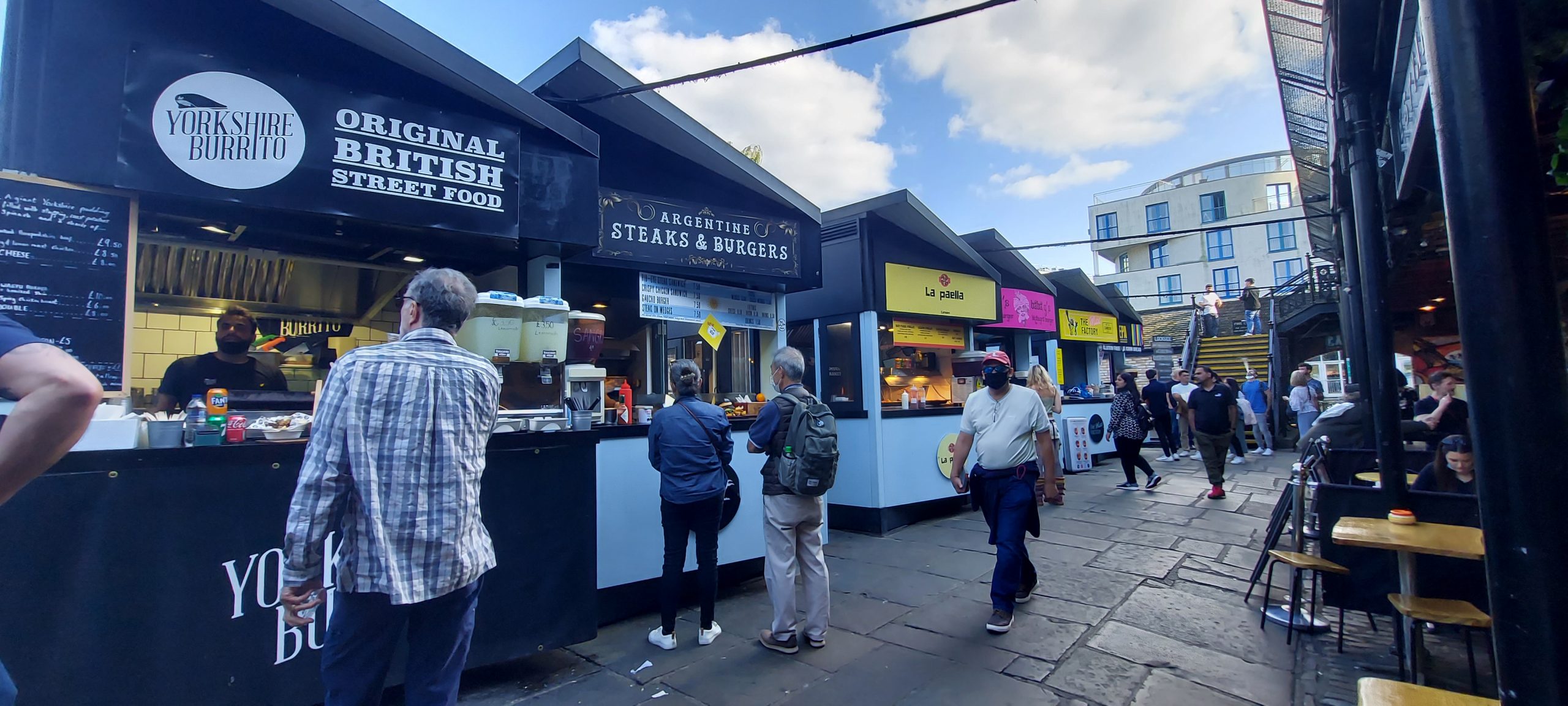
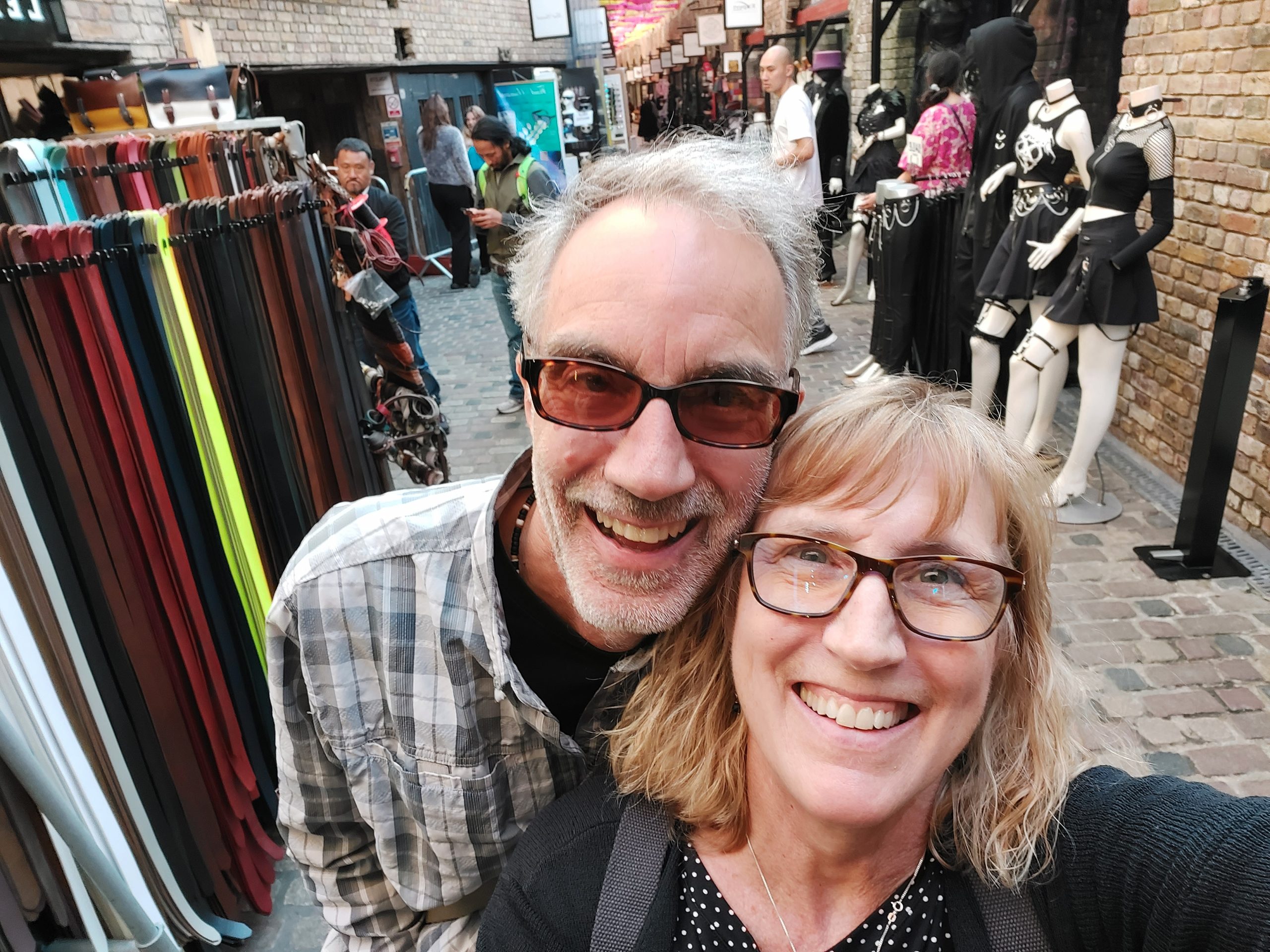
London was a whirlwind of walking (averaging six miles a day), taking boat rides (on the Regent’s Canal, the Thames twice, and even a paddleboat on the Serpentine), running in Hyde Park, exploring markets (Camden Town was our favorite), and more.

Lisa enjoyed the theater on four occasions: Hamilton (excellent, again), Pretty Woman (okay but needing a little work), Back to the Future (surprisingly clever), and SIX (phenomenal).

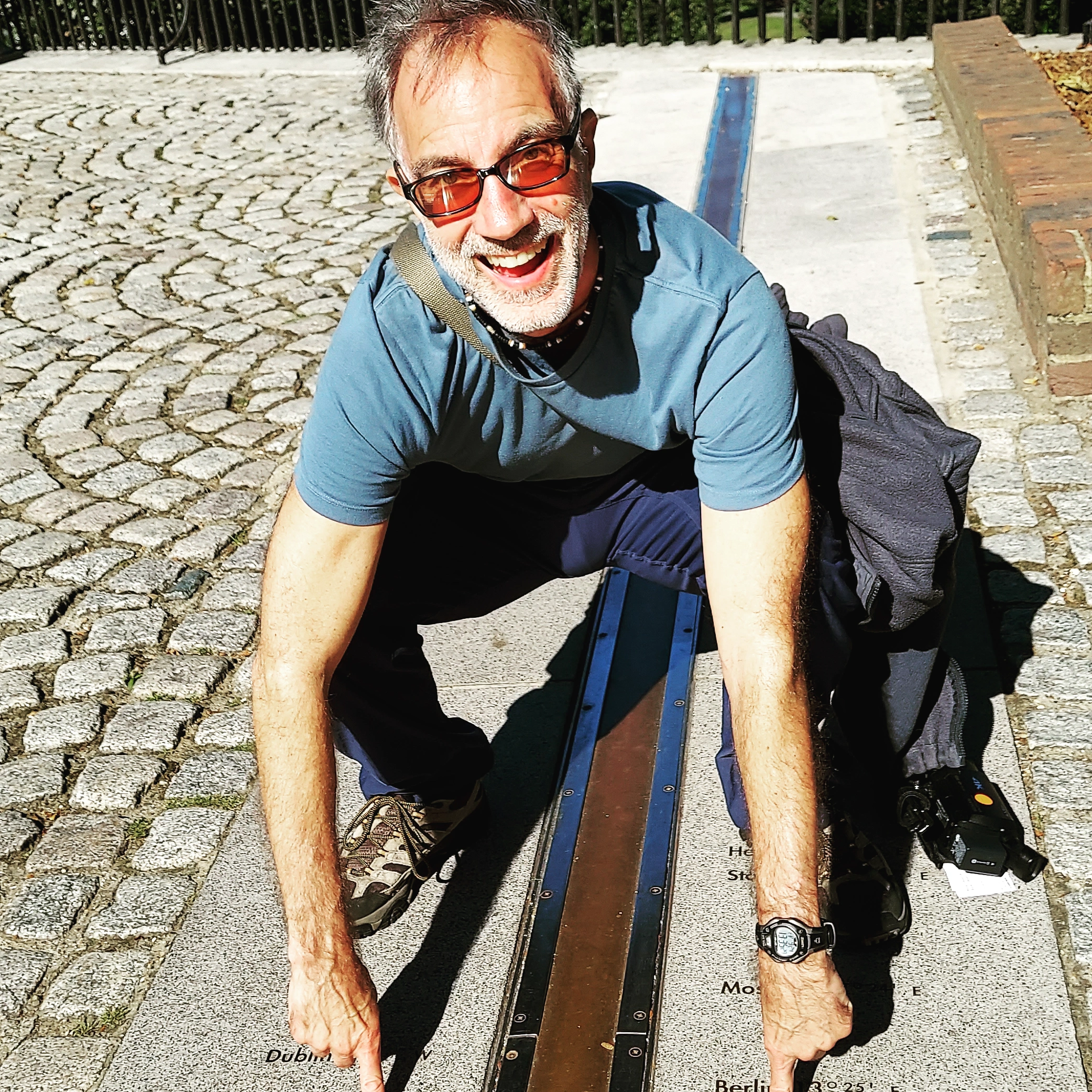
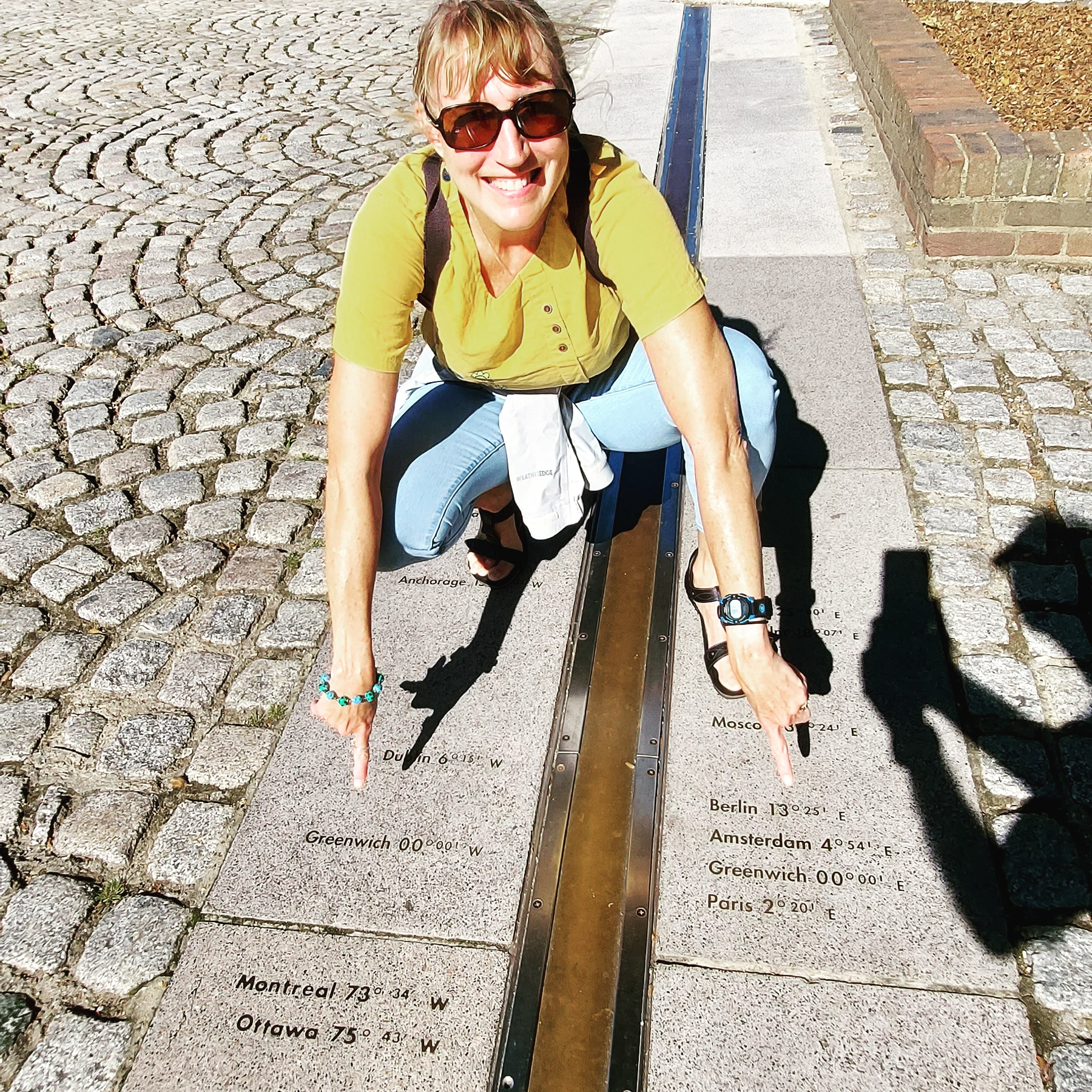
We visited Greenwich and straddled the Prime Meridien.

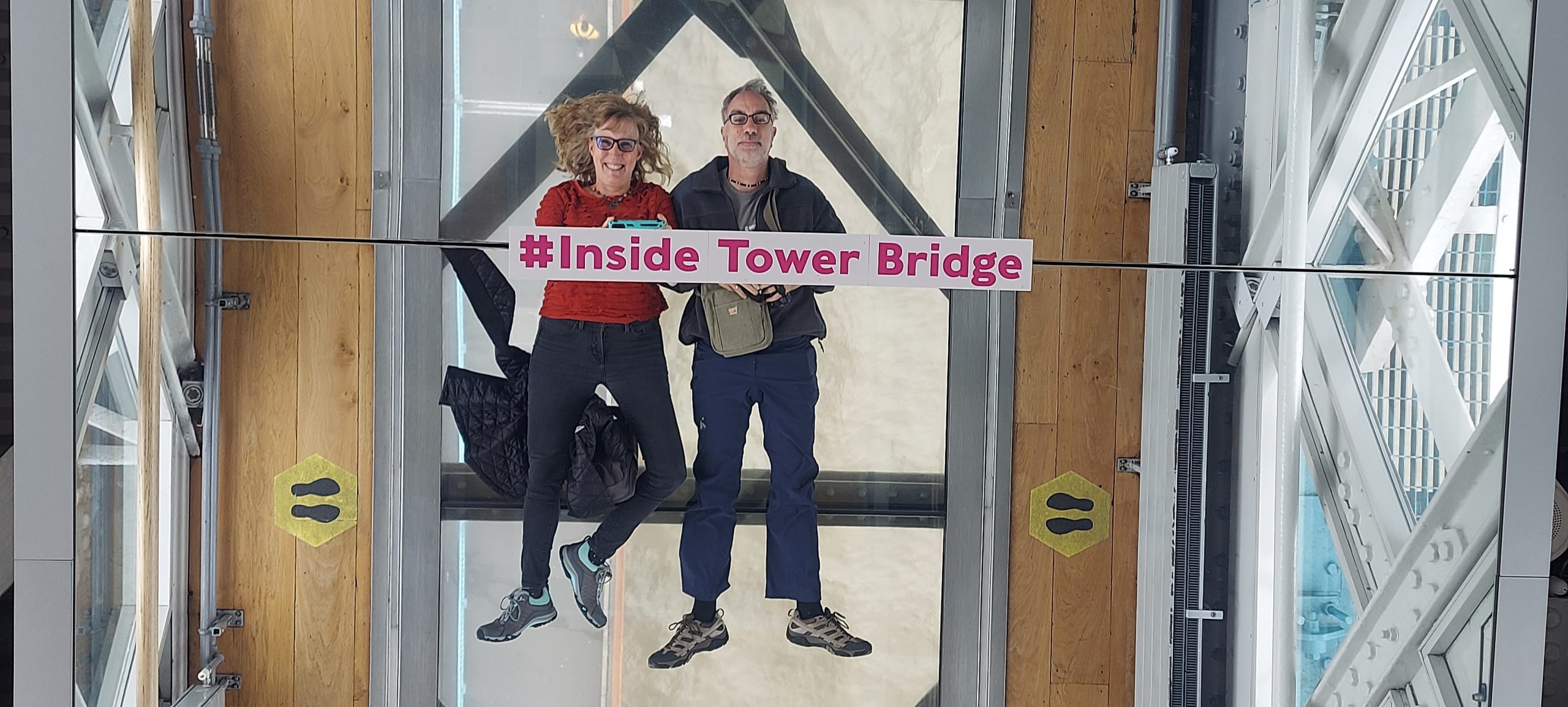
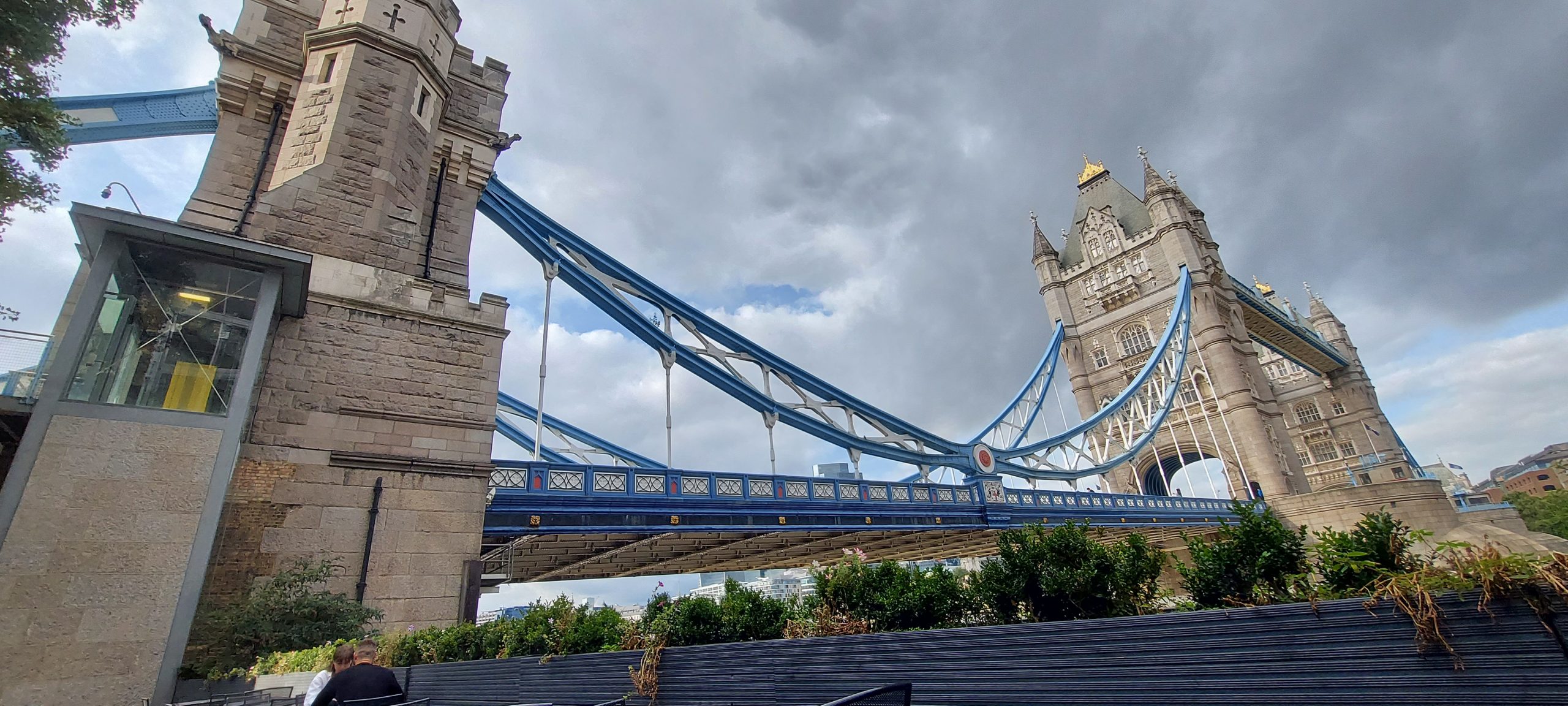
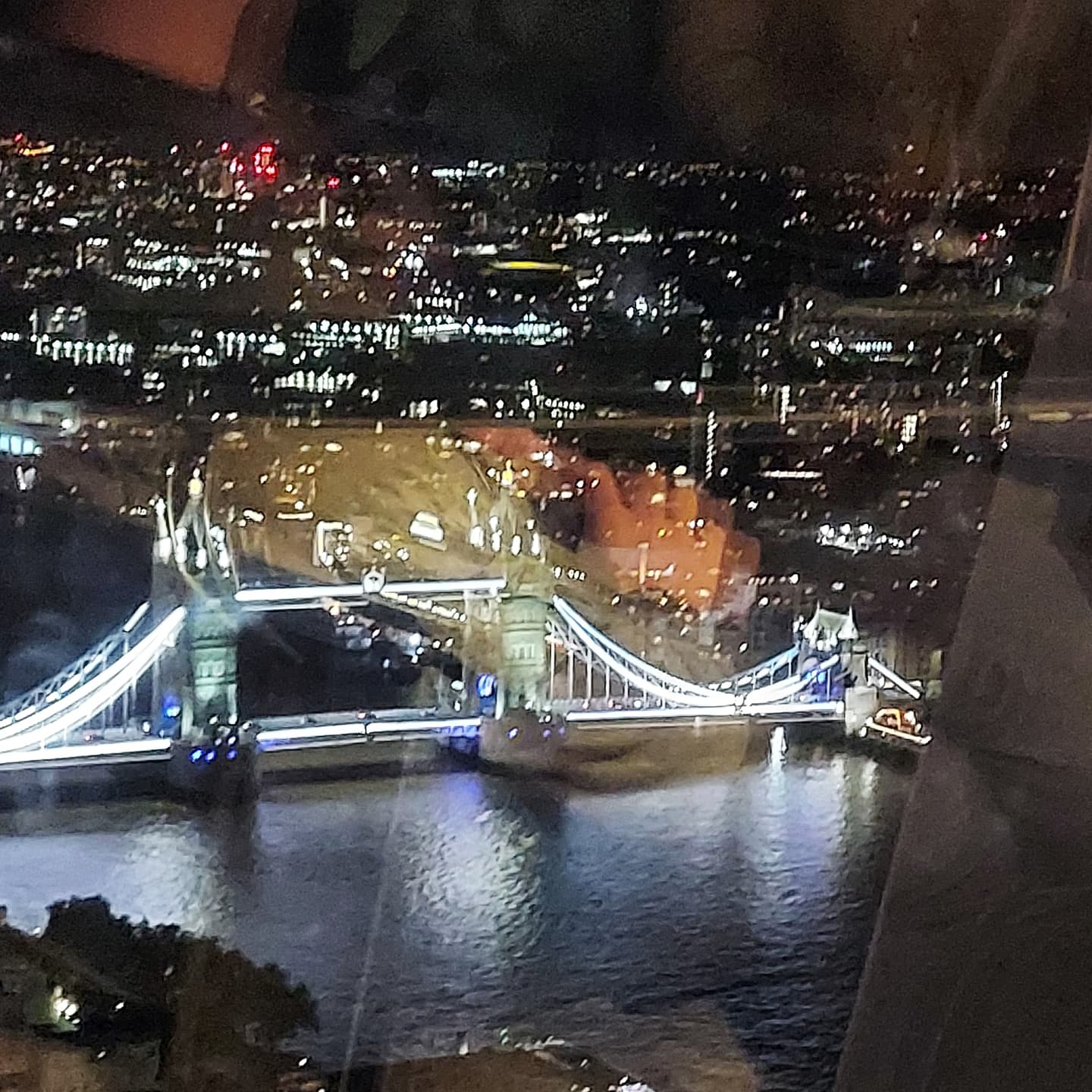
We toured Tower Bridge.

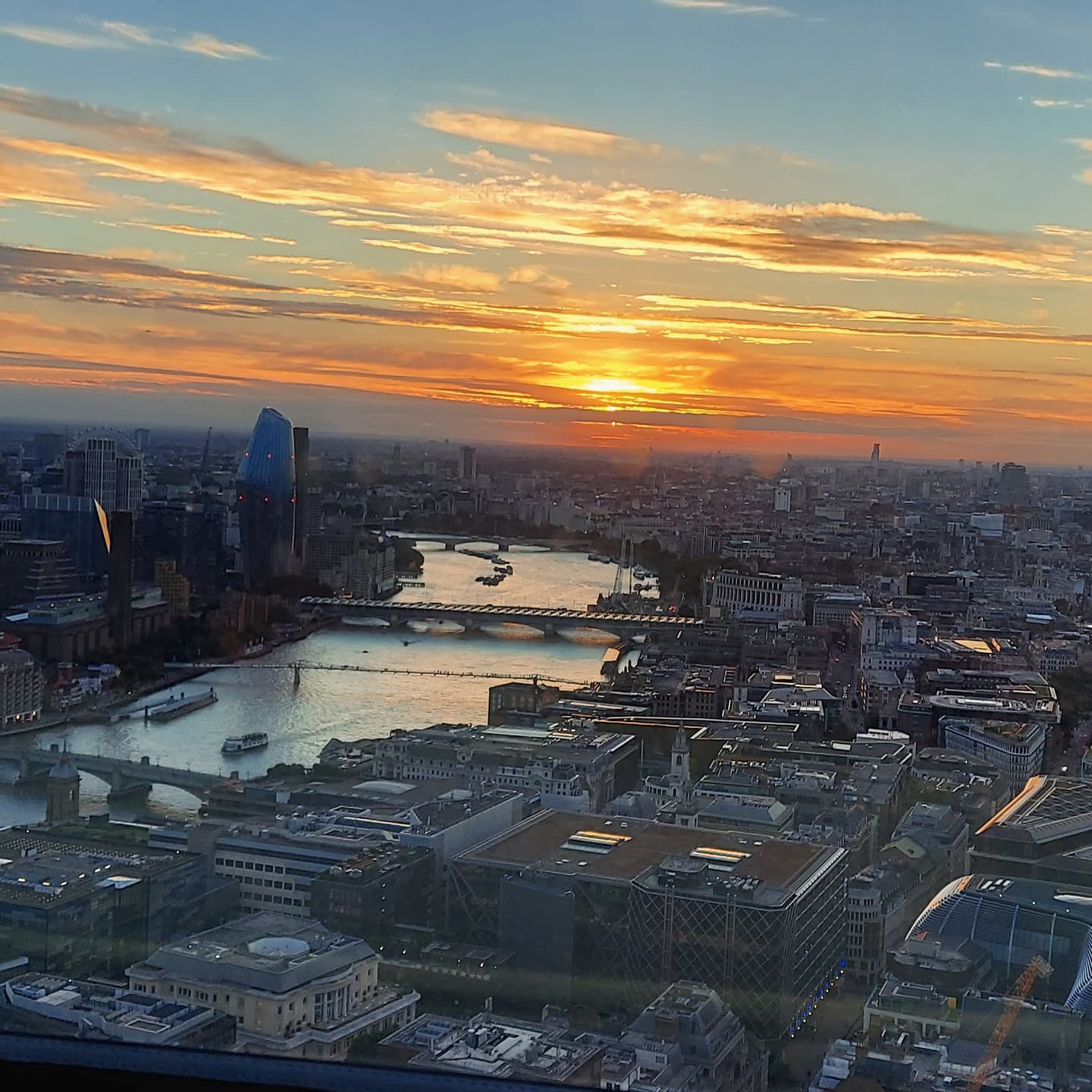
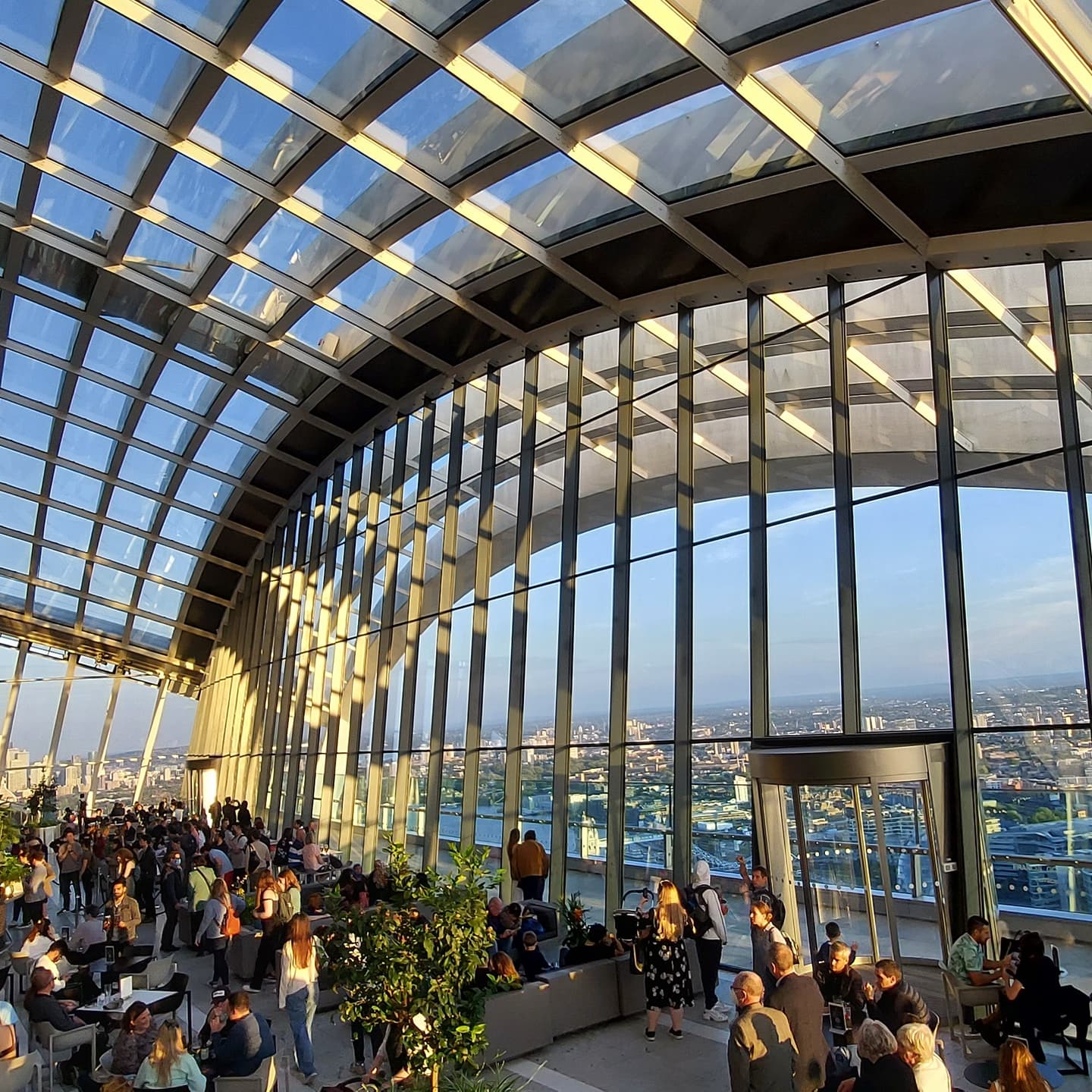
We went to the top of the Walkie Talkie Building at sunset.

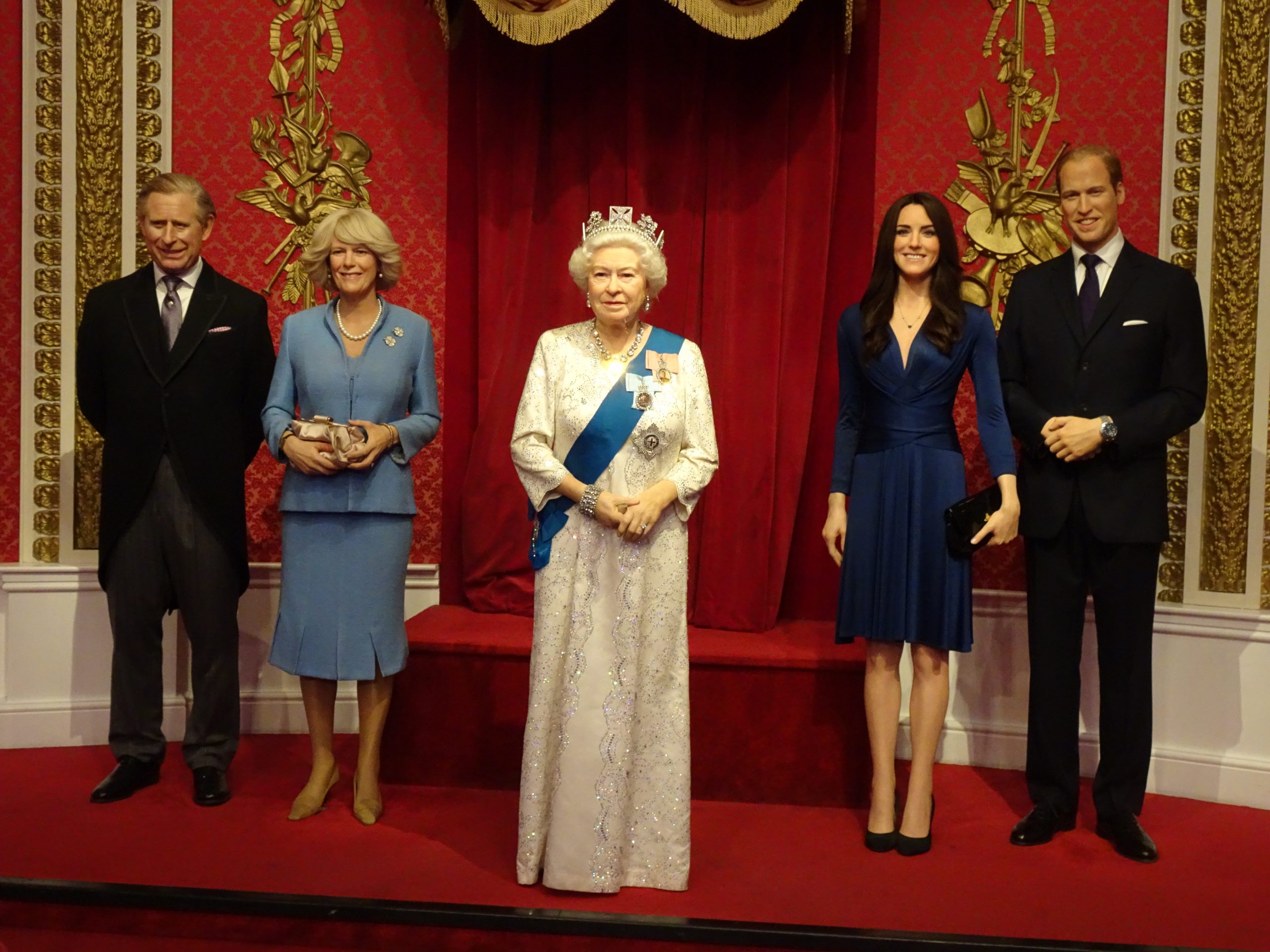
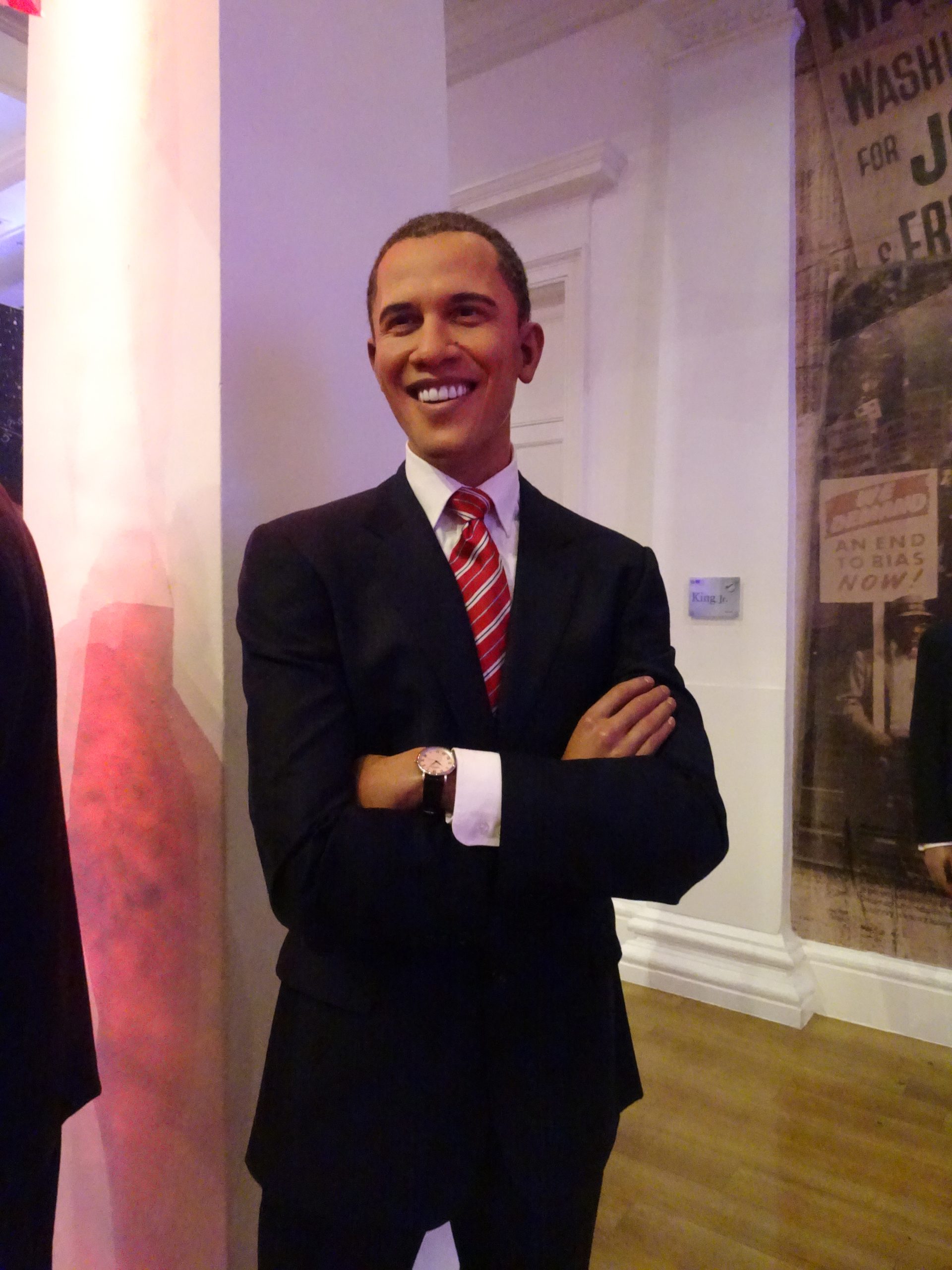
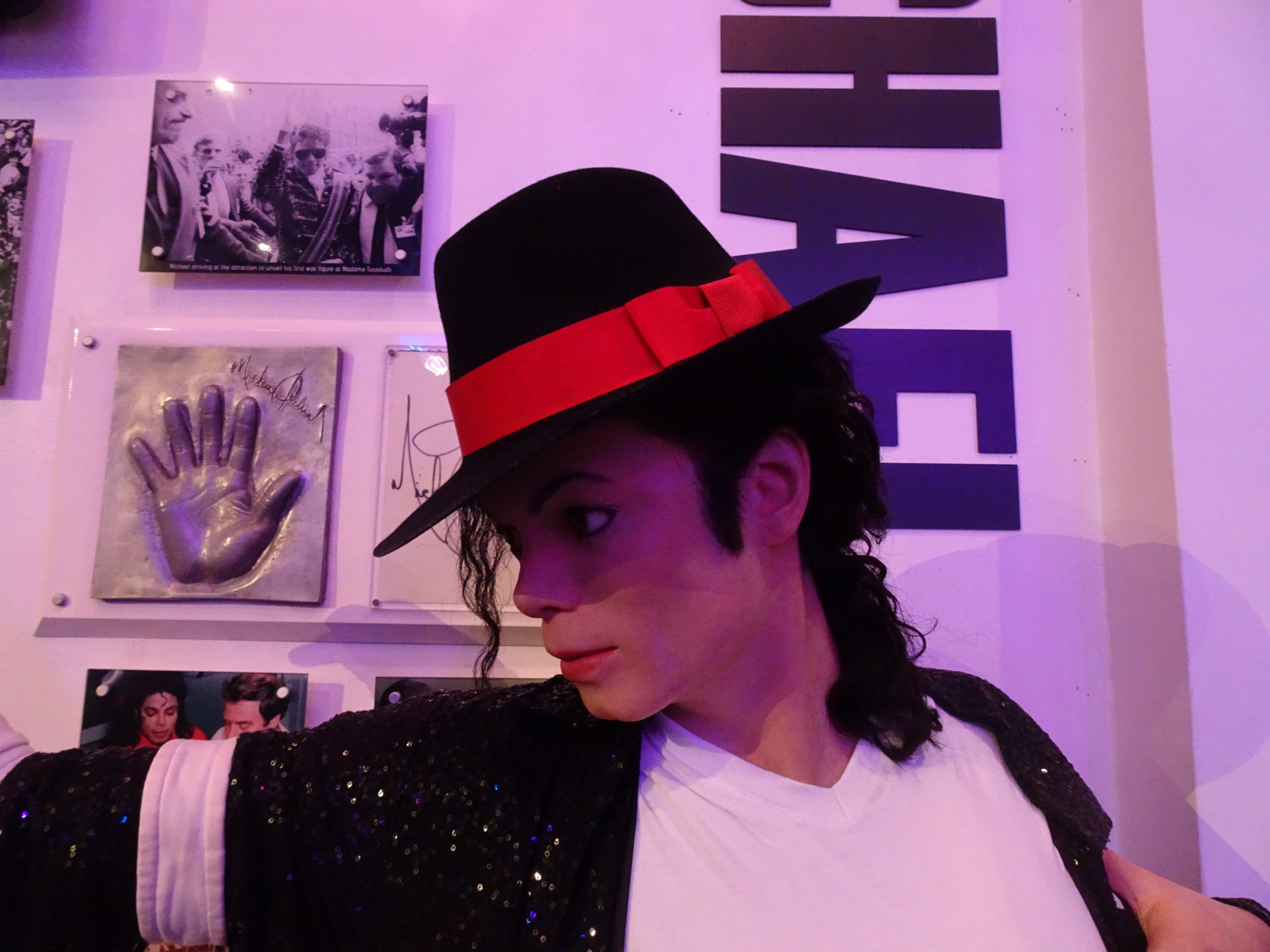
We embraced the iconic Madame Tussaud’s.

We climbed the Marble Arch Mound, and discovered a laser structure museum inside.

Lisa visited Kensington Palace.

We took a narrowboat ride on the Regent’s Canal.

We visited Camden Market.

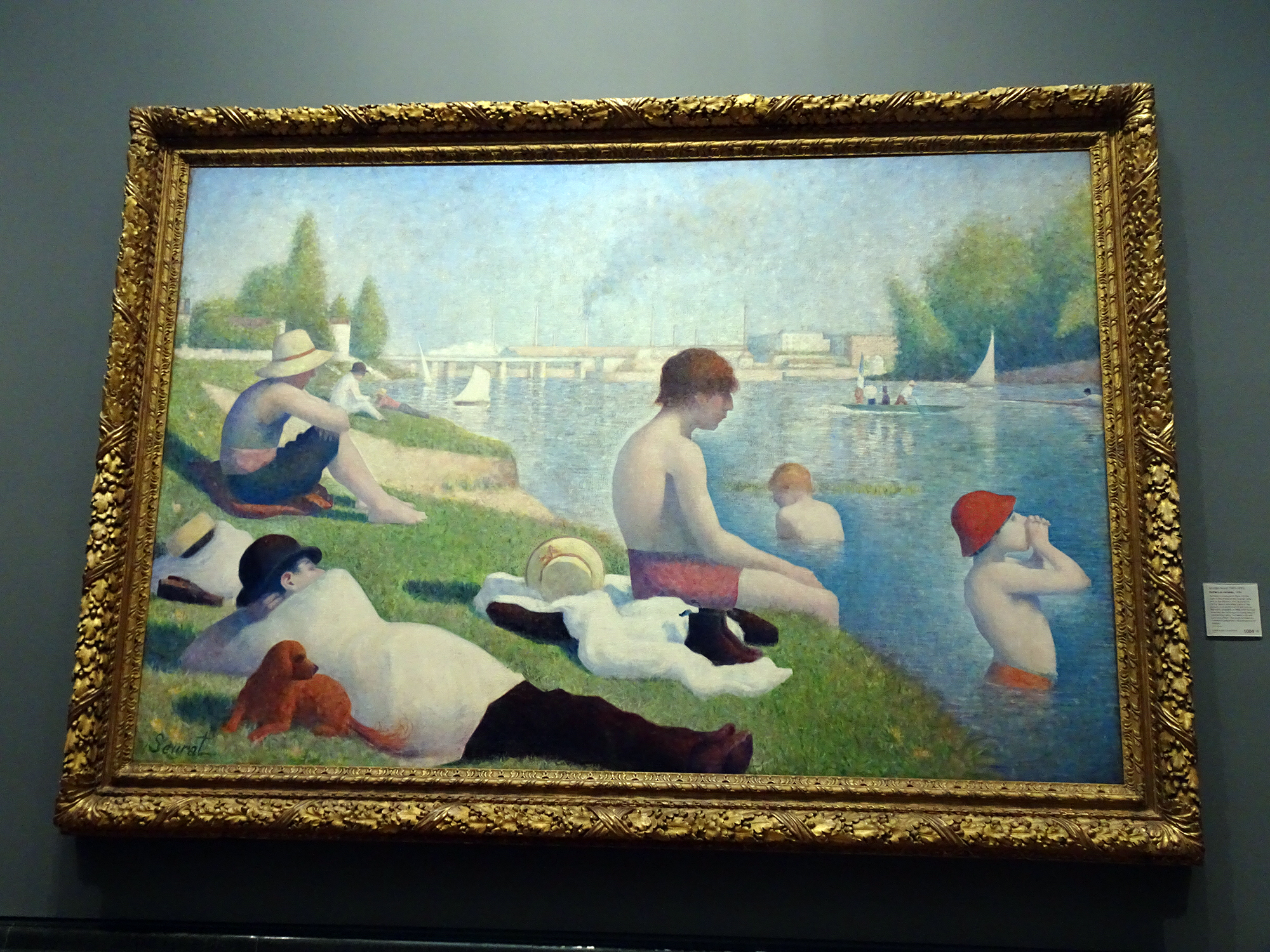
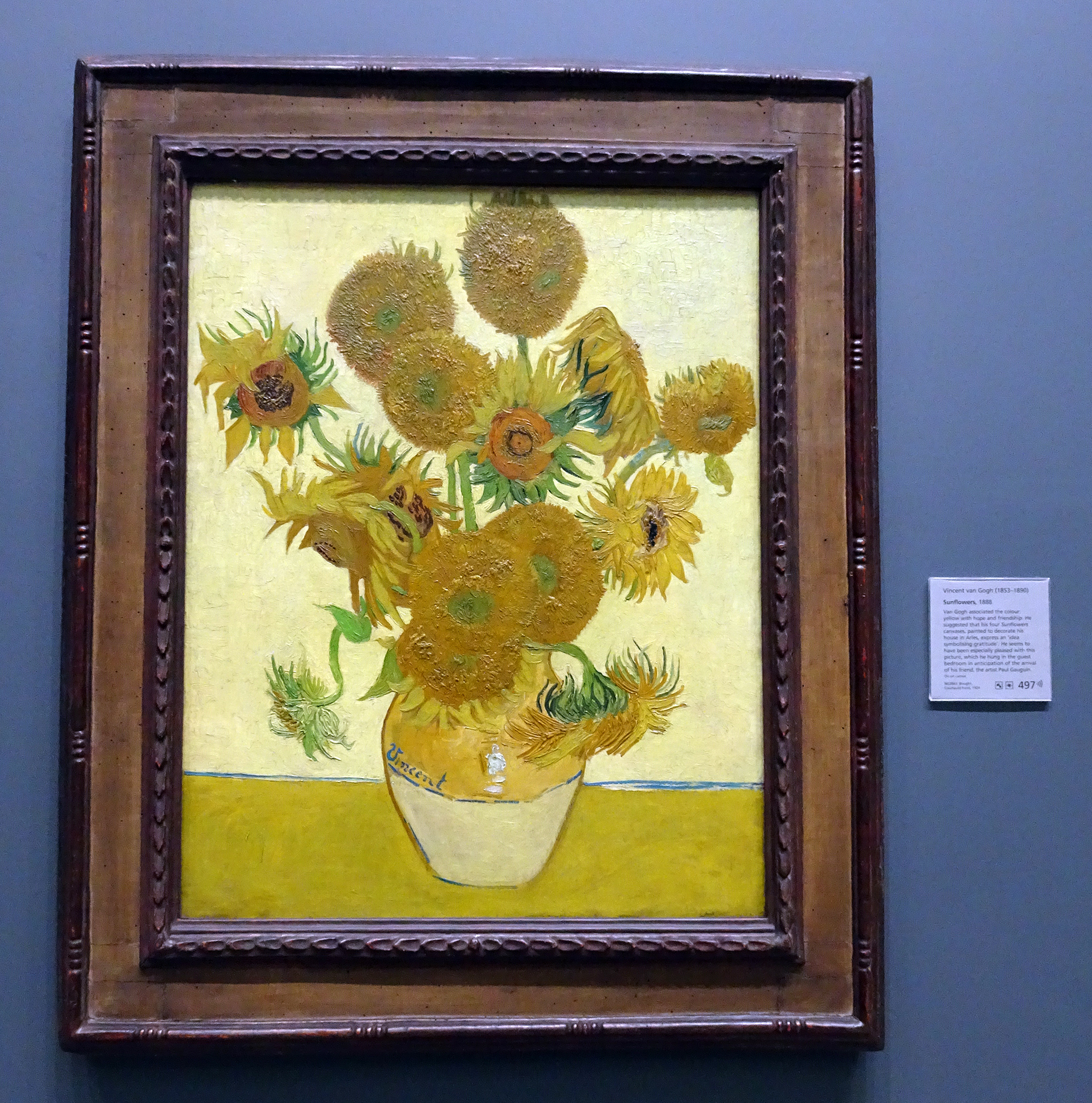
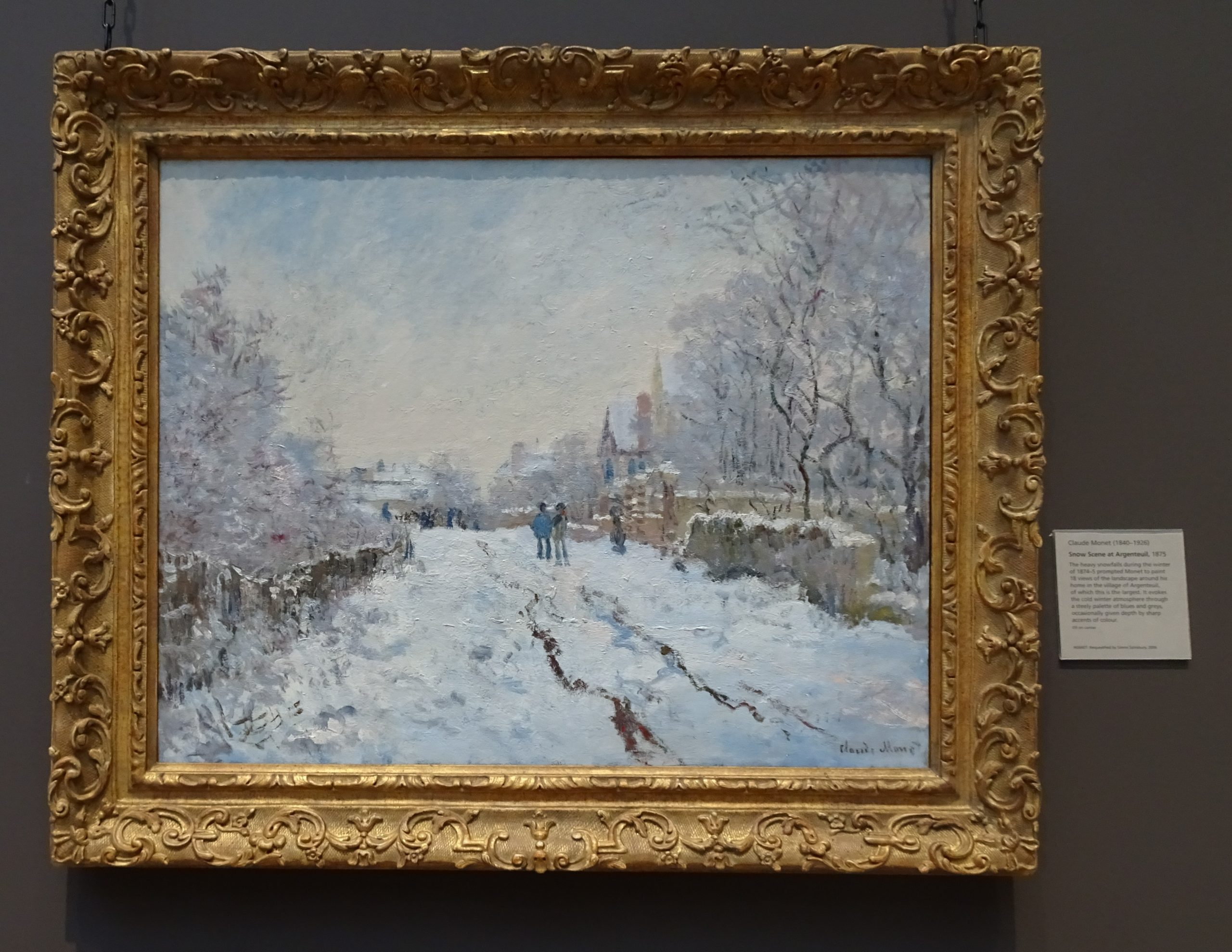
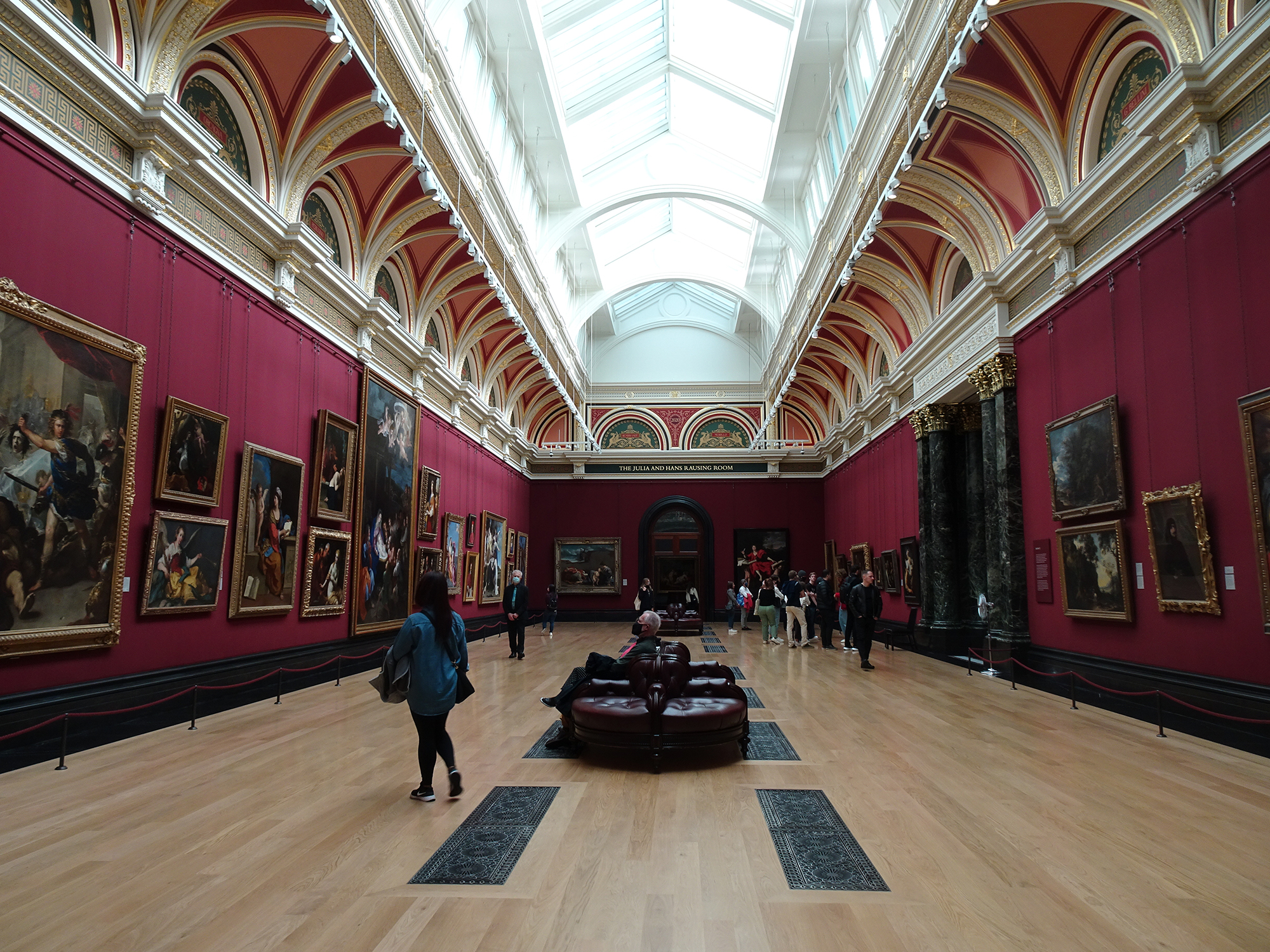
We looked at art in the National Gallery.

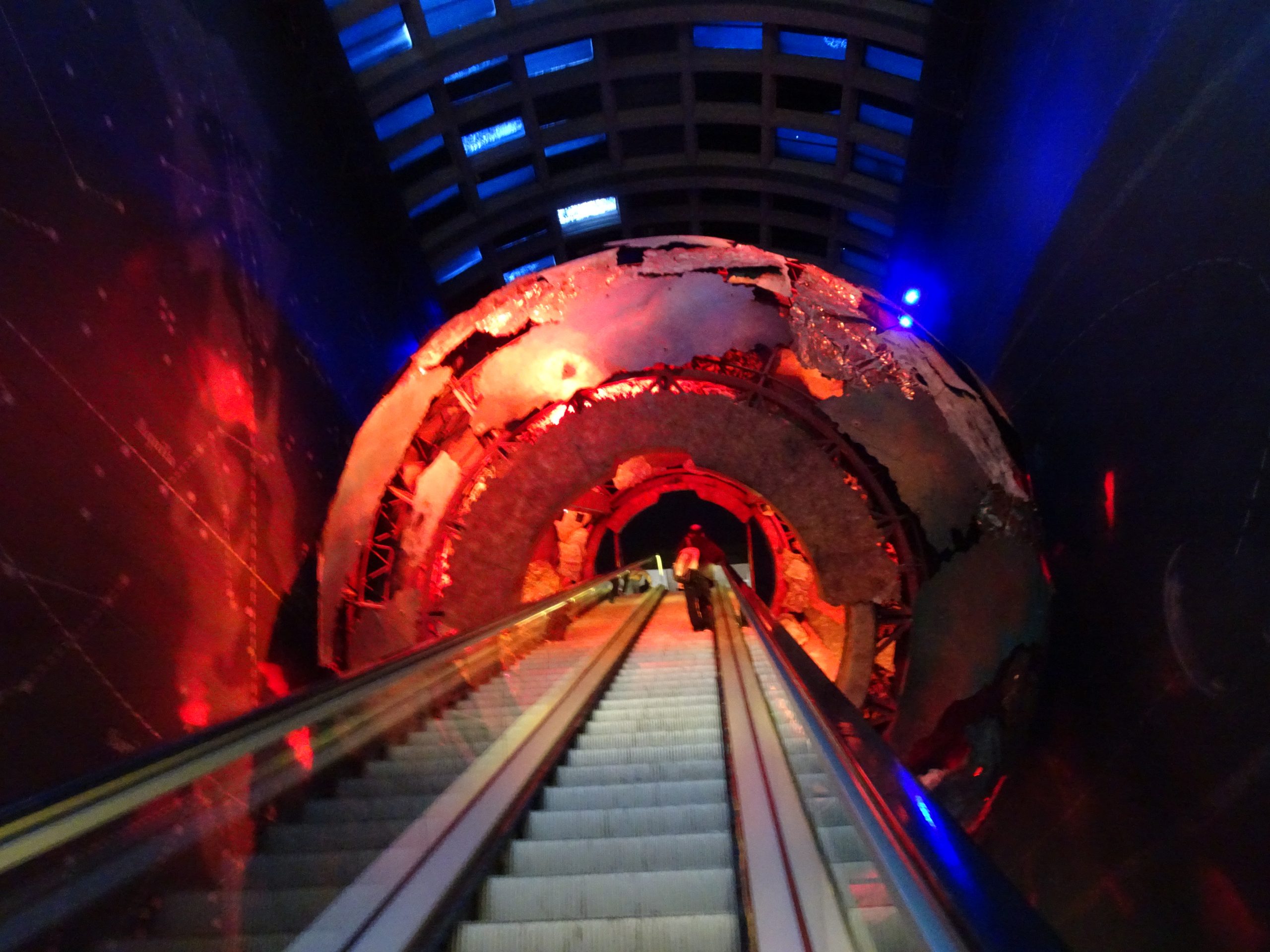
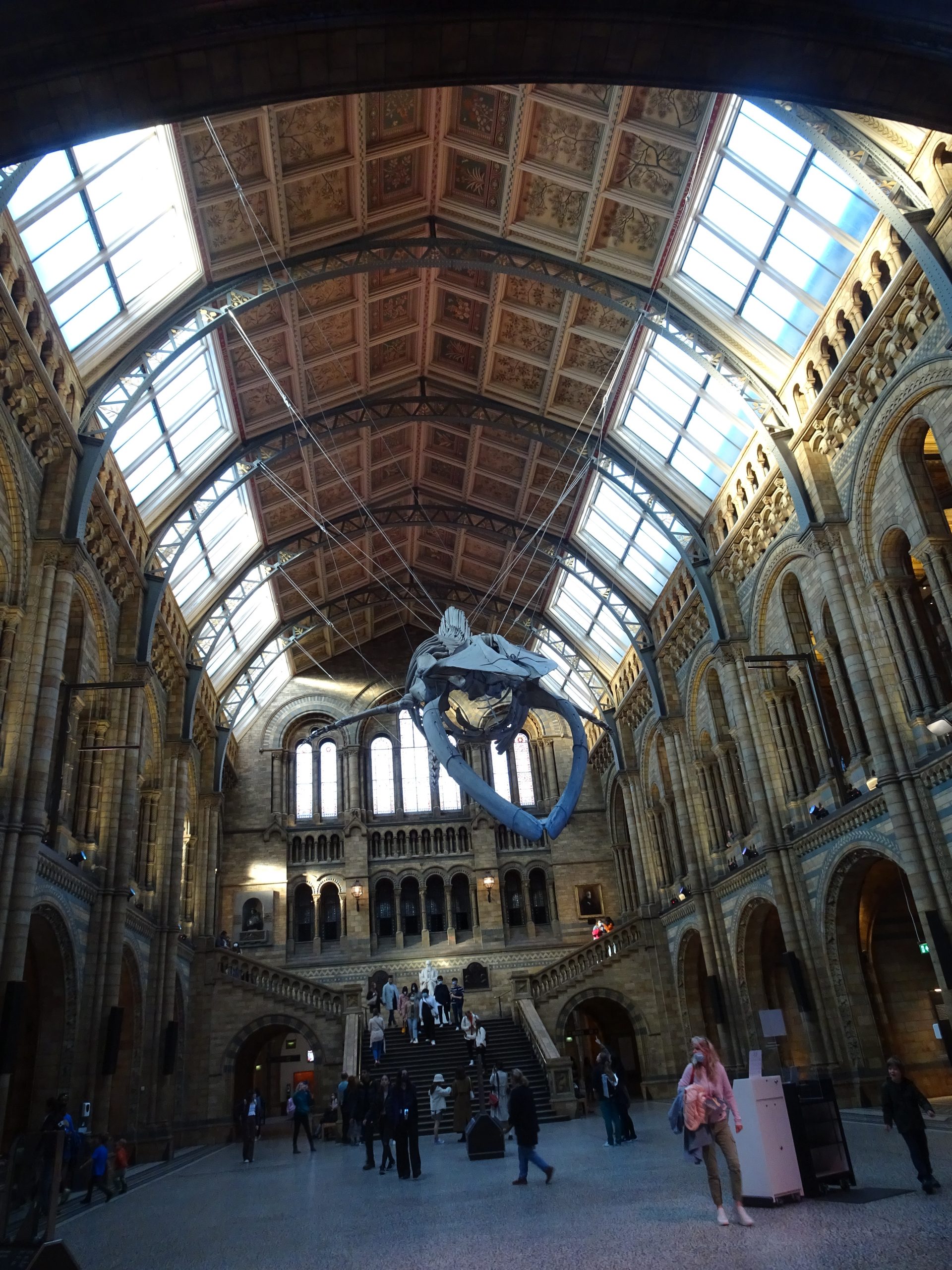
We visited the Natural History Museum.

When we got back to Vermont, we literally collapsed from exhaustion.

We’ll be going back in April when we attend Aryk’s COVID-delayed graduation from Keele University. There’s still a lot left to see!

Drive to Mexico 2020

Our second time driving across the Mexican border was a bit different from the first, even though we used the same crossing – Colombia Solidarity Bridge in Laredo, Texas.

Getting Us Into Mexico

The first time we crossed, in January 2019, we had Mexican Visas, the first step in attaining Temporary Residency in Mexico, because we expected to stay long-term. This time, our Temporary Residencies had accidentally expired because of the extra time we spent in the States taking care of my sick mother, and we knew we are going to stay less than three months, so we entered with Tourist Visas.

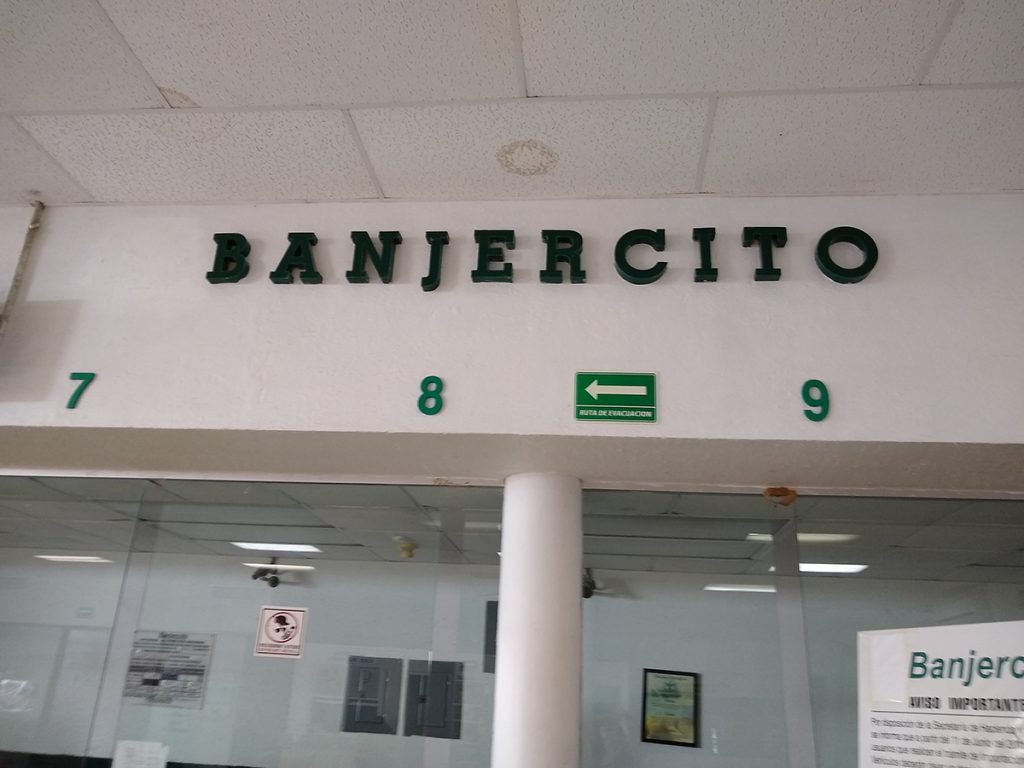
The difference was that this time, we each had to pay a Tourist Visa fee at a cost of $575 MXN, about $39 US. (Note that this fee is included in your airline ticket fee when you fly into Mexico). This entailed the initial stop at Immigration office, a stop to pay at the Banjercito window, and then another stop at Immigration to finalize our paperwork.

Getting our Truck Into Mexico

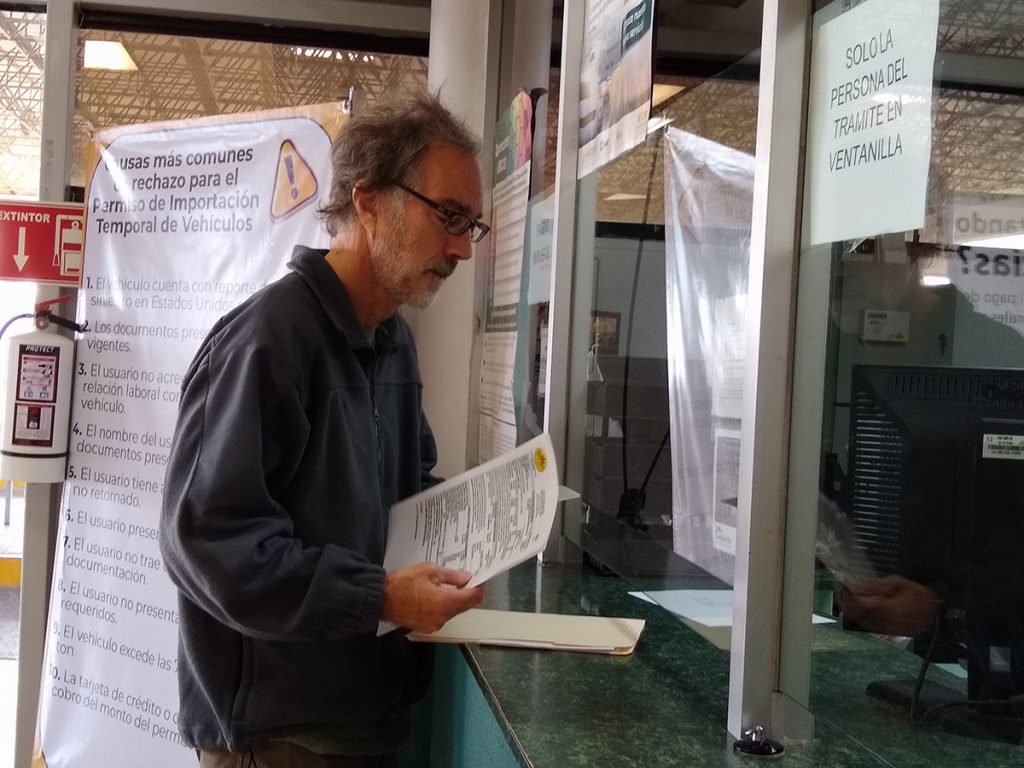
Next, we had to get the Temporary Import Permit for our car. This cost $400 USD, which is supposed to be reimbursed when you leave Mexico, plus a processing fee of approximately $51 USD. I wasn’t as prepared this time as I was previously and I had left copies of my driver’s license and passport buried in a folder in the back of the truck, so we chose to stand in the copy line at the border facility and get those copied.

Registering the truck

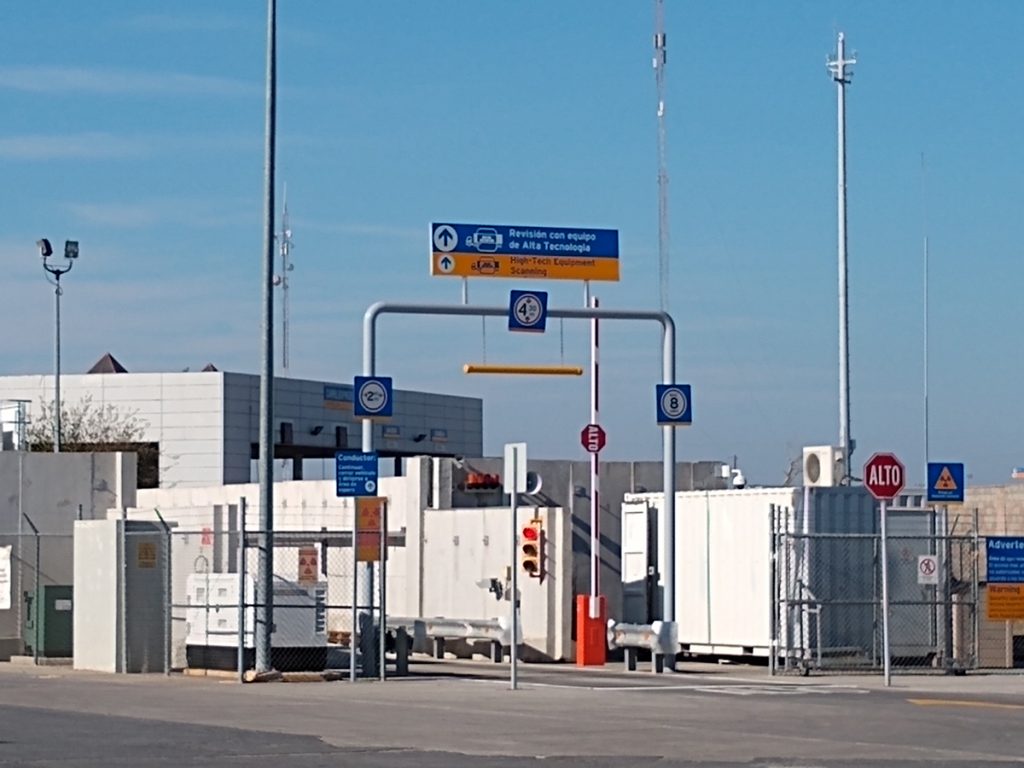
Next, we had to drive through Customs. It seemed as if every car was chosen for inspection, and ours was no exception.

Inspecting the Cats

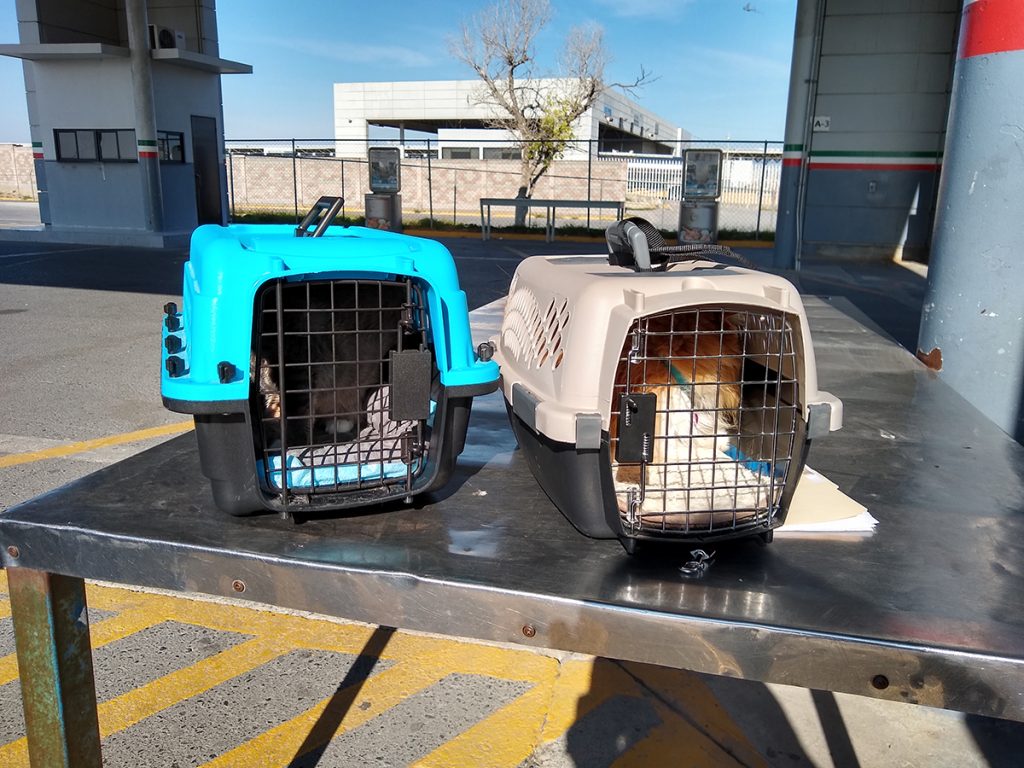
This time was that they asked for documentation for the cats. We were traveling with only two because Ellie, the third, was now living at Champlain College in Vermont with Gavin, our youngest. Effective January 1, 2020, you no longer need a Certified Health Certificate to bring a cat into Mexico, but they can physically inspect the cats for open sores, health problems, etc., and you need to prove they have rabies vaccines. The Inspector made us pull out the paperwork, which unfortunately was stored in the far reaches of the truck, entailed a near-total unpacking. He very thoroughly reviewed the paperwork.

Noxy and Kaylee patiently waited during the truck inspection

X-Raying the Truck

Next, Lisa and the cats had to get out of the truck while I, once again, drove it through the x-ray machine. Once they reviewed the x-rays, we were free to go.

The truck x-ray machine
Our truck is inside this x-ray machine

In the end, it took us about 1.5 hours at Mexican Immigration and Customs. Fortunately, there weren’t lines (which is why we like Colombia), or this could have been much longer.

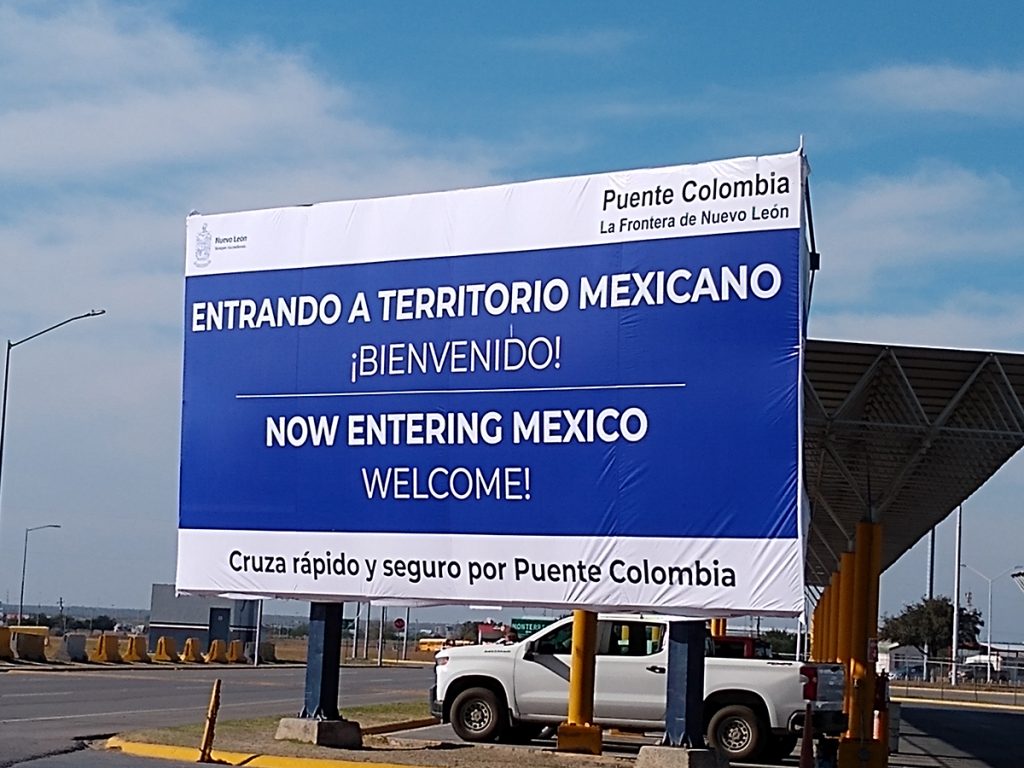
Welcome to Mexico!

And then we were in Mexico! We didn’t take time to celebrate, but pressed forward to get to our first night’s lodging before dark.

Lisa’s favorite sign

We drove about 6 hours to Matehuala, where we had a reservation at the same cat-friendly motel we stayed at last time, Las Palmas Midway Inn in Matehuala.

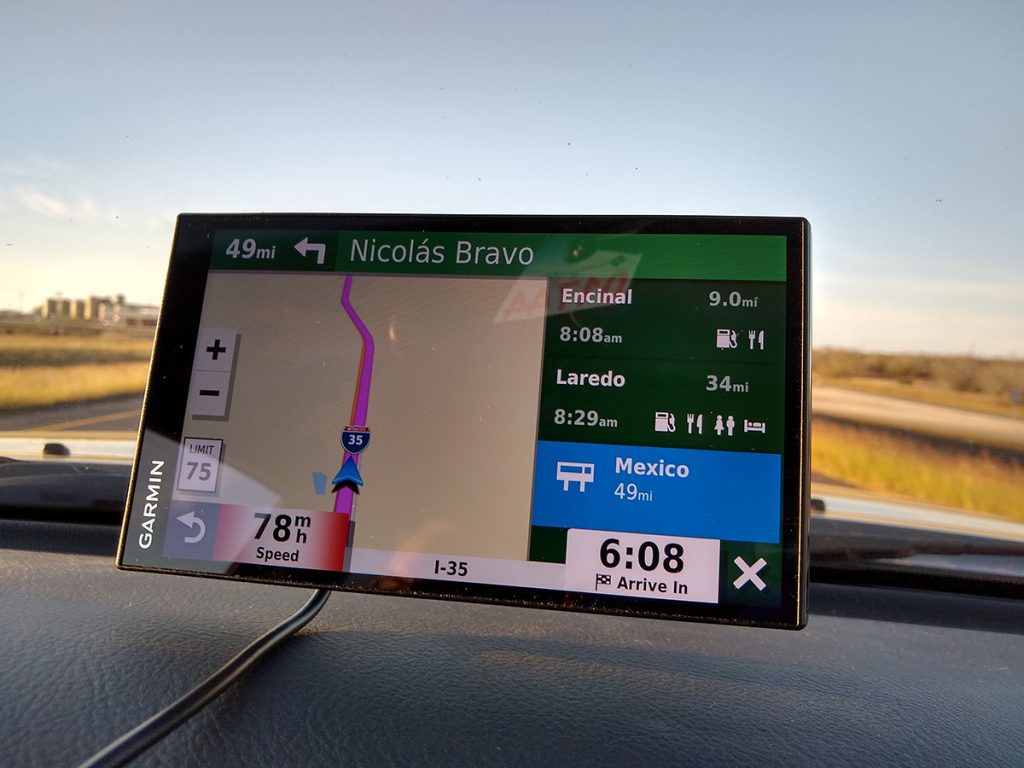
Our new Garmin GPS seemed to under-estimate our travel time, by about an hour both days. We didn’t run into traffic either day, so that wasn’t the issue. Maybe it was the fact that many of the Mexican roads we drove on incessantly changed speed limits, going anywhere from 110 kph to 60 kph and back. It may be difficult for the GPS to deal with that along with the fact that there may be few people driving those routes and providing route time feedback. It could also be that we drive the speed limit while many Mexican drivers don’t necessarily do that. I don’t really know how the GPS time estimation works, so this is all just a guess.

We love our new Garmin GPS

Another thing that may impact the time estimation is the number of toll booths. Overall, we passed through 10 of these booths at a total cost of $924 MXN, or about $50 USD.

Stopped by the Mexican Cops (the Federales)

Finally, the last thing that was different on this trip was we were stopped by the Federal Police on two occasions. The first of these seemed to be more friendly. The second one was at an organized Federal Police checkpoint. Here they pulled over several people and performed inspections. They asked me 3 times if I had weapons or drugs (armas, pistolas, drogas) and then had me open the back of the truck and open selected suitcases, even going to the point of asking me where my shoes were in one of them, which I had to subsequently dig out. They also frisked me. Asking me to empty my pockets, patting me down and having me lift up my pant legs. So, that was a different experience than last time as we weren’t selected for the inspections as we drove through several of those checkpoints before.

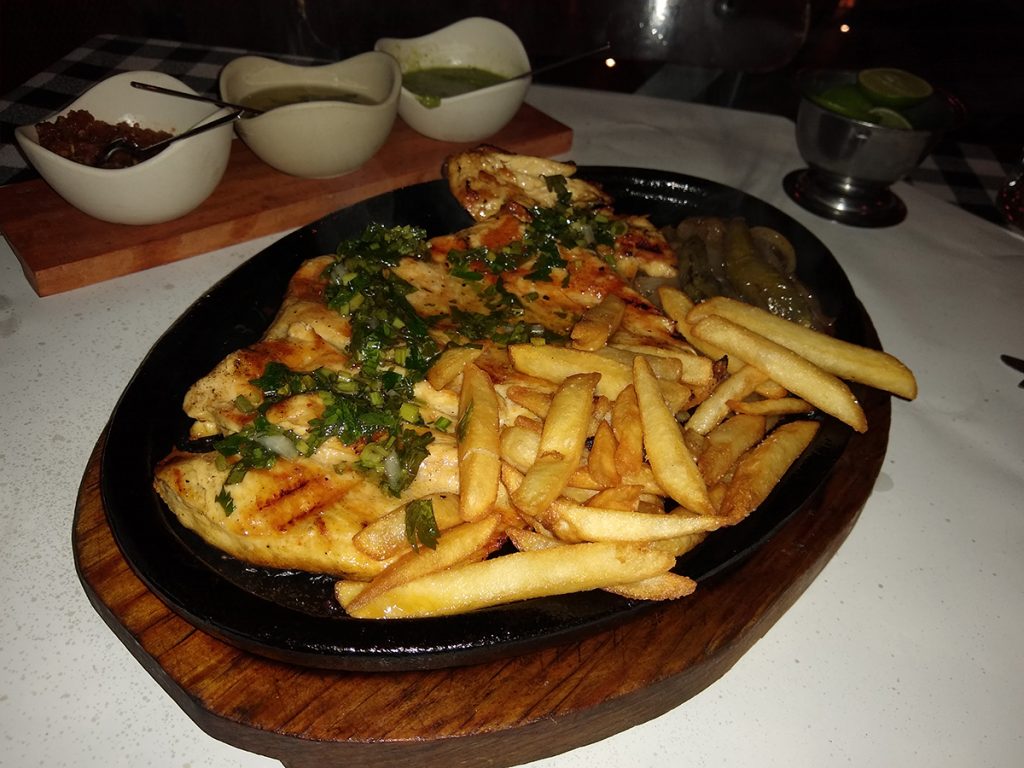
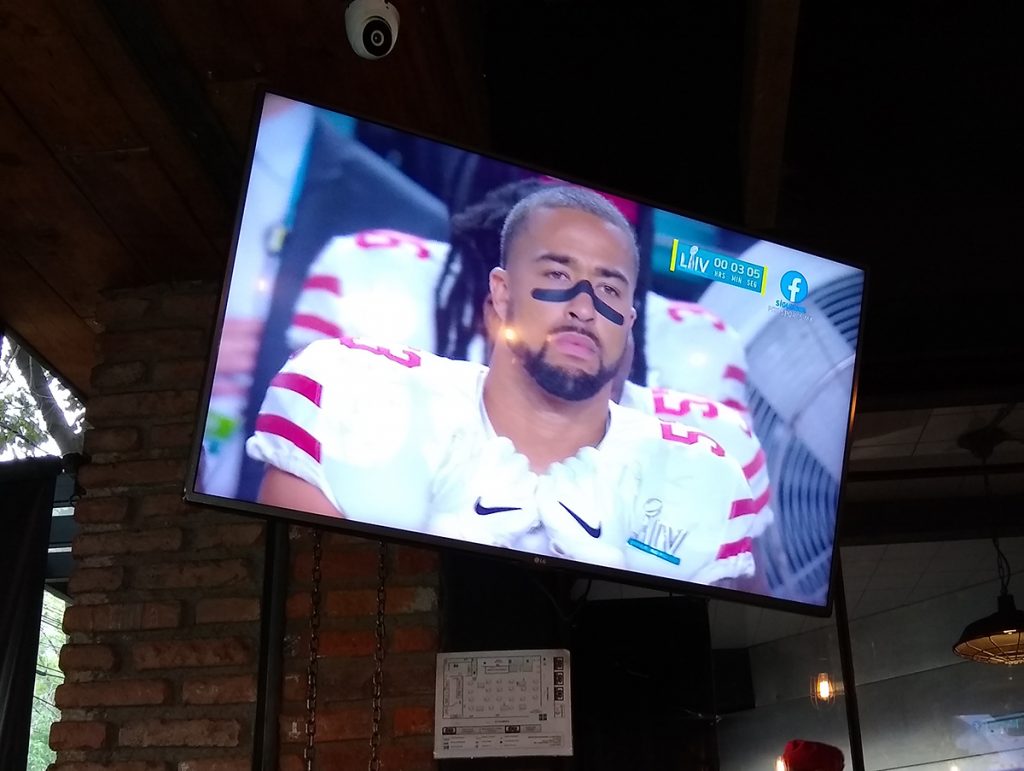
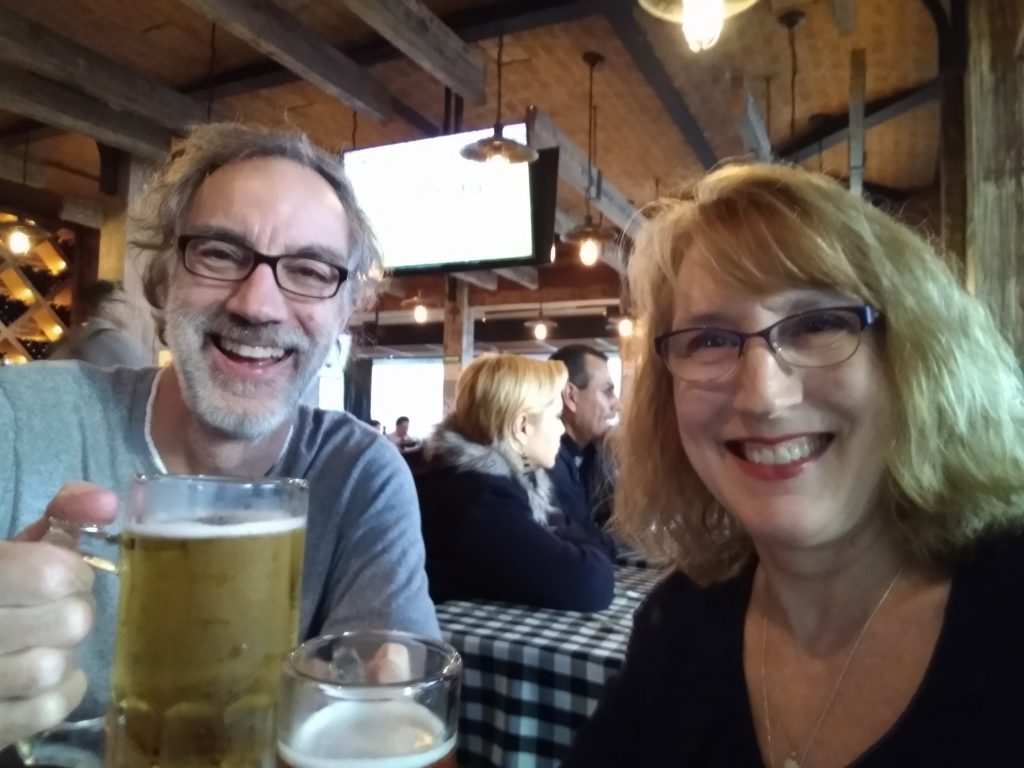
Nonetheless, we arrived in Mexico City with enough time to unload, park the car and find an extremely nice restaurant to have a couple of beers, dinner and watch the Super Bowl (in Spanish).

New Orleans, Part 2: The National World War II Museum

On our single full day in New Orleans, we opted for history instead of entertainment and headed to the National World War II Museum. It was, without a doubt, one of the most spectacular, illuminating museums I have ever experienced in my life. This museum, which started out as the D-Day Museum in 2001, and is located in New Orleans because most of the landing craft used on that turning-point day in history was manufactured here. The D-Day Museum was so well received that it was expanded a few years later to become the National WWII Museum.

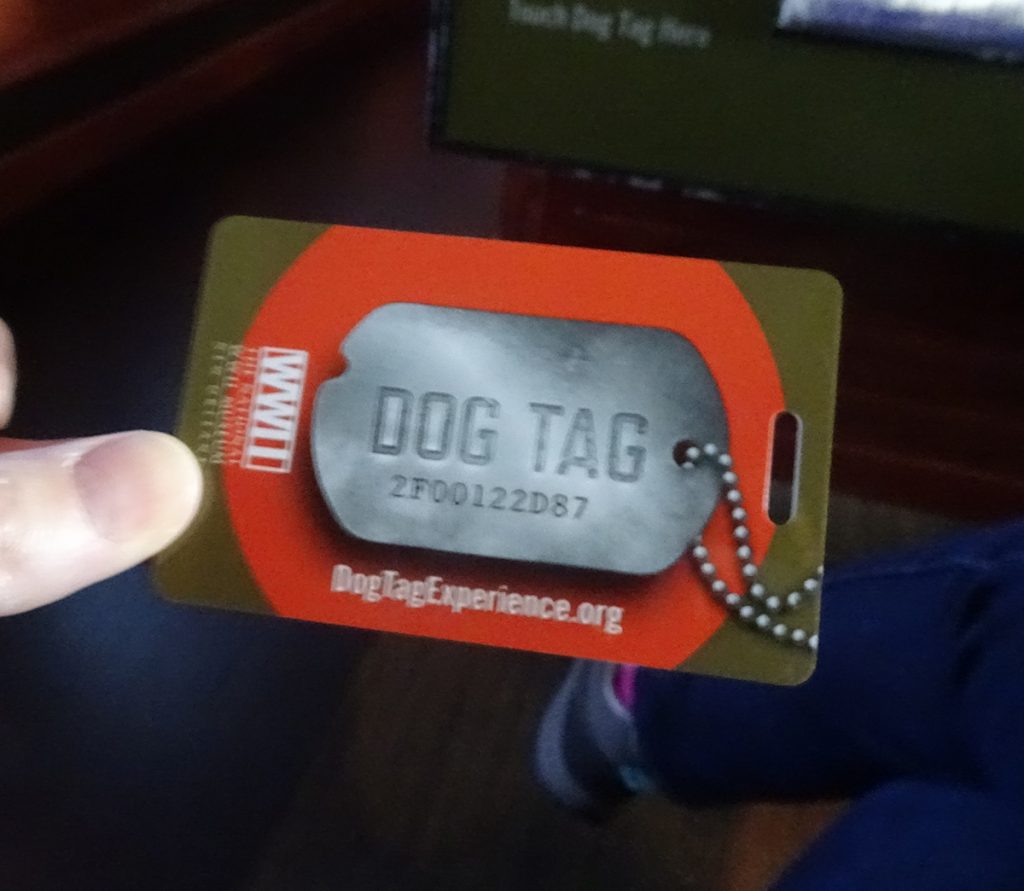
Lisa’s dog tag

You start by getting a dog tag to represent a soldier you will be tracking all day at check-in stations, and board the same kind of train many soldiers took when they embarked on their journeys. It was a truly immersive experience as, with seats rocking, the train whistle blowing and the grainy black-and-white landscape flying by, the conductor welcomed you aboard.

Beyond Boundaries Film

After getting off the train, we started our explorations by watching the 48-minute film Beyond Boundaries, a 4D experience narrated by Tom Hanks that used film and other sensory effects, including a 1930s wooden-cabinet radio, falling snowflakes, a plane cockpit that lowered from the ceiling to punch out an air battle scene, and more to introduce us to the sheer magnitude of World War II. The mini-documentary stunningly put into perspective the global threat presented by German Furer Adolph Hitler, Italian Benito Mussolini, and Emperor Hirohito of Japan, the Axis leaders who wanted nothing less than global domination. It ended at the climax, the bombing of Pearl Harbor that dragged the United States in the war and engaged every person in the country in the fight for the very survival of democracy.

We learned how the ill-equipped United States, previously hesitant to join in the war as Nazi forces took over country after country, stepped up when it came under attack. Men young and old rushed to join the war effort and defend their country against the invaders. Women, who were home raising children, took factory jobs and churned out an incredible volume of planes, jeeps, weapons, artillery and more.

The European Theater

The WWII Museum is comprised of five buildings, and we only had one day, so we chose to enter the Road to Berlin: European Theater gallery. I don’t even know how to describe the experience after this. We spent five awe-struck hours being assaulted from all sides by grainy black-and-white film, sound and lighting effects, real-life voices telling their stories, radio broadcasts, flashes and explosions, and much more.

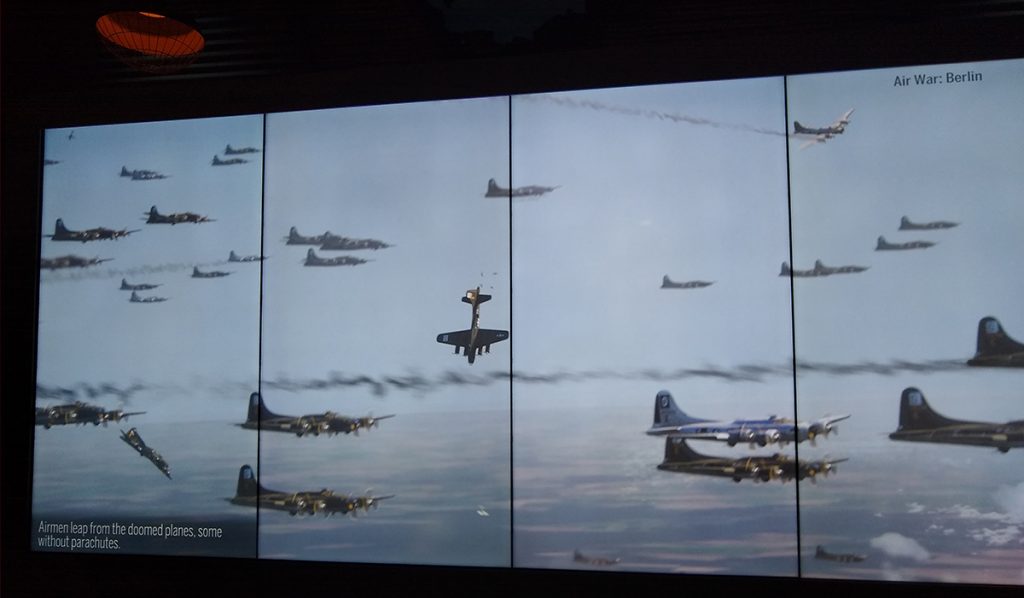
This breathtaking exhibit took us through the major steps in the European campaign, starting with North Africa and moving across Italy, southern France, Normandy, the Battle of the Bulge, D-Day, England, and  Germany, that culminated in the unconditional surrender of Nazi Germany. We experienced the shock that troops felt when they discovered the atrocity of the concentration camps and the slaughter of 6 million Jews, as well as millions of others deemed inferior to Hitler’s Aryan race. We met military leaders and foot soldiers, journalists (including Ernie Pyle’s life and death) and pilots. We saw airplanes and jeeps, nurses’ uniforms and bomber jackets. We shivered in the snowy woods in Germany and leaned away from incoming anti-aircraft fire from a small plane. I thought of my three Troisi uncles who flew many missions in Europe and for the first time had a concept of what their experience was like.

A plane goes down during an air battle

My dog tag soldier, John, was a 17-year-old who went to Canada to pursue becoming a pilot when the United States rejected him because of a previous broken neck. He ended up doing bomb runs for Canada, and then England, before the United States decided to let him join. He won a medal of honor and was a prisoner of war in Germany for more than a year.

Planes, Jeeps and Submarines

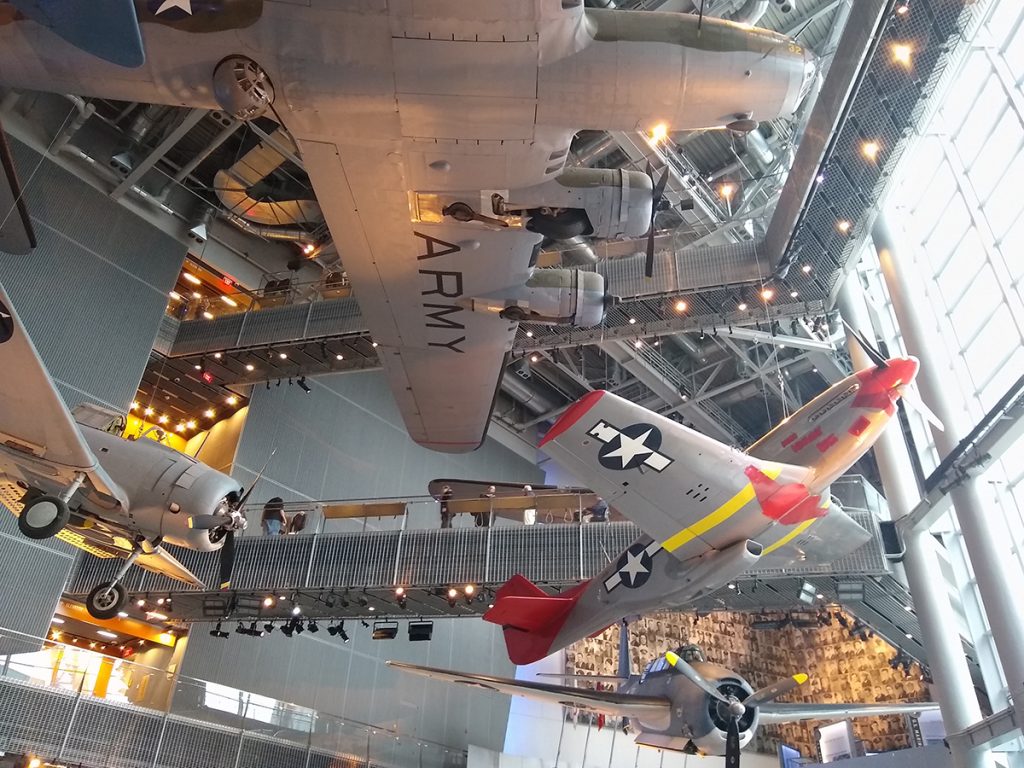
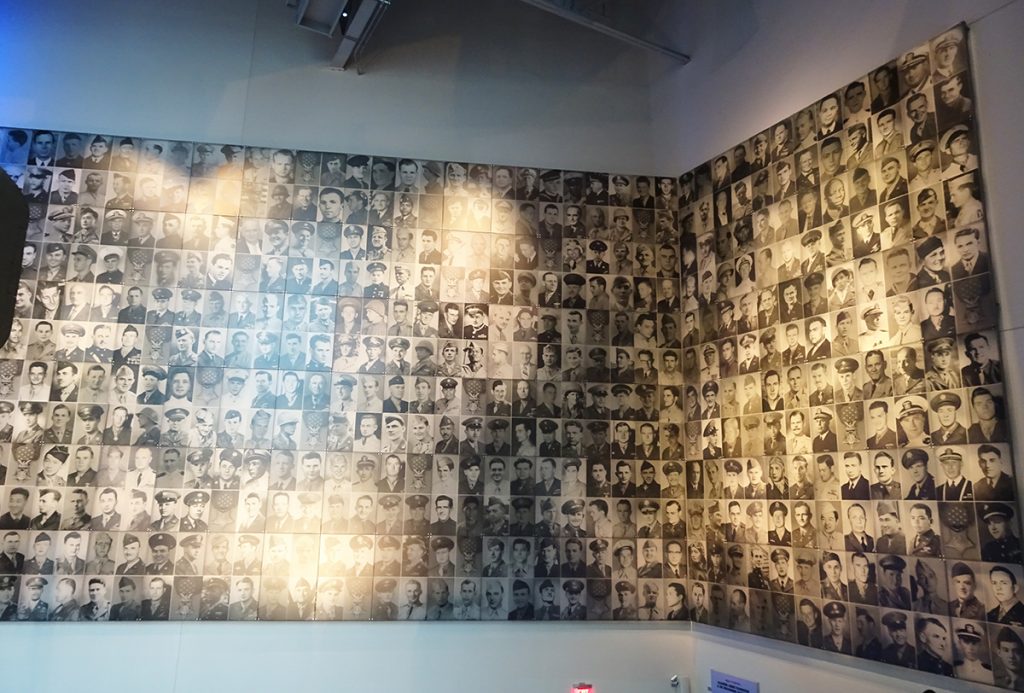
We also visited the US Freedom Pavilion: The Boeing Center, where we saw a number of WWII planes and jeeps, as well as the Medal of Honor Exhibit.

Wartime aircraft
Medal of Honor recipients

We still need to go back to see the other Campaign of Courage: The Pacific Theater, especially since that’s where Bob’s dad was stationed on a Destroyer Escort in 1943-45. There’s a whole hall, the Arsenal of Democracy, that we didn’t have time for, and a doomed submarine experience I’m interested in. The outdoor area is under construction to create a Freedom Garden.

New Orleans is about a lot more than Jazz and Jambalaya. If you visit this city, definitely devote a day or two to the National WWII Museum. To get the full experience of the museum, watch Bob’s video on the Messy Suitcase YouTube channel.

By Lisa Hamm-Greenawalt

Torture and Death in Mexico

We visited three morbid museums that reflect a certain
obsession with death and torture in Guanajuato, Mexico.

El Museo de las Momias de Guanajuato 
(The Mummy Museum)

 
The one that attracts the most tourists is El Museo de lasMomias de Guanajuato, or the Mummy Museum of Guanajuato. This underground museum tucked into a corner
of the old city displays scores of naturally mummified bodies found to be in surprisingly good shape when they were disinterred to make room for new bodies in the cemetery above.
 
The mummies were discovered in the late 1800’s after the government instituted a perpetual burial tax on the cemetery. If the families of the buried did not pay, the bodies of their loved ones were exhumed. It was during this process of evicting the dead for back taxes that the mummies were discovered, beautifully preserved.


After exhumation, the mummies were stored in an ossuary beneath the cemetery, where they are displayed today. Each mummy has a tag with a little information about them and theories on how they died. Many of them are still wearing the clothes they were buried in.
 
The most interesting to me was the mummy pair of a mother and her unborn child, advertised by the museum as the smallest mummy in the world.
 
Mama
Baby
In addition to the mummies, the place is full of existential quotes such as the following:
 

“Man must open himself to death if he wants to open himself to life.
The cult to life is also cult to death.
A civilization that denies death ends up denying life. “

–Octavio Paz
 

La Casa de Los Lamentos
(The House of Wailing)

 
La Casa de Los Lamentos is a cheesy House of Horrors located in a historic 18th-century mansion where serial murders occurred in the 1890s and early 1900s. The story goes that the owner, Tadeo Fulgencio Mejia, was obsessed with trying to contact his dead wife, Constanza, and committed an unknown number of murders as human sacrifices to perform rituals in an attempt to reach her. Human bones were supposedly found in the mansion’s basement.


The museum uses red and flickering lighting, slammed doors and other sound effects, a Hitchcock-style video in a picture frame, and ghostly holograms to scare the BeJesus out of the unfortunate who walk in and pay the 45 pesos admission. We stumbled upon it while exploring the Valenciana neighborhood and it was a hoot!
 
But we were the ones wailing at the end, because we came out of the museum to a colossal downpour. We had walked half a mile down the hill from Casa Estrella and had to wait out the tormenta before we could walk back. But what a diverting hour or two!

El Museo Casa del Purgatorio
(The Purgatory House Museum)

We stumbled upon El Museo Casa del Purgatorio, tucked innocuously into an alley near the Templo de San Cayetano (Saint Cayetano Church), while walking around the little village of Valenciana, down the road from our lodging. Aryk and Lexie were with us for this exploration of a museum that turned out to be about methods of torture and killing during the 18th century Spanish Inquisition in Mexico, when people were persecuted and killed for being Catholic.
 
Methods of torture we experienced through our guide included a spinning wheel into excrement (sort of an extreme sort of water boarding), the stretching table, the guillotine, and of course the gallows. The museum even featured a small cemetery with a replica of the tomb of El Pipila, the hero of the Mexican Independence movement – despite the fact that this iconic miner hero wasn’t even caught and tortured, but apparently lived to the ripe old age of 83 before dying in his hometown of San Miguel de Allende.


This museum was so gruesome that Lex had to leave and waited outside. The rest of us enjoyed it in a perverse way.
 
By Lisa Hamm-Greenawalt

Social media & sharing icons powered by UltimatelySocial
Facebook
Instagram
YouTube
YouTube
Set Youtube Channel ID
Pinterest